Aluminum Vaccine Adjuvants and Rabbits

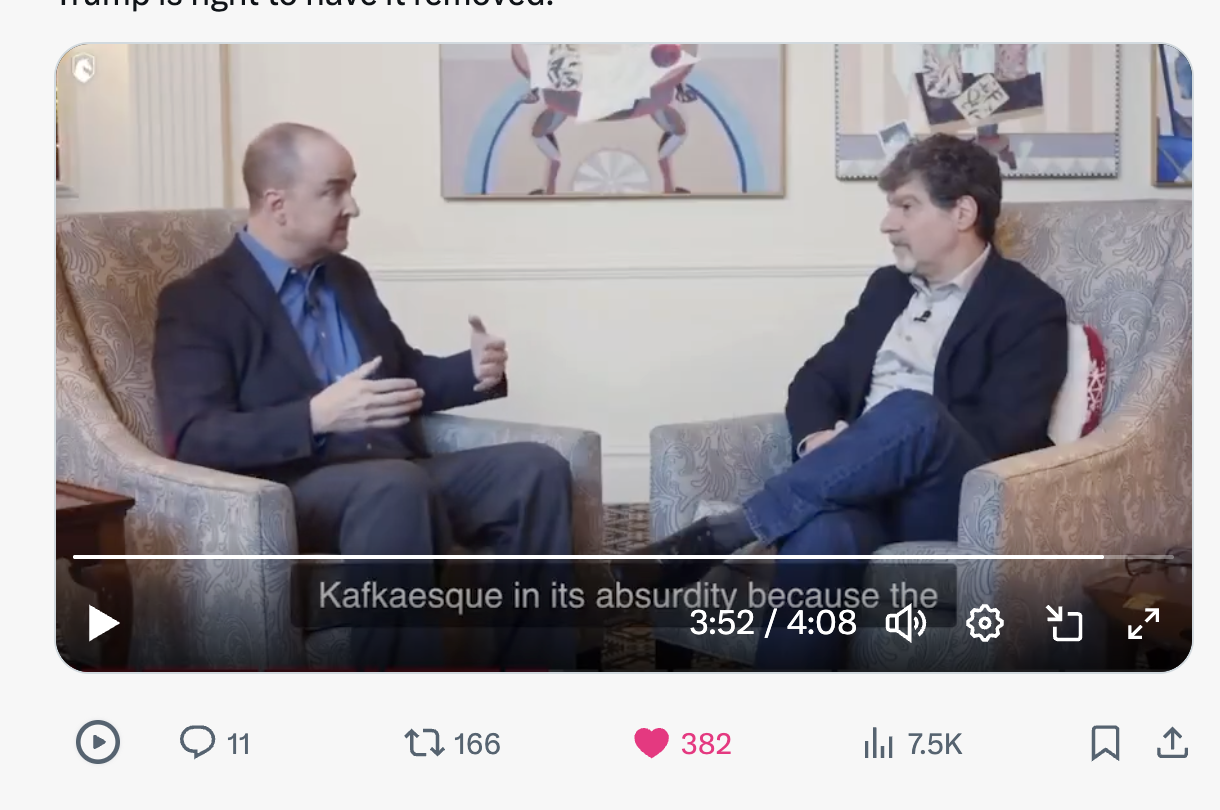
In this interview with Bret Weinstein, Rogers discusses safety concerns regarding mercury and aluminum adjuvants in vaccines, focusing on a surreal study regarding four rabbits.

"Kat A" summarizes the video on X:

Having spent the last decade studying the causes of autism, Dr Tobey Rogers was mortified to discover FDA/CDC approval for the use of aluminum in vaccines was based on a study of 4 rabbits.

The results were a disaster. With aluminum found in the brain, kidneys, liver, heart, lymph nodes and bone marrow.

‘It’s beyond kafkaesque in its absurdity because the science is so terribly bad that anybody who reads that study would not want to inject their children with aluminum adjuvanted vaccines.

And that’s just one ingredient amongst hundreds in these vaccines.’

Trump is right to have it removed.

Tobey Rogers is an American political economist and writer known for his work on public health policy, particularly the intersections of regulatory capture, pharmaceutical industry influence, and chronic childhood illnesses like autism. He serves as a Fellow at the Brownstone Institute for Social and Economic Research, where he contributes articles on health policy and industry corruption.

Continue ReadingAluminum Vaccine Adjuvants and Rabbits

COVID Panic in 2025

Wow. And I know other people like this too.

Billy Binion:

I say this without snark: We underestimate how much the government's response to COVID truly broke some people. Many are left with persistent, crippling anxiety about just living daily life. It makes me sad. Some people also seem to really thrive—over 5 years later—off of the purpose & identity they get from being a COVID purist. It's very human to want to fight for something. But the world is not going to stop for you anymore. It is time to find a new cause.

Continue ReadingCOVID Panic in 2025

Stays in the Deltoid?

Remember when the CDC assured us that the the mRNA would "stay in the deltoid"? New ACIP board member Robert Malone asked how Pfizer determined that. I'll translate part of Pfizer's answer: We used the least sensitive test and we worked in close consultation with the corrupt people at the FDA. The CDC quietly removed this "will stay in the deltoid" phrasing from its site around 2022–2023 without explanation. A short highly disturbing video. I'm so very glad we have Robert Malone sitting on the ACIP board to ask real questions.

And it's incredible how many things non-curious financially incentivized companies don't know.

Continue ReadingStays in the Deltoid?

Aaron Siri Introduces his New Book, Vaccines, Amen.

New post on X by Aaron Siri:

An excerpt from the intro to Vaccines, Amen:

Ever hear someone say, “I believe in cars” or “I believe in tools”? I cannot recall ever hearing anyone say they believe in a certain product. But I hear people say, “I believe in vaccines” all the time, especially in response to evidence regarding vaccines.

The expression “I believe in vaccines” carries a truism. The properties often attributed to vaccines require faith. Belief. This is because most claims about vaccines are not grounded in evidence. They are beliefs. It is why challenging claims about vaccines—meaning challenging beliefs—often results in an emotional, not logical, reaction.

This is also why wading into this topic is not for the faint of heart. Nor is it for anyone seeking to avoid controversy. Just the word “vaccines” evokes emotions for many.

Falling Into Vaccine Law

For this reason, among many others, I likely would have laughed if someone had told me eighteen years ago that I would be managing a law firm, with over 100 professionals, working on vaccine injury, exemptions, and policy. Back then, I was working on high-stakes, multi-billion-dollar lawsuits at one of the country’s premier law firms. Even after starting my own law firm over a decade ago, I continued to handle mostly high-stakes business litigation matters.

Then, one fateful day, I learned something I could not unlearn: of all the corporations I was defending, I would likely never have to defend a pharmaceutical company against claims that children were seriously injured or killed by a vaccine. Why? Because in 1986, Congress granted these companies financial immunity for injuries caused by childhood vaccines in a law titled the National Childhood Vaccine Injury Act (the 1986 Act).

I learned that, because of the 1986 Act, parents of seriously injured or deceased children must sue the federal government’s health department, instead of the company that profited from the product that harmed their children. From that one data point, my journey regarding vaccines began. What I have uncovered along the way has frequently been unbelievable.

This journey, spanning over a decade of litigating vaccine lawsuits of all stripes across the country, has been unique. This is partly because, unlike doctors, who can appeal to their credentials, I do not get to just say, “trust me.” I need to prove claims I assert with real data. Real proof. Something that will hold up in court. Non-authoritative science will not do. Unreliable data will not do. This means my vaccine litigation work requires me to study the primary sources and carefully review and scrutinize the studies and data that support each claim. v In the course of that legal work, I have worked with well over a hundred immunologists, infectious disease doctors, pediatricians, and other medical professionals. I have deposed these specialists as well, including the world’s leading vaccinologists. This work requires an understanding of vaccinology, immunology, infectious disease, and pediatrics, among other disciplines, with regard to these products. Want to talk about any other drug, medical procedure, etc.? I am not your man. But vaccines, those I know.

Incredibly, most of the information needed to understand vaccine safety is freely available on federal government websites and public databases. Most doctors and parents never bother to look or don’t know it exists. Those who do know and look often learn things they cannot unlearn.

Continue ReadingAaron Siri Introduces his New Book, Vaccines, Amen.

Pfizer and “Risk Reduction”

In 2021 I was joyous that Pharma had vaccines that were on the order ot 95% effective. Now we know what that means.

How Pfizer duped billions via statistical manipulation: Pfizer reported that its vaccine shows a 95% efficacy. That sounds like it protects you 95% of the time, right? But that's not actually what that number means. That 95% refers to the relative risk reduction, but it doesn't tell you how much your overall risk is reduced by vaccination.

For that, we need absolute risk reduction. In the Pfizer trial, 8 out of 18,198 people who were given the vaccine developed COVID-19. In the unvaccinated placebo group, 162 people got it, which means that even without the vaccine, the risk of contracting COVID-19 was extremely low at 0.88%, which the vaccine then reduced to 0.04%. So the net benefit or the absolute risk reduction that you're being offered with a Pfizer vaccine is 0.84%. That 95% number, that refers to the relative difference between 0.88 and 0.04%. That's what they call 95% relative risk reduction.

And relative risk reduction is well known to be a misleading number, which is why the FDA recommends using absolute risk reduction instead, which begs the question, how many people would have chosen to take the COVID-19 vaccines had they understood that they offered less than 1% benefit?

Continue ReadingPfizer and “Risk Reduction”