
FDA Corruption in the Spotlight at ACIP
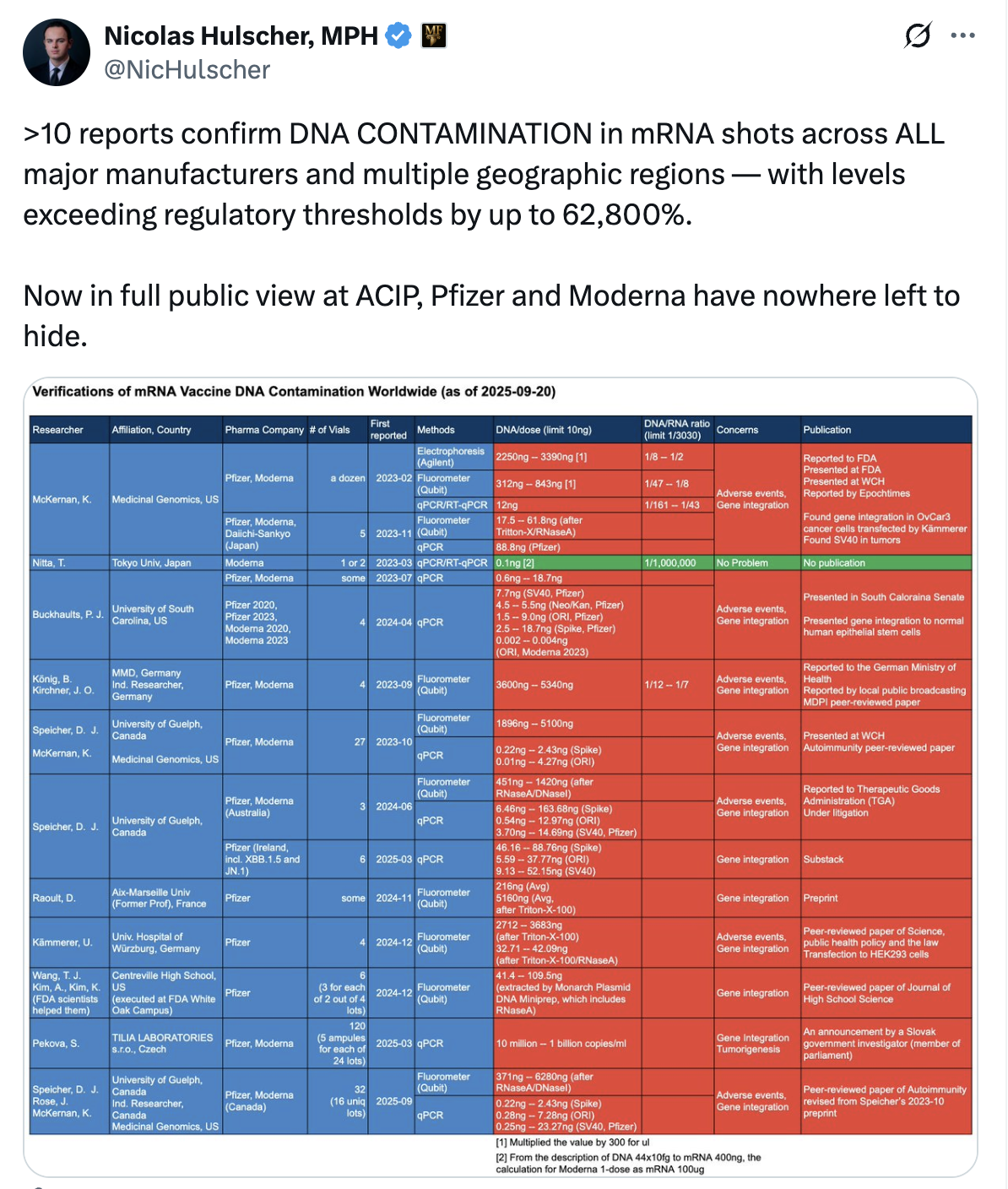
Many people tell me that RFK, Jr. is a lunatic even though they haven't bothered to watched any of his videos. Never read any of his words. Well, he appointed a bunch of competent doctors and medical researchers to ACIP and for the first time in memory, Big Pharma and the FDA are being put under the spotlight. Here, the FDA effectively admits regulatory capture. Pharma has been its boss-and the FDA hasn't been questioning Pfizer's corrupt research. Real research is now showing that spike protein wanders all over the body (and lingers, damaging hearts and other organs) and the so-called COVID vax is contaminated by DNA. FDA: We can solve that problem by putting our head in the sand. That will protect Pfizer, our boss.
I am so very grateful that RFK, Jr. has cleaned house, but you'd never know the good things that are happening if you rely on corporate media.
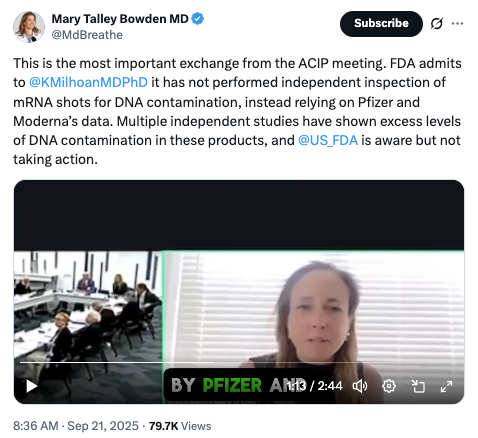
Mary Talley Brown, MD, is a doctor who had her license threatened for using her medical judgment to treat COVID patients (instead of jamming endless boosters into her patients):
This is the most important exchange from the ACIP meeting. FDA admits to @KMilhoanMDPhD it has not performed independent inspection of mRNA shots for DNA contamination, instead relying on Pfizer and Moderna’s data. Multiple independent studies have shown excess levels of DNA contamination in these products, and @US_FDA is aware but not taking action.
The COVID Origins Payoff
This story has still not had proper exposure in the corporate press. Perhaps it never will. The following post is by Camus. It summarizes a conversation between Megyn Kelly and RFK, Jr:
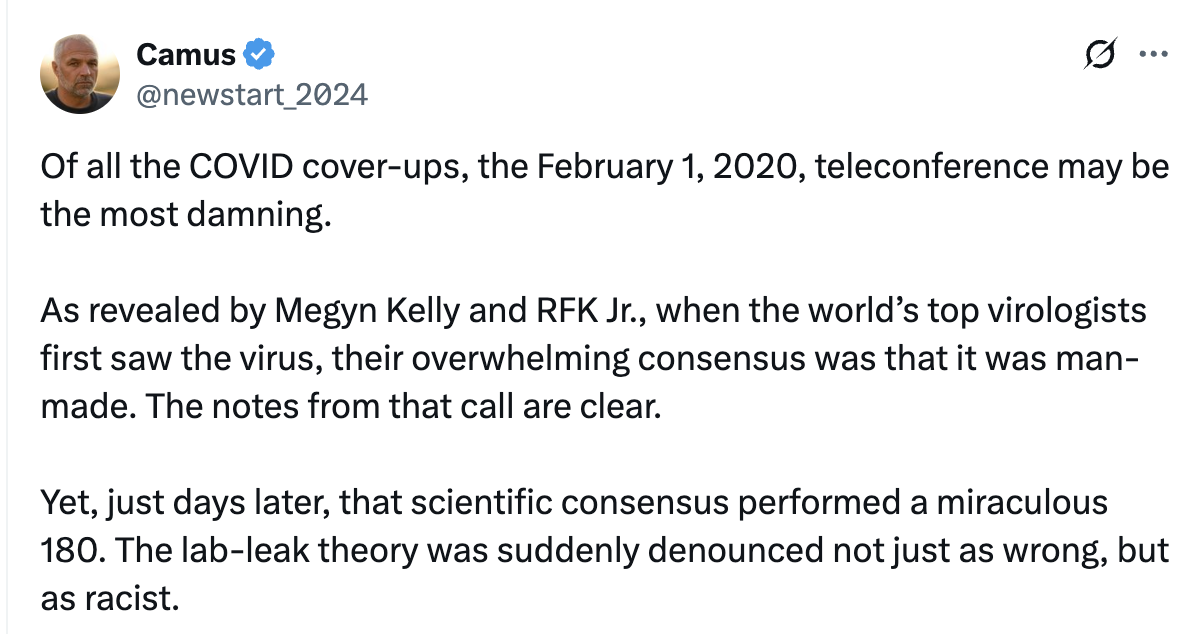
Of all the COVID cover-ups, the February 1, 2020, teleconference may be the most damning.As revealed by Megyn Kelly and RFK Jr., when the world’s top virologists first saw the virus, their overwhelming consensus was that it was man-made. The notes from that call are clear.
Yet, just days later, that scientific consensus performed a miraculous 180. The lab-leak theory was suddenly denounced not just as wrong, but as racist.
Why the reversal? RFK Jr. connects the dots: Virtually every scientist on that call had a massive financial conflict of interest.
They were either:
• Directly doing work at the Wuhan Lab.
• Receiving tens of millions in grants from Tony Fauci’s NIH.
• Funded by the Wellcome Trust, an arm of Big Pharma.
Their reward for killing the lab-leak theory? Larger grants than ever before—some as high as $60 million.
They were paid to create a “scientific” orthodoxy that silenced all dissent, smearing questions as conspiracy theories.
The truth was suppressed not by science, but by a lucrative financial cartel. Follow the money.
Stays in the Deltoid?
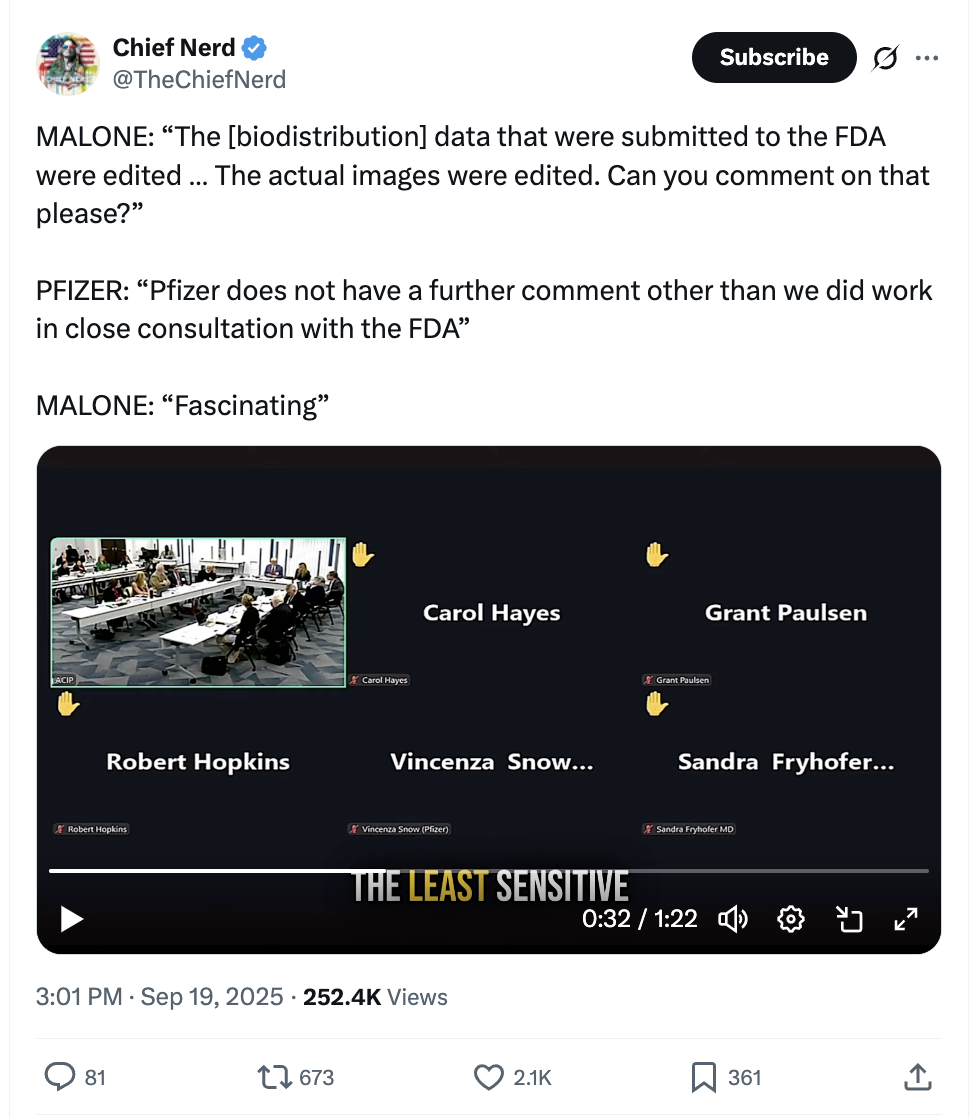
Remember when the CDC assured us that the the mRNA would "stay in the deltoid"? New ACIP board member Robert Malone asked how Pfizer determined that. I'll translate part of Pfizer's answer: We used the least sensitive test and we worked in close consultation with the corrupt people at the FDA. The CDC quietly removed this "will stay in the deltoid" phrasing from its site around 2022–2023 without explanation. A short highly disturbing video. I'm so very glad we have Robert Malone sitting on the ACIP board to ask real questions.
And it's incredible how many things non-curious financially incentivized companies don't know.
Deposing the High Priest of Vaccines
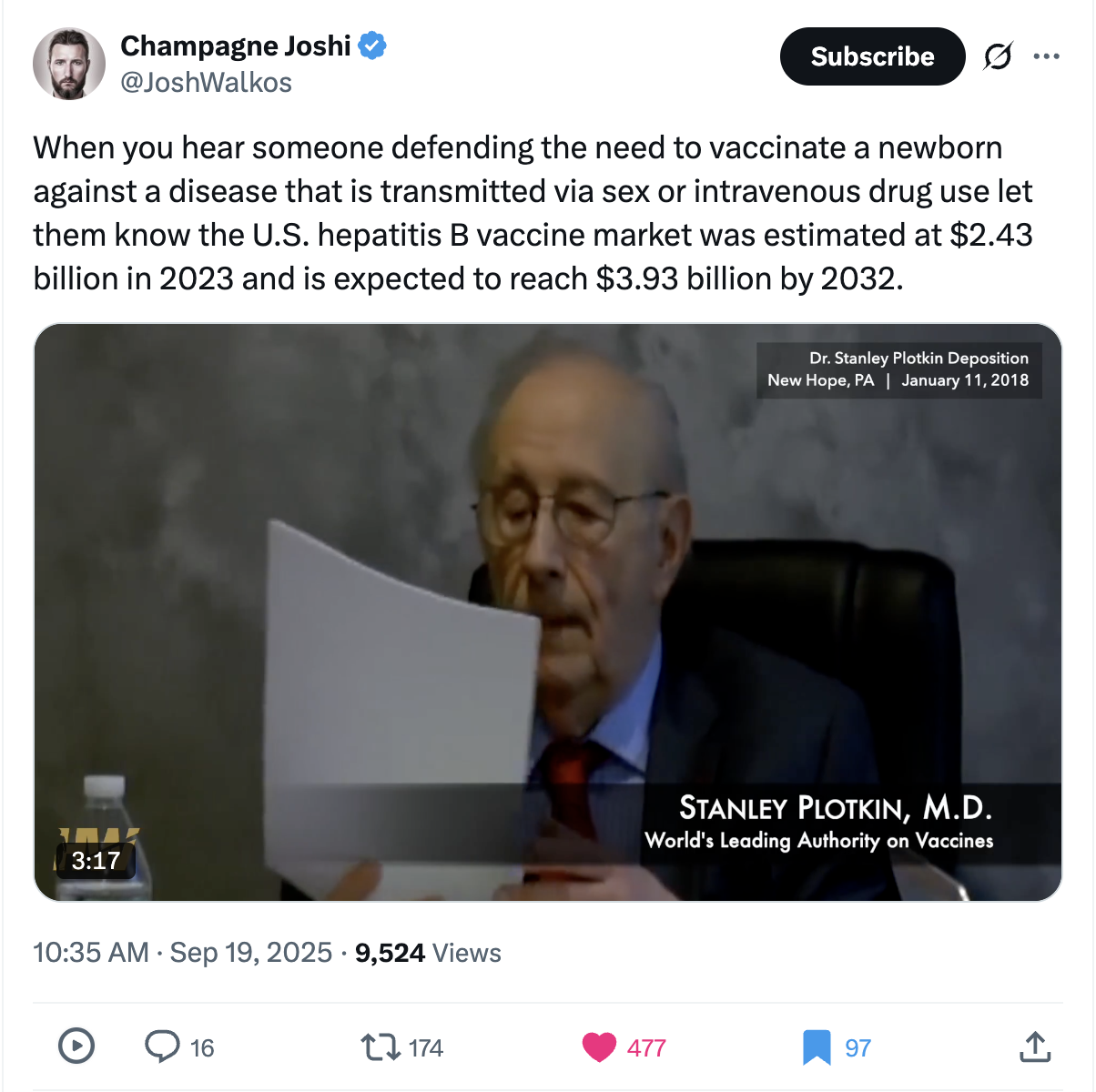
Vaccine Injury Attorney Aaron Siri deposing the High Priest of Vaccines, Stanley Plotkin. Every word of this . . . gripping . . . horrifying.
- Go to the previous page
- 1
- …
- 7
- 8
- 9
- 10
- 11
- 12
- 13
- …
- 175
- Go to the next page