Stop the mobile cupcake peddlers
Just when I thought that the streets were getting safe, I spotted this ominous-looking van in front of the office building where I work:
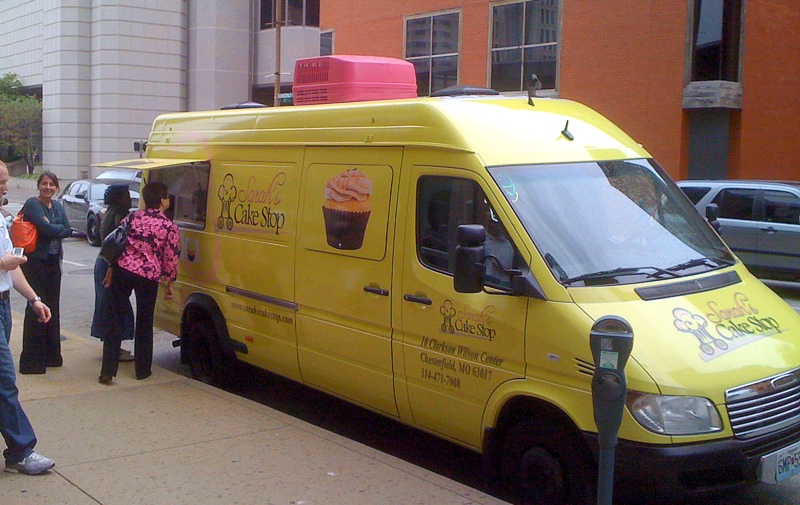 Talk about attractive nuisance! Notice the growing line of docile people above, each of them helpless to resist the temptation of the active ingredient one finds in cupcakes, C12H22O11. Check out the mountain of icing towering over the cupcake pictured on the side of the van. Talk about superstimulus! "Three dollars per cupcake," said the cheerful woman working in the back of the truck. She insisted that her cupcakes were "made with love."
Maybe so, but this is a product that will make a lot of people fat. 65% of Americans are overweight as it is. These cupcake trucks, if allowed to roam freely, would probably kick that percentage up to 95%. We just can't allow that to happen, but how could one stop it?
My first reaction was that these cupcake trucks should be made illegal. But then I took a deep breath and pondered the long-term situation. If we made cupcakes illegal, then people would start selling them in
Talk about attractive nuisance! Notice the growing line of docile people above, each of them helpless to resist the temptation of the active ingredient one finds in cupcakes, C12H22O11. Check out the mountain of icing towering over the cupcake pictured on the side of the van. Talk about superstimulus! "Three dollars per cupcake," said the cheerful woman working in the back of the truck. She insisted that her cupcakes were "made with love."
Maybe so, but this is a product that will make a lot of people fat. 65% of Americans are overweight as it is. These cupcake trucks, if allowed to roam freely, would probably kick that percentage up to 95%. We just can't allow that to happen, but how could one stop it?
My first reaction was that these cupcake trucks should be made illegal. But then I took a deep breath and pondered the long-term situation. If we made cupcakes illegal, then people would start selling them in 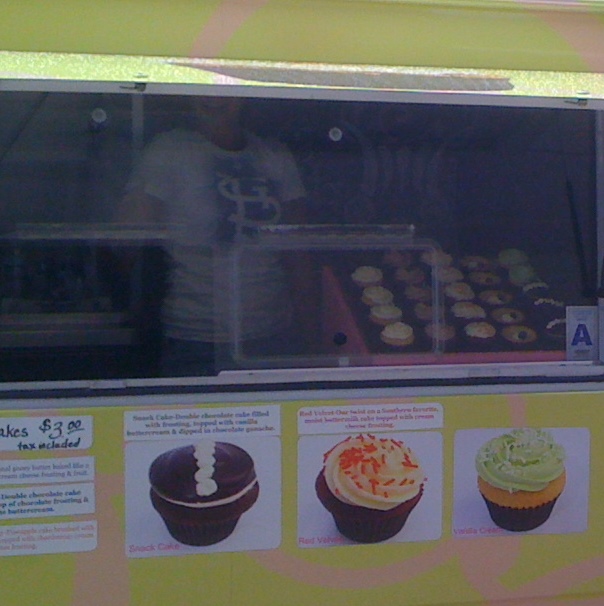 dark alleys, and even in the proximity of schools. And then gangs would spring up to defend their respective turfs in the cupcake street wars. Teenagers would start running cupcakes for the young adult pushers. Police would be chasing cupcake dealers from one end of the city to the other. Families would be broken up as parents were caught dealing in cake. People would be hurt. Some people would die ignominious street deaths, shot to pieces by cupcake gang members bearing AK-47s. Prisons would become crammed even more than they currently are. New social programs would need to be created to deal with the cupcake eating underclass. Some kids would see their schoolwork suffer as they abandoned their homework, their shopping malls and their Wii's and, instead, sat around and obsessed about their next hit of cupcake.
The attempt to enforce new anti-cupcake laws would jack up the cost of the cupcakes, and the quality of the product would diminish--disreputable dealers would cheat customers by putting less icing on top. Innocent obese people would suffer withdrawal symptoms. Cops would increasingly crack down on peddlers, and the local news would feature pallets full of seized cupcakes that would start disappearing as soon as the hit the "safe" confines of the police evidence lockers.
As much as I'd like to put a stop to this new temptation, the best way to deal with these cupcake pushers is public education. We need billboards, Internet ads and television spots informing people that cupcakes do not taste good. We need to educate people that if they see one of these vans along the street, that they need to keep looking straight forward and walk on by, paying no heed to the amoral peddler within.
dark alleys, and even in the proximity of schools. And then gangs would spring up to defend their respective turfs in the cupcake street wars. Teenagers would start running cupcakes for the young adult pushers. Police would be chasing cupcake dealers from one end of the city to the other. Families would be broken up as parents were caught dealing in cake. People would be hurt. Some people would die ignominious street deaths, shot to pieces by cupcake gang members bearing AK-47s. Prisons would become crammed even more than they currently are. New social programs would need to be created to deal with the cupcake eating underclass. Some kids would see their schoolwork suffer as they abandoned their homework, their shopping malls and their Wii's and, instead, sat around and obsessed about their next hit of cupcake.
The attempt to enforce new anti-cupcake laws would jack up the cost of the cupcakes, and the quality of the product would diminish--disreputable dealers would cheat customers by putting less icing on top. Innocent obese people would suffer withdrawal symptoms. Cops would increasingly crack down on peddlers, and the local news would feature pallets full of seized cupcakes that would start disappearing as soon as the hit the "safe" confines of the police evidence lockers.
As much as I'd like to put a stop to this new temptation, the best way to deal with these cupcake pushers is public education. We need billboards, Internet ads and television spots informing people that cupcakes do not taste good. We need to educate people that if they see one of these vans along the street, that they need to keep looking straight forward and walk on by, paying no heed to the amoral peddler within.