The fake food parade
Don't pick on Taco Bell. Or rather, don't pick on only Taco Bell.

Don't pick on Taco Bell. Or rather, don't pick on only Taco Bell.
In this video, you can see the power of two square meters of sunshine. As a child I used to set fire to a piece of paper outside with a small hand held magnifying glass. This sophisticated mirror is several magnitudes more impressive. You might be wondering whether sort of device could be used for cooking. The answer is yes, and these cheap devices can help slow deforestation and desertification. Here is a video demonstration of the cooking power of the sun:
Marcel Dicke is a Dutch insect agricultural specialist. At TED, he made a strong case they need to switch our diets from eating mammals to eating insects.
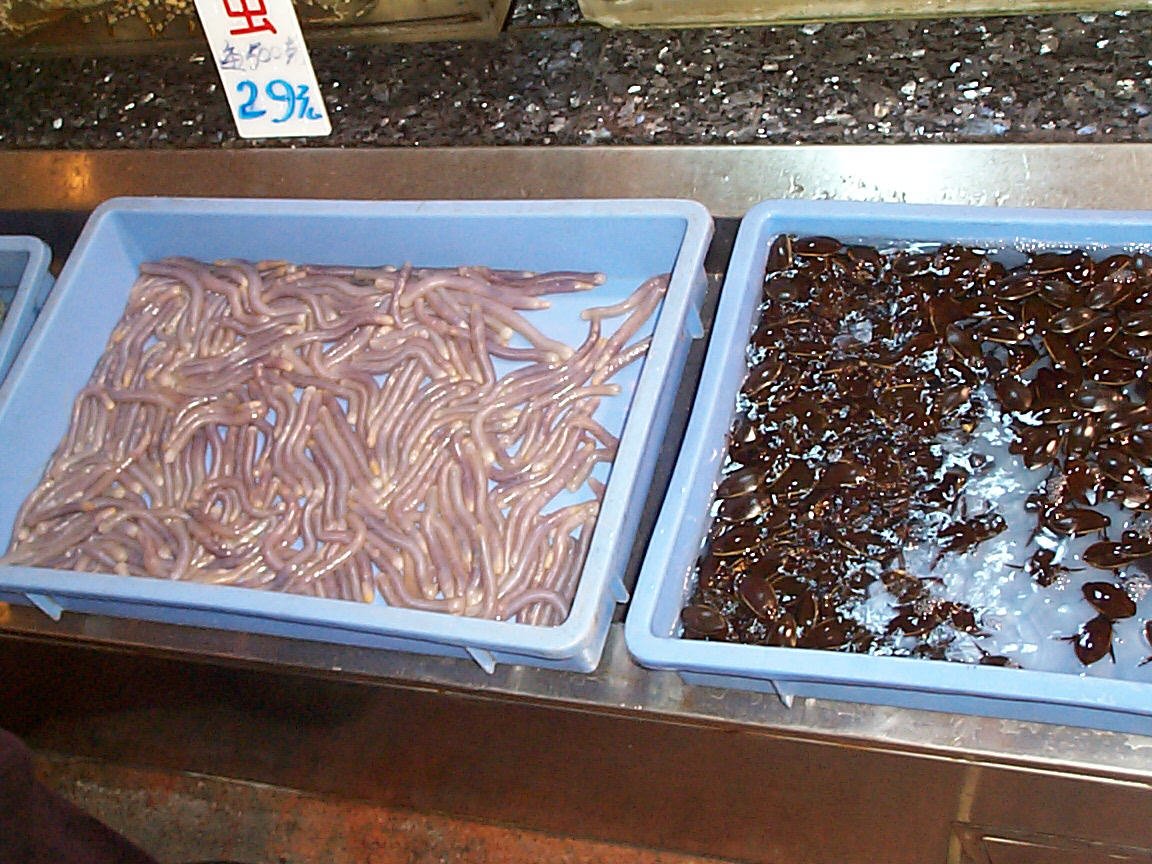 By insects, Dicke is referring to critters with six legs, of which there are 6 million species. 80% of the people of the world currently eat insects (relatively wealthy Western countries being the exception to the rule), and they pick and choose from as many as 1000 species of insects. Dicke referred to fine restaurants in China that allow customers to pick and choose from the bugs they want to eat (I once went to one of these restaurants Guangzhou).
Dicke makes a wide variety of impressive arguments. For instance, we should not get grossed out about eating insects because we already eat lots of insects. On average, each of us already eats 500 g of insects per year--they are ground-up and made part of our peanut butter, tomato soup and other processed foods. Many food dyes are made of insects. There are also pragmatic reasons for switching over to insects. For instance, the Earth's population is rapidly growing, and it is predicted that we will need 70% more food in coming decades, yet there does not seem to be any way to obtain this increase relying on traditional sources of protein. Meat is expensive to produce and, on average, each person on the planet eats 80 kg of meat per year (that's 120 kg per year in the United States). 70% of our land is already used for producing livestock. We have no more land to use for raising food, unless we are willing to destroy even more of our precious dwindling rain forests, and this would give us only an incremental increase in production. The main reason that we should eat insects is that "we will have to." We are already making the move to insect food. Dicke notes that we are increasingly finding insect food products even in developed Western countries.
Insects do not present the danger of recombinant viruses that mammals do. Insects are amazingly efficient at converting food into protein (10 kg of food can be turned at 9 kg of locusts). Further, insects produce far less greenhouse gases and far less waste in general then mammalian livestock. Dicke argues that insects also provide excellent nutrition, and they can be made into a wide variety of foods-- they can be ground into an innocuous looking meal that provides excellent protein. He argues that we already eat a delicacy much like insects when we each shrimp. "The locust is a shrimp of the land." And insects taste good. Many people currently eat insects because they prefer to eat insects.
And check out the specialty foods and pastries that Dicke presents to the audience toward the end of the presentation.
By insects, Dicke is referring to critters with six legs, of which there are 6 million species. 80% of the people of the world currently eat insects (relatively wealthy Western countries being the exception to the rule), and they pick and choose from as many as 1000 species of insects. Dicke referred to fine restaurants in China that allow customers to pick and choose from the bugs they want to eat (I once went to one of these restaurants Guangzhou).
Dicke makes a wide variety of impressive arguments. For instance, we should not get grossed out about eating insects because we already eat lots of insects. On average, each of us already eats 500 g of insects per year--they are ground-up and made part of our peanut butter, tomato soup and other processed foods. Many food dyes are made of insects. There are also pragmatic reasons for switching over to insects. For instance, the Earth's population is rapidly growing, and it is predicted that we will need 70% more food in coming decades, yet there does not seem to be any way to obtain this increase relying on traditional sources of protein. Meat is expensive to produce and, on average, each person on the planet eats 80 kg of meat per year (that's 120 kg per year in the United States). 70% of our land is already used for producing livestock. We have no more land to use for raising food, unless we are willing to destroy even more of our precious dwindling rain forests, and this would give us only an incremental increase in production. The main reason that we should eat insects is that "we will have to." We are already making the move to insect food. Dicke notes that we are increasingly finding insect food products even in developed Western countries.
Insects do not present the danger of recombinant viruses that mammals do. Insects are amazingly efficient at converting food into protein (10 kg of food can be turned at 9 kg of locusts). Further, insects produce far less greenhouse gases and far less waste in general then mammalian livestock. Dicke argues that insects also provide excellent nutrition, and they can be made into a wide variety of foods-- they can be ground into an innocuous looking meal that provides excellent protein. He argues that we already eat a delicacy much like insects when we each shrimp. "The locust is a shrimp of the land." And insects taste good. Many people currently eat insects because they prefer to eat insects.
And check out the specialty foods and pastries that Dicke presents to the audience toward the end of the presentation.
The USDA is funding a smear campaign against the Environmental Working Groups efforts to educate consumers about pesticide-laden fruits and vegetables. As reported by Mother Jones, our federal government is once again siding with well-monied corporate interests and not with the People.
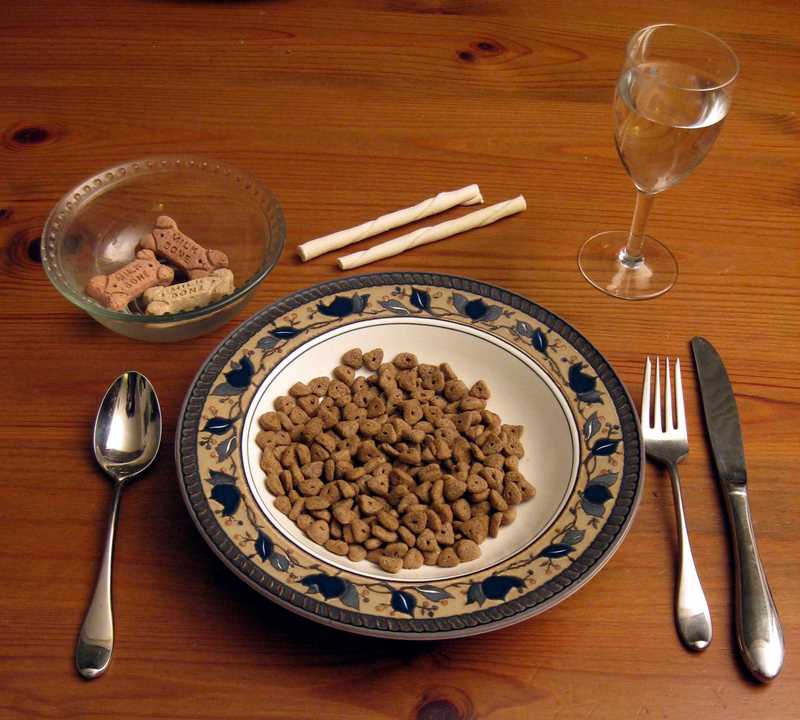
Come on, now. Dog food looks quite delicious, or at least the packaging does. And most dogs I know seem to enjoy reasonably long healthy lives, without requiring anyone to plan their meals or cook them. So how about it? Is anyone ready to switch over to eating dog food, at least occasionally? I suspect that we could get by on a cup of it in the morning and another cup in the evening. Or is eating far to intertwined with being social and being proper? [Disclaimer: I have eaten a piece of dry dog food on several occasions. It tastes like a bland cracker, no matter how "premium" the brand. But it is certainly edible by humans]. I "challenged" readers to switch over to eating dog food in a previous post. It would certainly be convenient, but there was fierce resistance to the idea, even though the morning cereal many of us eat has the same fill-up-the-bowl-and-eat-it procedure. [It shouldn't come as a surprise that humans could survive on dog food. Consider this: "We are not so different when it comes to genes either. The dog genome is basically the human genome divided into about 70 different pieces and rearranged on a greater number of chromosomes, according to a new map of the dog genome."]
I will offer three anecdotes about the social pressures that affect the way we eat: Last night, a woman eating at a table of friends in a diner starting eating her quesadillla with a knife and fork. I embarrassed her more than a bit by asking her whether she'd eat them quesadillas this way at home, in private. She admitted, no. At home, she would simply pick up the pizza-shaped pieces and eat them pizza-style. But at the restaurant she felt compelled to cut them into even smaller pieces with utensils.
Anecdote number Two: A few months ago, I attended a function hosted by a parent at my children's school. Food was offered in a spacious room with a clean dry floor. I was talking with a group of people that included the hostess when the hostess dropped a cracker on the floor. She reached down to pick it up, hesitated, then walked over to a trash can to throw it away. I then asked her whether she would have thrown away that cracker had she been eating alone.
So how about it? Is anyone ready to switch over to eating dog food, at least occasionally? I suspect that we could get by on a cup of it in the morning and another cup in the evening. Or is eating far to intertwined with being social and being proper? [Disclaimer: I have eaten a piece of dry dog food on several occasions. It tastes like a bland cracker, no matter how "premium" the brand. But it is certainly edible by humans]. I "challenged" readers to switch over to eating dog food in a previous post. It would certainly be convenient, but there was fierce resistance to the idea, even though the morning cereal many of us eat has the same fill-up-the-bowl-and-eat-it procedure. [It shouldn't come as a surprise that humans could survive on dog food. Consider this: "We are not so different when it comes to genes either. The dog genome is basically the human genome divided into about 70 different pieces and rearranged on a greater number of chromosomes, according to a new map of the dog genome."]
I will offer three anecdotes about the social pressures that affect the way we eat: Last night, a woman eating at a table of friends in a diner starting eating her quesadillla with a knife and fork. I embarrassed her more than a bit by asking her whether she'd eat them quesadillas this way at home, in private. She admitted, no. At home, she would simply pick up the pizza-shaped pieces and eat them pizza-style. But at the restaurant she felt compelled to cut them into even smaller pieces with utensils.
Anecdote number Two: A few months ago, I attended a function hosted by a parent at my children's school. Food was offered in a spacious room with a clean dry floor. I was talking with a group of people that included the hostess when the hostess dropped a cracker on the floor. She reached down to pick it up, hesitated, then walked over to a trash can to throw it away. I then asked her whether she would have thrown away that cracker had she been eating alone.
 She sheepishly admitted that had she been eating at home and dropped the cracker, she would have picked it up and eaten it. Dropped food often occurs to those of us raising children; parents of young children commonly invoke the "30 second" rule and we eat food that has spilled onto any reasonably clean dry floor. Dropped food triggers zero-tolerance among adults. And God forbid that you would ever try something like this.
Anecdote number Three: I know more than a few attorneys who would rather be found dead than to to be seen eating lunch in low priced restaurant (e.g., a Chinese stir fry restaurant or Taco Bell) in the business district of town on a workday, even though they admit that they often eat this sort of food when with their children and they actually enjoy it.
Thus, our behavior is often not about the food, even when it seems to be. And much of what we do is not really about the thing that it seems to be about. Usually, it's about social relationships and the compulsion to make proper displays to those around us. I suspect that most things that puzzle me about life have similar explanations; it's not about the thing it seems to be about--it's about displaying one's fitness and resources to others. The example that immediately comes to mind is religion. I've previously written about the social compulsions that seem to underlie religious assertions and participation in religious ceremonies.
Well, it's getting late. I think I'll have a bowl of dog food and then turn in.
She sheepishly admitted that had she been eating at home and dropped the cracker, she would have picked it up and eaten it. Dropped food often occurs to those of us raising children; parents of young children commonly invoke the "30 second" rule and we eat food that has spilled onto any reasonably clean dry floor. Dropped food triggers zero-tolerance among adults. And God forbid that you would ever try something like this.
Anecdote number Three: I know more than a few attorneys who would rather be found dead than to to be seen eating lunch in low priced restaurant (e.g., a Chinese stir fry restaurant or Taco Bell) in the business district of town on a workday, even though they admit that they often eat this sort of food when with their children and they actually enjoy it.
Thus, our behavior is often not about the food, even when it seems to be. And much of what we do is not really about the thing that it seems to be about. Usually, it's about social relationships and the compulsion to make proper displays to those around us. I suspect that most things that puzzle me about life have similar explanations; it's not about the thing it seems to be about--it's about displaying one's fitness and resources to others. The example that immediately comes to mind is religion. I've previously written about the social compulsions that seem to underlie religious assertions and participation in religious ceremonies.
Well, it's getting late. I think I'll have a bowl of dog food and then turn in.