About “You”

If you are not aggressively doubting, investigating and fighting for your personal autonomy every hour, you are no longer the author of "your" thoughts. As Soloman Asch warned us, if you aren't pushing back hard against your own people, you will become a mere sock puppet.

For much more, see Robert Malone's new book, PsyWar. I'm half-way thorugh. This summary is by Grok (though I've tweaked it a bit:

* Robert W. Malone MD, MS, an mRNA technology pioneer and physician-scientist, and Jill Glasspool Malone PhD. Psywar delves into the mechanisms of modern psychological warfare, or "PsyWar," which the authors define as government-orchestrated campaigns using propaganda, censorship, and psychological operations (psyops) to manipulate public opinion and behavior.

* The book focuses on how these tactics have been deployed against the American people, drawing from historical contexts to contemporary applications. It argues that PsyWar is a tool for enforcing a "New World Order" through techno-totalitarianism and global control structures. Specifically addressing 5th generation psyops—often tied to fifth-generation warfare—the text explores asymmetric, information-based conflicts that blend psychological manipulation with technology, surveillance, and behavioral control to achieve dominance without traditional military engagement. Malone, known for his critiques of COVID-19 policies and vaccine mandates, frames these as examples of psychological bioterrorism and administrative state overreach.

* Key topics covered include:

* - **Propaganda and Behavioral Control**: Techniques for shaping public perceptions and actions through media and information manipulation.

* - **Psychological Bioterrorism**: The use of fear-based psyops in health crises to enforce compliance.

* - **Deep State Censorship and Surveillance Capitalism**: How government and corporate entities collaborate to monitor and suppress dissent.

* - **Fifth-Generation Warfare**: Non-kinetic strategies emphasizing psyops, cyber elements, and hybrid threats to undermine societies.

* - **PsyWar Tactics and Techno-Totalitarianism**: Modern tools like AI-driven censorship and data exploitation for totalitarian ends.

* - **The New World Order and Global Control**: Visions of centralized power structures enabled by these warfare methods.

* The authors emphasize the critical role of free speech in countering these threats, advocating for a return to constitutional principles to resist totalitarian creep and restore personal sovereignty. The book has been discussed in podcasts and reviews as a call to action against perceived government psyops, particularly in the context of recent global events.

Continue ReadingAbout “You”

Whitney Webb: What to Do About the Puppetmaster

Whitney Webb argues that the general public is unaware of the power structure of oligarch networks and their connection to the national security state. She argues that the CIA, created by Wall Street bankers with ties to organized crime, has historically served corporate interests. She calls for individuals to disengage from big tech companies, which are heavily interconnected with intelligence agencies and have unsavory associations. She advocates for independence from these systems to avoid being controlled by them, emphasizing the need for personal responsibility and action rather than relying on the political system. Transcript of Whitney Webb:

What I attempt to do. I mean, basically, at the end of the day, this into these entities and this power structure had been successful because people have not really been aware of what, what's been going on, and how interconnected a lot of these oligarch networks ultimately are, and how connected they are to our national security state. Because a lot of people, you know, if we're just talking about, back to my point earlier, talking about Mossad, talking about the CIA, who does the CIA work for? Who does Mossad work for?

In the case of the CIA, it's very clear that it was created by Wall Street bankers who entered into questionable alliances with organized crime, and bankers and organized crime are both ultimately interested in expanding their their rackets and is making as much money as possible. And so eventually you have certain economic networks and court you know, the this, these, these alliances dominated what is now corporate America, the multinational corporation that's who the CIA has throughout most of its history, conducted coups on behalf of so we have to go a level up if we really want to know what's going on and Look beyond CIA and Mossad and see, you know, who's really, at least at the scale up a key part of the power structure that's really running the show, because, you know, it's important for them that the public doesn't really look that high up, because then it just seems like We can't really do anything about it, but I think people ultimately can.

What I've argued a lot for a long time is that people need to try and extricate themselves from the biggest iteration of what this mob is today, which is really big tech, which is, again, connected to a lot of it. Connect a lot of these CEOs connected to figures like Epstein or other questionable associations, and also almost all of the big Silicon Valley companies today have their have origins or funding tied to the CIA or to DARPA or to entities like that and that.

We should boycott them as much as possible, and not use their services as much as possible, and not be dependent on these entities. Because if we're dependent then, you know, they can do whatever they want to us. Yeah, and so you know the best way to not give up is to work to be as independent of those systems as possible. Because if we're dependent on them you're basically a slave to these people at the end of the day, which is what I think most Americans do not want.

There's a lot of efforts being made to sort of keep people in in the box of where they think, Oh, well, if I vote for this party or this politician and this candidate, I don't have to do anything to ensure my independence from the system. I can remain dependent on the system and hope that politician XYZ will magically, you know, save the day and fix the country and, you know, ends this ruling power of 80 plus years of, you know, intelligence and organized crime. Yeah, I think it's really something that has to be sort of done on an individual level, and people need to take individual responsibility if they don't want to be part of the system, particularly as we move into this increasingly digital future that these very small handful of companies are going to completely control.

In sum, here is what we can do:

  • Boycott and avoid using services from big tech companies that have ties to the CIA and DARPA.
  • Encourage others to become more independent from the current power structure and not be dependent on the system.
  • Raise awareness about the interconnected nature of oligarch networks, intelligence agencies, and multinational corporations.
Who is Whitney Webb?  According to Grok:

[More . . . ]

Continue ReadingWhitney Webb: What to Do About the Puppetmaster

Matt Taibbi and Walter Kirn Discuss Losing Friends in our Balkanized World

I've been listening to the four-part series of conversations wherein Matt Taibbi and Walter Kirn discuss the novel 1984. In Part III, they discuss the horrific social balkanization of the modern day U.S. I transcribed it below:

Re: The Orwellian Future.

Walter Kirn:

And if you're not all educated in this program at once, you're going to fall out with each other?

Matt Taibbi

Yeah, and that's already happened. I mean, I think we, probably a lot of people who listen to this program, have had the identical experience of suddenly becoming distanced and cut off from people who with whom they were close pretty recently, right? And there's this, you know, for me that a there's an Invasion of the Body Snatchers quality to this, where I'm suddenly kind of hiding my thoughts, or either that, or I just feel, you know, increasingly alone sometimes. And I think this is a widespread phenomenon, but what I worry about is, is, is that it's going to disappear, because they're going to get better at this stuff. I mean, the less you know we're we're grounded in history and time, and realize that there are different. There's a whole range of opinions and feelings and things like that, the easier it becomes to smash

Walter Kirn

You don't want to be the control group, the people who aren't taking the drug when everybody else is taking The drug, especially if the drug for them feels urgent, necessary and perfect, and they have committed to it such that even if it has terrible side effects, they're going to keep taking it. All you will do if you don't and maybe thrive is enrage them about the choice they made and now regret and or you just become inexplicable to them. You know, why is Matt? Why is Matt repeating those conspiracy theories? What's wrong with Matt? What foreign government? What happened, you man? What malign entity has gotten a hold of him who's paying him to say these things? Exactly what happened to you? I mean, both you and I have experienced, just recently, a real upsurge in what they call concern trolling, which is, you know, I'm really worried about you, or you used to be cool. Yesterday, I saw a tweet against me, which said, Is this tweet evidence of mania or an untreated stroke, literally physicalizing it, you know, Walter, I think you need to go see a neurologist for your for your tweets. And that causes me to want to withdraw from those people, to want to withdraw from the people who know those people, and it causes them to fear that maybe there's some contagion they might get from me, or they might get punished for knowing me. They don't want to be seen. And as I say, the rate at which this process goes forth, which will be different for everyone and for every group, is going to cause new kinds of rifts we're used to. We're used to balkanization, traditionally, historically, over race, ethnicity, gender, language, religion and so on. But we're now going to face balkanization over submission levels of information.

Matt Taibbi

Yeah, Yep, absolutely. And you know, my cure for this, ironically, you know, has been spend less time on the internet, read more, you know, and that's one of the reasons I think we do this. This the show.

Walter Kirn:

And why should let's and mine too. And why should reading be, why should reading be a remedy for for this kind of cognitive balkanization, I'll call it, because by reading, you go back to a book, especially books that were written at least a few decades ago or more. You go back and you are able to be with peers in a way you're able to feel a sense of community, an intellectual community, that you can't get now. In other words, it's a less fractured existence, a less fractured reality. You. Uh, because the book has created its own in a way, community of minds. And there are commentaries on the book and and it was also written at a time when this balkanization was less advanced, and you do really find refuge,

Matt Taibbi

You do. And I mean, I remember this, when I was a kid, the the feeling, you know, if you if you're one of those kids, like I was, who, you know, had trouble at school, wasn't popular, like, if you were bullied, if you were any of those folks,

Walter Kirn

You're so big, how did they bully? Well, I wasn't big until

Matt Taibbi

A certain point, and then, yeah, then it became a, anyway,

Walter Kirn

Puny ass bitches, yeah.

Matt Taibbi

But, you know, I had a hard time when I was a kid for a variety of reasons, and, and, and I remember having this thought that, wow, like, you know, there are these people who are long dead, who I seem to have be closer to than anybody that I meet all the time, you know, in my regular daily life and but also, what's important about books is, is that it forces your mind to do things that In a society that is sort of anti thought. Those muscles are kind of turned off, right? You have to construct images. You have to feel other people's feelings. You have to do all these things that doesn't do it for you. It doesn't show it to you. And you know, the weaker that muscle gets in your head, the easier it is to kind of stamp out your individuality, and books force you to get back in shape spiritually a little bit, and they do. And so it's, it's a beautiful thing, still, but,

Walter Kirn

But also for a book to work except for, except for radical experimental books that are, you know, determined to be incoherent and jagged and, you know, internally contradictory. But for most books to work, they have to present an internally coherent universe. Okay? And it's just like going on vacation to immerse yourself in a coherent universe, even if it's a nightmare like 1984 because the much worse nightmare than being in a coherent airstrip one Oceania, World of 1984 of nightmarish political oppression is to live in a world of absolutely splintered, uncertain and unstable, endless surprise, contradiction and disappointment and in, you know, and social,

Matt Taibbi

Incompatible, paradox, all those things, yeah, absolutely.

Walter Kirn

It's like going to a small town 1984 you know, it may be the most nightmarish small town ever built by man's mind, but at least you feel, after you started reading it, that you know how it works and what its rules are and who the people are, and little of what to expect.

Matt Taibbi

Absolutely, absolutely. Yeah. So nightmarish as this is, it's still, it's it's still a respite in some ways, so but horrifying part of the book still relevant anyway, thank you, Walter.

Steve Kirsch and Bret Weinstein have also spoken of the substantial social costs one incurs by being true to one's self in a time when many people delegate fact-finding to their favorite tribe


Continue ReadingMatt Taibbi and Walter Kirn Discuss Losing Friends in our Balkanized World

Must Watch Documentary on COVID Vaccine Adverse Reactions and their Cover-Up: “Follow the Silenced.”

I just finished watching the new documentary, "Follow the Silenced," an allusion to thousands of Americans who were vaccine-injured. I'm irate at the fraud committed by public health officials, legacy media and pharma. Anyone who thinks that our COVID response was anything less than detestable should watch this video. You might have it in your mind that these entities were trying to act in good faith in a difficult set of circumstances.

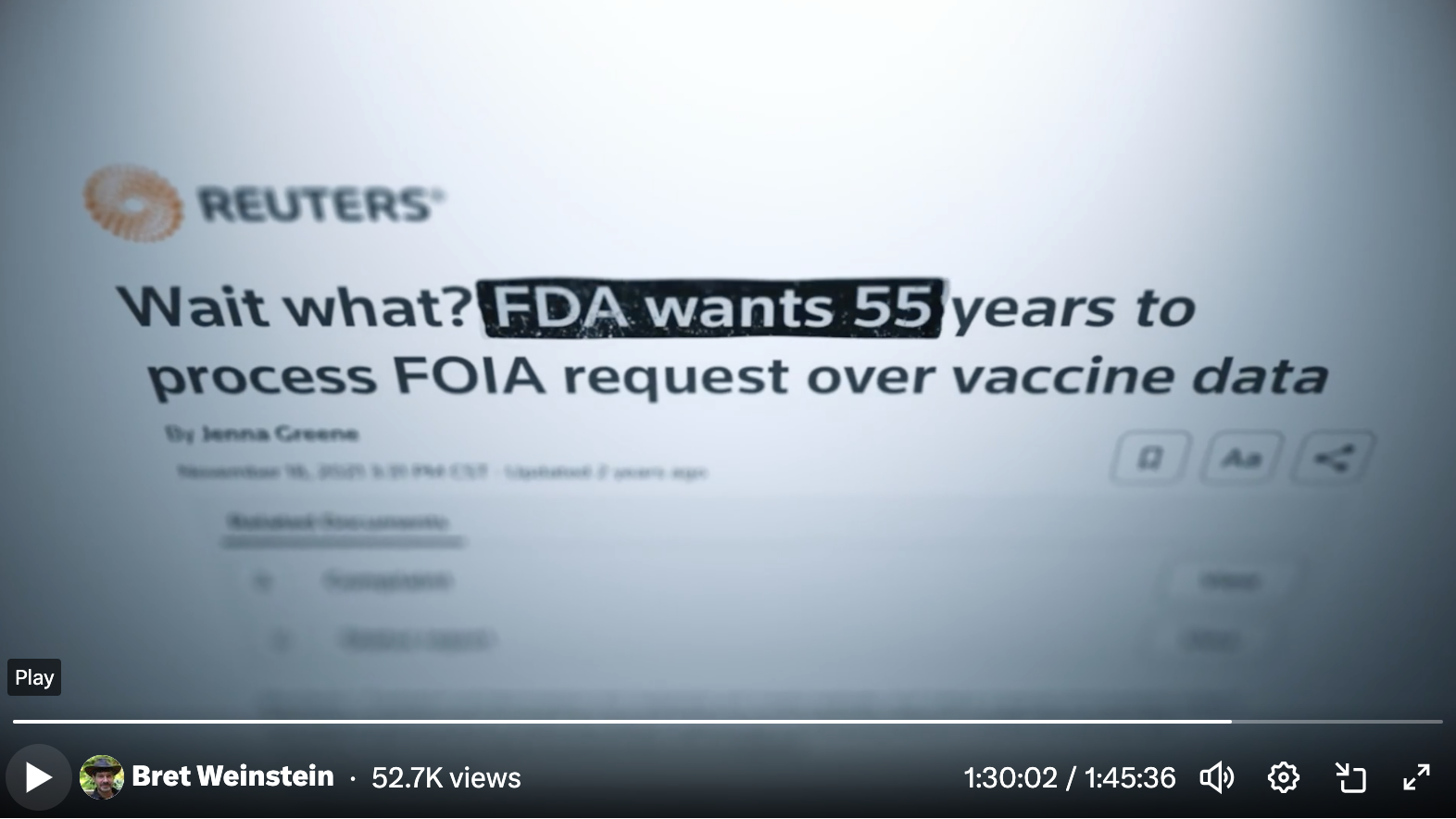
Bullshit. Why were the % of adverse reactions rigged downward by claiming that a person is not considered vaccinated until WEEKS after the first shot, even though many of the severe injuries were manifest immediately? Watching this documentary, you'll learn that doctors were discouraged from reporting side effects to VAERS. You'll learn that people who suffered severe injuries were ignored. They were told by doctors and public health that they were merely anxious and that they had no injuries even though they were bed-ridden. You'll see the actual numbers that constituted a safety signal while, at the same time, public health official and politicians were telling us to keep pumping these dangerous products into our arms. Like I did. Three times. Without informed consent. Here is the documentary's indictment: in summary form, along with some screenshots from the documentary:

Suppression of Vaccine Injury Stories: Public health authorities, pharmaceutical companies, and the government systematically silenced and censored individuals who experienced severe adverse reactions to COVID-19 vaccines. Victims, such as Brianne Dressen and Ernest Ramirez Sr., were ignored when attempting to share their experiences, pointing to a broader effort to conceal the scope of vaccine injuries.

Illegal Censorship Campaign: The federal government, in collaboration with Stanford University and social media companies, engaged in an illegal censorship campaign that violated the First Amendment rights of vaccine injury victims. This effort allegedly aimed to suppress narratives that questioned the safety of COVID-19 vaccines. For instance, FB shut down numerous groups of organically organized vaccine-injured people.

Abandonment by the Medical Establishment: The medical establishment abandoned vaccine-injured individuals, leaving them without proper care or acknowledgment. Victims were dismissed or neglected by healthcare systems after experiencing life-altering adverse effects.

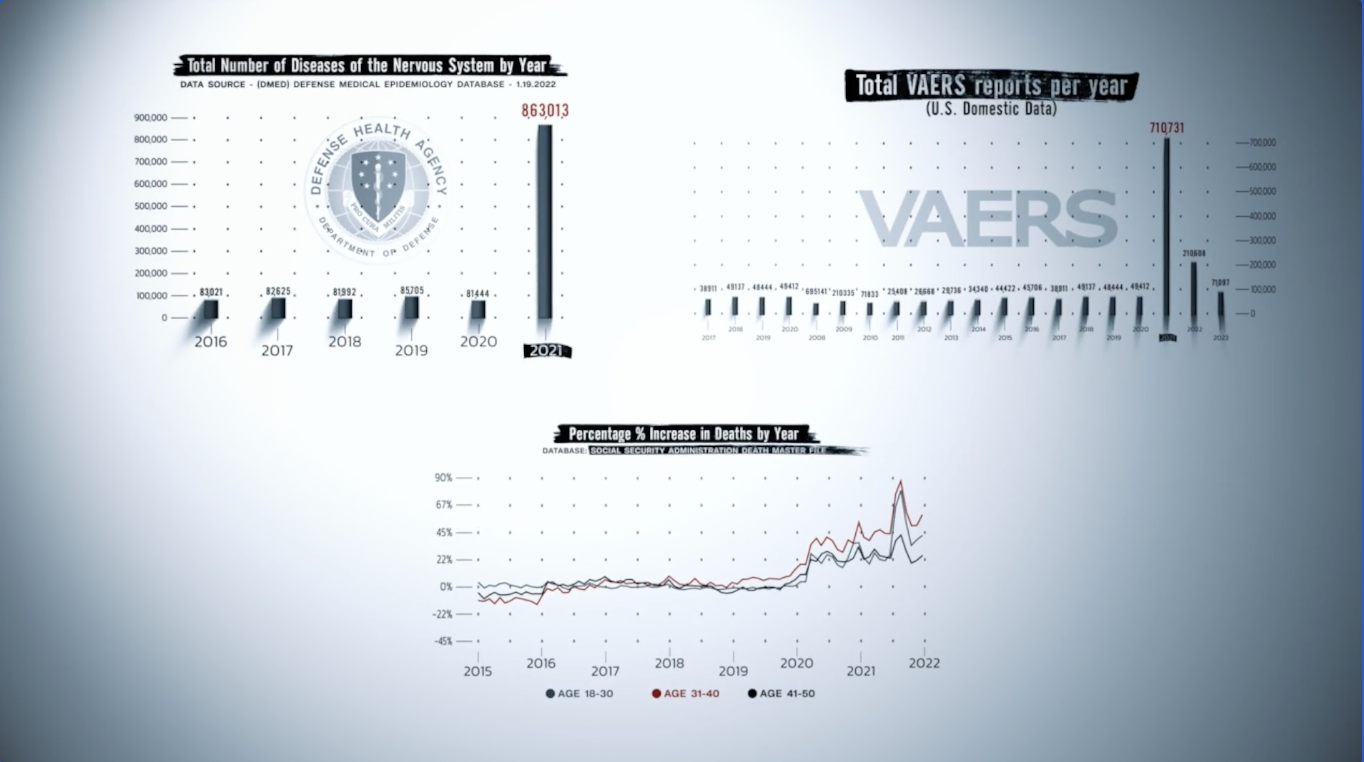
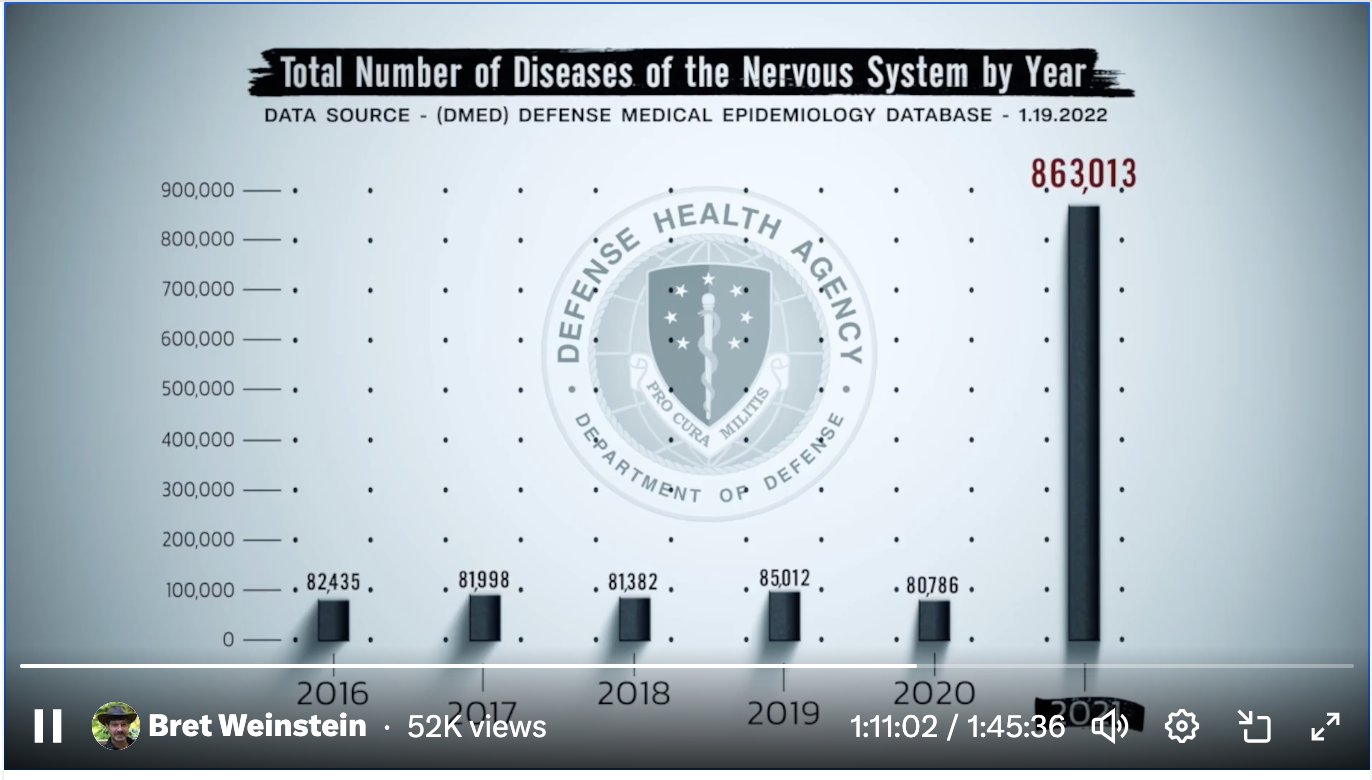
Cover-Up of Adverse Effects Data: Consider the Defense Medical Database (DMED), where an alleged 1100% increase in neurological diseases among service members was observed in the year following the introduction of COVID-19 vaccines. The Department of Defense shut down access to this data to obscure these findings, a deliberate cover-up. Pfizer's own data (that it attempted to hide) showed 26,000 cases of nervous system disorders in its clinical trials. 24 Hours after Senator Ron Johnson told the Biden WH to preserve DIMED data (that indicated that the vaccines were dangerous) the system went down and then reappeared with doctored data.

Media Complicity in Misinformation: The news media betrayed public trust by aligning with pharmaceutical and government narratives, failing to investigate or report on vaccine injury cases, and contributing to the marginalization of affected individuals. These accusations frame a narrative of systemic misconduct, lack of transparency, and disregard for those harmed by vaccines.

You are invited to view "Follow the Silenced," without charge, here:

Continue ReadingMust Watch Documentary on COVID Vaccine Adverse Reactions and their Cover-Up: “Follow the Silenced.”

Mike Benz Explains “Whole of Society” Censorship

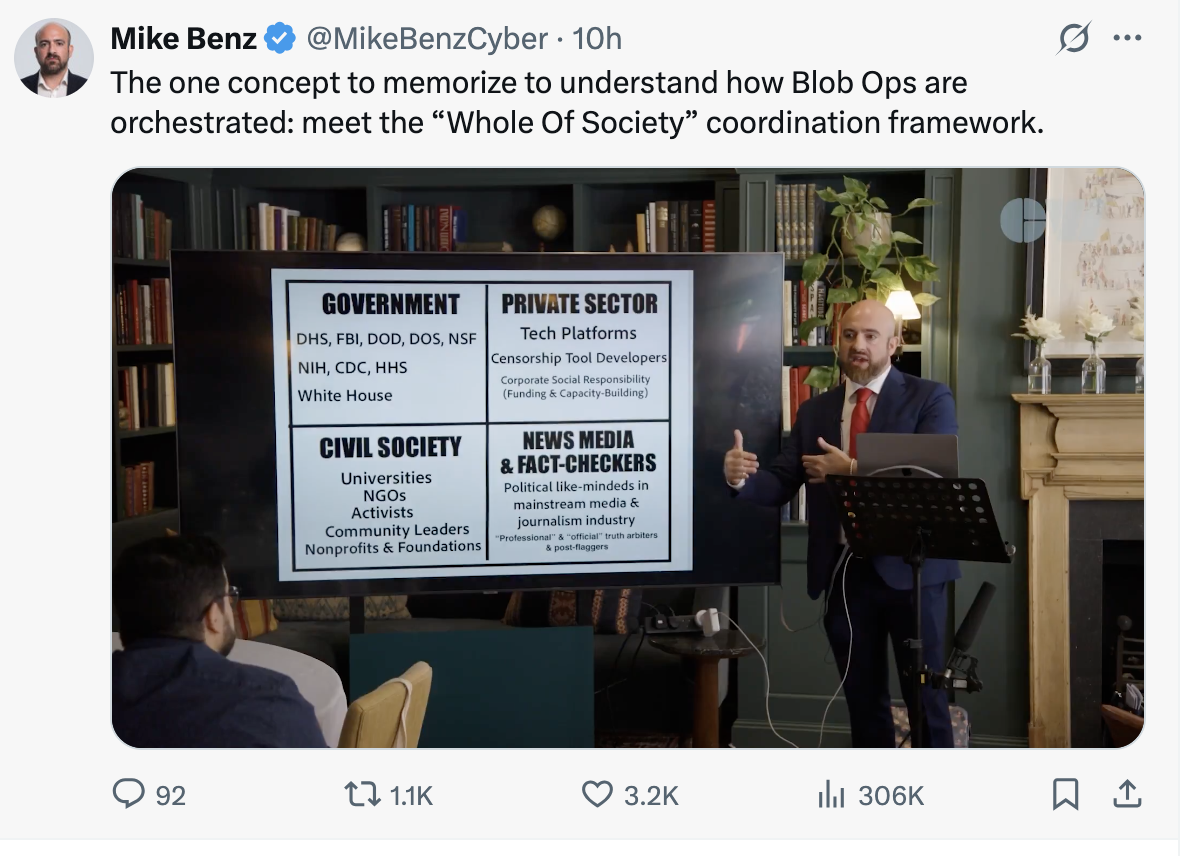
Excellent presentation by Mike Benz. Topic is "Whole of Society" Censorship.

To Supplement, I asked Grok to summarize "Whole of Society" Censorship. Here is Grok's answer:

The "whole of society" censorship approach refers to a coordinated effort involving government, private sector, academia, media, and civil society to control information and suppress certain narratives. It’s characterized by:

* Collaboration Across Sectors: Governments partner with tech companies, universities, NGOs, and media to monitor and restrict content deemed harmful or misleading, often bypassing legal constraints through informal agreements.

* Preemptive Narrative Control: Instead of just reacting to content, this approach shapes narratives proactively, promoting approved messages while marginalizing dissent through algorithms, fact-checking networks, and deplatforming.

* Broad Scope: It targets not only explicit misinformation but also "malinformation" (true information presented in ways that challenge official narratives), affecting political discourse, science, and public health.

* Examples: Documents like the Twitter Files revealed U.S. government agencies working with social media platforms to flag or remove content. The 2021 Stanford Virality Project, involving academics and tech firms, monitored vaccine-related content to counter skepticism. * Mechanisms: Include content moderation, shadowbanning, account suspensions, and funding "trusted" sources to dominate information ecosystems.

Critics argue it stifles free speech and centralizes narrative control, while proponents claim it’s necessary to combat disinformation at scale. The term gained traction in discussions about COVID-19 policy enforcement and election-related content moderation.

Continue ReadingMike Benz Explains “Whole of Society” Censorship