
Heterodox Academy Celebrates its Five Year Birthday

Earlier this evening, I attended the five year celebration of Heterodox Academy (HxA). The lineup of illustrious speakers included:

  • Jonathan Haidt (Psychologist and Professor of Ethical Leadership at New York University Stern School of Business)
  • Jeffrey Sachs (Political Scientist at Acadia University)
  • Randall Kennedy (Harvard Law Professor)
  • Nadine Strossen (Former President of the ACLU)
  • Nicholas Christakis (Sociologist and Professor at Yale)

What is HxA's main concern?

We see the following threats to Open Inquiry within the academy today:

Across the political spectrum, we see protest and backlash against scholars that threaten a preferred narrative.

Expanding bureaucracies at many colleges and universities subject ever more of campus life to administrative oversight — and encourage people to resolve disputes through reporting, investigations, and academic reprisals rather than good-faith debate and discussion.

Concerns about placating donors, ensuring high enrollments or positive course evaluations can distort research and pedagogy — especially for the growing numbers of contingent faculty whose careers and livelihoods can be threatened by a single upset student, donor or colleague. Contingent faculty are statistically more likely to be women, people of color, and other equity seeking groups whose numbers are underrepresented in tenure track positions.

Many fear losing the esteem of, or being ostracized by, one’s peers for saying the “wrong” thing. Even in the absence of formal sanctions, social and professional isolation can make academic life difficult — and many prefer to self-censor rather than risk it. This is a significant concern among students, faculty, and administrators: our 2019 Campus Expression Survey found that roughly half of students, regardless of their political ideology, agreed that the climate on their campus prevents people from saying things because others may find them offensive.

What does HXA propose as a solution to this problem?

To improve the quality of research and education in universities by increasing open inquiry, viewpoint diversity, and constructive disagreement.  We aspire to create college classrooms and campuses that welcome diverse people with diverse viewpoints and that equip learners with the habits of heart and mind to engage that diversity in open inquiry and constructive disagreement.

We see an academy eager to welcome professors, students, and speakers who approach problems and questions from different points of view, explicitly valuing the role such diversity plays in advancing the pursuit of knowledge, discovery, growth, innovation, and the exposure of falsehoods.

Heterodox Academy (HxA) is a nonpartisan collaborative of thousands of professors, administrators, and students committed to enhancing the quality of research and education by promoting open inquiry, viewpoint diversity, and constructive disagreement in institutions of higher learning. All of our members embrace a set of norms and values, which we call “The HxA Way.”

All of HxA's members embrace the following statement:

I support open inquiry, viewpoint diversity, and constructive disagreement in research and education.

HXA proposes the "HxA Way" as the best way to support open inquiry. The four elements of the HxA Way are:

  1. Make your case with evidence.
  2. Be intellectually charitable.
  3. Be intellectually humble.
  4. Be constructive.
  5. Be yourself.

Who would have ever thought we would need an organization to help us learn how to talk to each other on important issues at colleges and universities?  Well, we do.  That's why I joined HxA tonight in my capacity as a law professor.  I'm looking forward to getting increasingly involved in all the HxA does.

Note: There is some overlap in the concerns and missions of HxA and FIRE (Foundation for Individual Rights in Education). If you support one of these organizations, you will probably also support the mission of the other.
Continue ReadingHeterodox Academy Celebrates its Five Year Birthday

Helen Pluckrose Discusses the Need to Push Back Against Critical Social Justice Activism (Woke-ness)

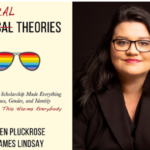
Earlier this year, British author Helen Pluckrose, also the Editor-in-Chief of Areo Magazine, co-authored a new book, Cynical Threories, with James Lindsay, who is the creator of the anti-woke website New Discourses.  The long title to their book is also their compact thesis: Cynical Theories: How Activist Scholarship Made Everything about Race, Gender, and Identity―and Why This Harms Everybody.  

Pluckrose was recently interviewed by Jason Hill of Quillette. The topic was the brand of postmodernism embraced by modern Critical Social Justice activists. In recent years CSJ's version of postmodernism has been increasingly employed as a political strategy by the Woke Left.  What is "postmodernism"?  Pluckrose offers these four characteristics:

  1. Objective knowledge is inaccessible and what we consider knowledge is actually just a cultural construct that operates in the service of power.
  2. Dominant groups in society—wealthy, white, heterosexual, western men—get to decide what is and isn’t legitimate knowledge and this becomes dominant discourses which are then accepted by the general population who perpetuate oppressive power dynamics like white supremacy, patriarchy, imperialism, heteronormativity, cisnormativity, ableism, and fatphobia.
  3. The critical theorists exist to deconstruct these discourses and make their oppressive nature visible. This results in the breakdown of boundaries and categories through which we understand things like emotion and reason, fact and fiction, male and female.
  4. [Critical theorists] also produce a profound cultural relativism and a neurotic focus on language and language policing as well as a rejection of individuality and humanism in favor of identity politics. This is a problem because of the resulting threats to freedom of belief and speech, the divisive tribalism and the rejection of science, reason and liberalism.

Hill asked Pluckrose why it was necessary for Lindsay and Pluckrose to write Cynical Theories at this time? Pluckrose offered this response:

Continue ReadingHelen Pluckrose Discusses the Need to Push Back Against Critical Social Justice Activism (Woke-ness)

Douglas Murray’s Message for College Students

At New Discourses, Calum Anderson notes that Douglas Murray is offering important ideas for our moment in time using incidents from several recent colleges to illustrate. The article is titled, "Why University Students Need to Listen to Douglas Murray." An excerpt:

As is the case with all truly interesting people, the least interesting thing about Douglas Murray is his sexuality. He has been a steadfast voice of reason during an age of unreason, and a formidable opponent of the woke activists who presume to speak of his behalf as an openly gay man . . . Murray specifically chastises employees at Penguin Random House for their attempt to prevent their employer from publishing Jordan Peterson’s upcoming book Beyond Order: 12 More Rules for Life. He calls the inability to listen to contrary points of view a “generational phenomenon” which has been adopted by children who believe that “speech is harm, and harm is not harm, that silence is violence and that violence is fine.” Murray was addressing my generation, and despite what may be regarded as a sweeping generalization I am not the least bit offended. Not every twenty-something thinks this way, but the most vocal among us do and that is a serious problem: “the best lack all conviction while the worst are full of passionate intensity” (Yeats).

Continue ReadingDouglas Murray’s Message for College Students

A Detailed Case-Study in Theatrical Woke Defiance at Haverford College

In "Race and Social Panic at Haverford: A Case Study in Educational Dysfunction," Quillette's Jonathan Kay gives a detailed account of how Woke-permeated campus-wide insanity can be triggered by nothing in particular. Kay makes a strong case that Haverford College, a private and expensive far-left-leaning liberal arts institution, self-spiraled into moral panic in a way that brings to mind the meltdown of Evergreen State, a story told and experienced by evolutionary psychology professors Brett Weinstein and Heather Heying.  See also, Weinstein's discussion of Evergreen with his brother, Podcaster Eric Weinstein ("The Portal").

The self-annointed thought police are still working overtime at Haverford, where free-speech is merely a phrase and where tribal truths are the reality.  I could not imagine sending any student to Haverford if they wanted to learn how to think self-critically and be prepared to hold a job in the outside world.

Jonathan Kay's long article leaves a pit in my stomach and casts a pall over my evening as I write this comment. He needed to fill his article with an extraordinary amount of details in order to substantiate his extraordinary conclusions, including the following:  A) Nothing insensitive or racist occurred at Haverford College leading up to the current shrill unrest. B) Nothing that happened at Haverford justified the long ridiculous list of student demands (to which the administration mostly acceded).  C) Most chillingly, the administrators of Haverford (and many other colleges) lack the the necessary resources to have meaningful conversations with students or to take respectable negotiating positions during these Woke-fueled paroxysms.

A few excerpts from Jonathan Kay's excellent article:

[T]he mania that swept Haverford College in late October and early November 2020 lays bare, with unusual clarity, the fervid atmosphere of grievance and self-entitlement that has made the administration of elite colleges and universities so difficult.

Of all the Haverford community members I spoke with, the only one who asked to be quoted by name was recently graduated philosophy major Alex Gutierrez, who once summarized the mindset of campus activists in an essay about Jacques Lacan. “Modern activists have psyches that are built for the joy of transgression,” he observed. “They engage in activism so they can repeatedly experience that joy, a joy that is denied them in everyday life because everyday life is dominated by the ethics of pleasure… And so they need to invent fictional dominant orders so that they can defy them. This is why protesters would actually be extremely unhappy if oppression went away. They want white patriarchy to be as powerful as possible, so they can defy it.”

Gutierrez wrote these words before his alma mater fell into upheaval in late October. But his analysis seems apt. When students complained that Raymond had caused them “harm” with her October 28th email, they weren’t really speaking up as activists denouncing racism on campus (since there doesn’t seem to be much of it), but as consumers whose parents paid good money for them to experience the sensation of transgressive social-justice heroism. “Normally, the administrators are the perfect target for student transgression,” Gutierrez told me. “They take the abuse and they’re not supposed to push back. That’s part of their role. That’s what students expect.”

Continue ReadingA Detailed Case-Study in Theatrical Woke Defiance at Haverford College

John McWorter Draws a Line in the Sand When Ibram X. Kendi Publicly Labels his Ideas “Racist.”

One of the things I find most disturbing about "anti-racists" is their demand that you must either agree to everything they say or else you are a "racist." Popular authors Ibram X. Kendi and Robin DiAngelo claim that if you are not an "anti-racist" you are a racist. There are only two options. Thus speak the anti-racists.  This false dilemma, this unjustified dichotomy, is just "because."

"Anti-racism" is not the opposite of racism, despite the misleading nomenclature. It is virulent new form of racism. To pull off this minor miracle of creativity, the "anti-racists" have invoked a new expansive definition of "racism" that has nothing to do with specific unfair attitudes or behavior of specific people. The "anti-racists" invoke a Manichean claim that it is OK to judge people as good and bad (respectively Blacks and whites) based on immutable physical appearance, just because. In doing this, they are dusting off that old disreputable idea that melanin should serve as a guilt barometer. This is something they have in common with racists of the Civil War and Jim Crow eras, although the new barometer is upside-down.

This "anti-racist" formula has worked all too well for the past several years. Well-meaning people who fervently disagree with this "anti-racist" claim, however, including the specific claim that "all white people are racist," are being held emotional hostage. They are afraid to speak up, to disagree in public places. It is truly bizarre to see so many people who disagree with these "anti-racist" claims who are afraid to speak up. I know this from numerous private conversations. It's starting to look like many religions, where the preachers preach at the flock and members of the flock merely nod their heads, even thought they know in every bone of their bodies that the Earth is not 6,000 years old, that virgins don't have babies and that (an example from my Catholic upbringing) eating the host is not literally eating bloody muscles and capillaries. Members of the flock sat in total silence when the NYT promoted claims that the American Revolution was primarily for the purpose of promoting slavery, a central claim of "The 1619 Project."

So this is where we are: the preachers are preaching and members of the flock keep sitting silently because they are afraid of going to "anti-racist" hell. For them, hell is what would happen is they were publicly called "racist."  Thus, members of the flock will sit in paralyzed silence, even when the anti-racists call all "white" people and their Black intellectual allies "racist" no matter how exemplary their lives have been. Isn't that weird? "White" people are already being called racists as a group merely by their skin color, yet they fear being called "racist" as individuals. And what drives this fear is, ironically, that they hate racism. This is stranger than any fiction any creative writer could concoct. These "anti-racist" threats of name-calling are successfully turning many people into Zombies (this reminds me of how many types of wasps sting and zombify other bugs to use as hatcheries). After getting stung by the threat of being called "racists," the fearful zombified flock is willing to sit in silence even when the "anti-racists" make patently false claims that no racial progress has occurred since 1619, since the Civil War or since the Civil Rights era.  They sit in silence while the "anti-racists" ridicule Martin Luther King's idea that we should not be judged by the color of our skin, but only by the content of character.

Once this creepy dynamic settled into place, anti-racists, such as Ibram X. Kendi and Robin DiAngelo, began getting free rides from individuals who knew better but who were afraid to speak out. More troublesome, the anti-racists' fact-free and oftentimes false diatribes also began getting luxury free rides from corporate HR departments, government agencies (and here) and many members of our sense-making institutions, including left-leaning legacy media. In addition to securing the silence of people who disagree under threat of being called names, the "anti-racists" employ another big weapon: the rage of Woke mobs who are willing to destroy the careers of anyone who dares to dissent (recent example).

Linguist John McWhorter has not been afraid to call out the anti-racists.  He has done this in many places, including his article in The Atlantic,  "The Dehumanizing Condescension of White Fragility: The popular book aims to combat racism but talks down to Black people." McWorther, a professor of linguistics, has taken a lot of flack from the far left for repeatedly calling out that the Emperor Has No Clothes.

McWhorter had more than his fill, however, when Ibram X. Kendi recently and publicly called McWhorter's ideas "racist."  Kendi has made dozens of claims that should be vigorously scrutinized by academics, book reviewers and the general public, but he has been surfing on the waves of fearful silence. That silence meant that the normally unflappable McWhorter had to fend for himself.  He decided it was time to push back dramatically, in a public way. Hence these excerpts from the November 23, 2020 episode of The Glenn Show with Glenn Loury:

Continue ReadingJohn McWorter Draws a Line in the Sand When Ibram X. Kendi Publicly Labels his Ideas “Racist.”