If I heard anyone saying these things three years ago, I would have thought that person needed help for a mental condition. Based on many things I've read and seen in the past three years, however, I am gravely concerned that Michael Shellenberger is not overstating the problems we face:
Around the world, politicians have either just passed or are on the cusp of passing sweeping new laws, which would allow governments to censor ordinary citizens on social media and other Internet platforms.
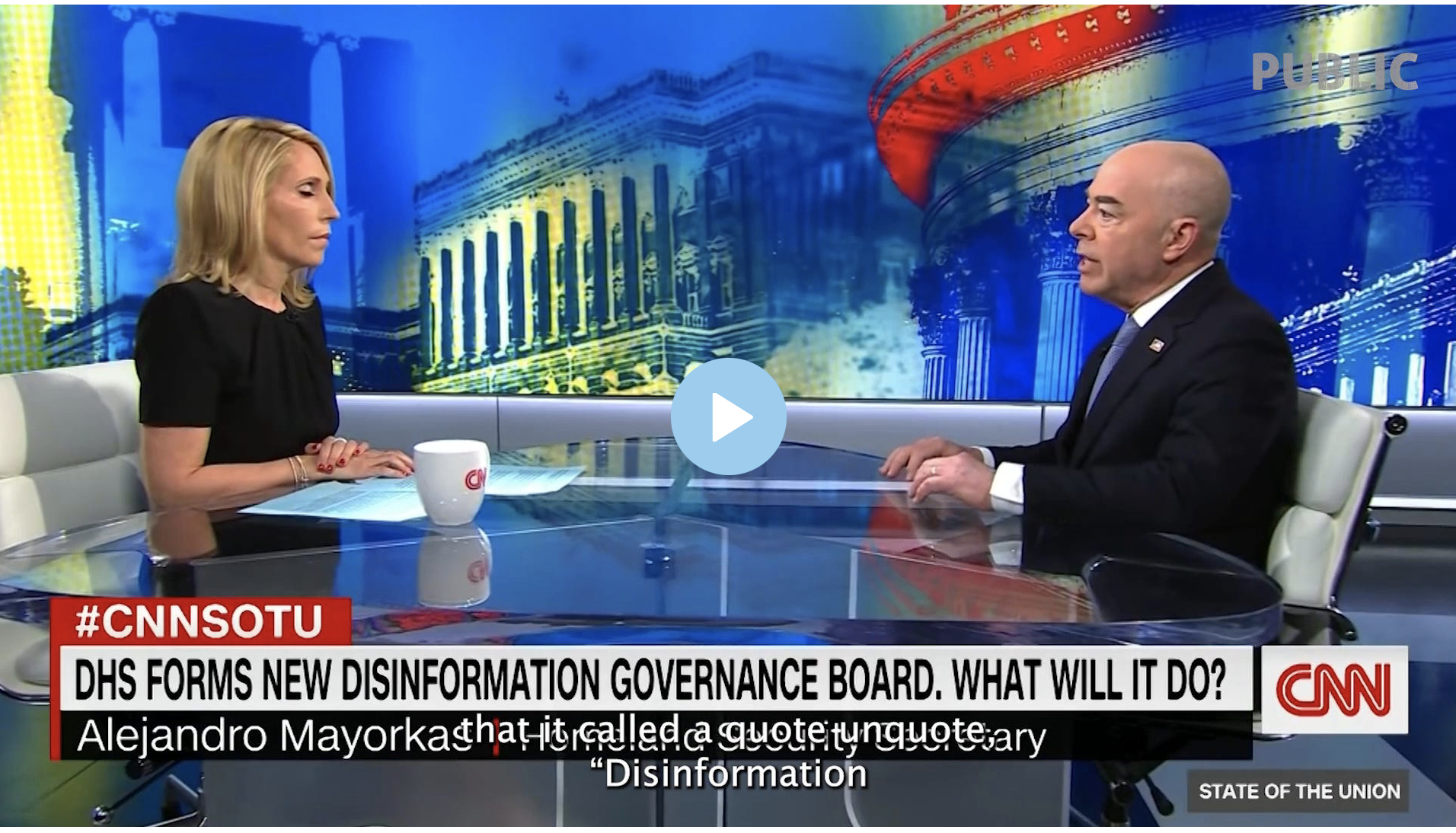
Under the guise of preventing “harm” and holding large tech companies accountable, several countries are establishing a vast and interlinked censorship apparatus, a new investigation by Public finds.
Politicians, NGOs, and their enablers in the news media claim that their goal is merely to protect the public from “disinformation.” But vague definitions and loopholes in new laws will create avenues for broad application, overreach, and abuse.
In Ireland, for example, the government may soon be able to imprison citizens simply for possessing material that officials decide is “hateful.” Under the RESTRICT Act in the US, the government may soon have the authority to monitor the Internet activity of any American deemed a security risk.
Here is an excerpt from the article by Coyne and Krylov:
Yet a wholesale and unhealthy incursion of ideology into science is occurring again—this time in the West. We see it in progressives’ claim that scientific truths are malleable and subjective, similar to Lysenko’s insistence that genetics was Western “pseudoscience” with no place in progressive Soviet agriculture. We see it when scientific truths—say, the binary nature of sex—are either denied or distorted because they’re politically repugnant.
We see it as well in activists’ calls to “decolonize” scientific fields, to reduce the influence of what’s called “Western science” and adopt indigenous “ways of knowing.” No doubt different cultures have different ways of interpreting natural processes—sometimes invoking myth and legend—and this variation should be valued as an important aspect of sociology and anthropology. But these “ways of knowing” aren’t coequal to modern science, and it would be foolish to pretend otherwise.
In some ways this new species of Lysenkoism is more pernicious than the old, because it affects all science—chemistry, physics, life sciences, medicine and math—not merely biology and agriculture. The government isn’t the only entity pushing it, either. “Progressive” scientists promote it, too, along with professional societies, funding agencies like the National Institutes of Health and Energy Department, scientific journals and university administrators. When applying for openings as a university scientist today, job candidates may well be evaluated more by their record of supporting “social justice” than by their scientific achievements.
But scientific research can’t and shouldn’t be conducted via a process that gives a low priority to science itself. This is why we wrote our paper, which was co-authored by 27 others, making for a group as diverse as you can imagine. We had men and women of various ages, ethnicities, countries of origin, political affiliations and career stages, including faculty from community colleges and top research universities, as well as two Nobel laureates. We provided an in-depth analysis of the clash between liberal epistemology and postmodernist philosophies. We documented the continuing efforts to elevate social justice over scientific rigor, and warned of the consequences of taking an ideological approach to research. Finally, we suggested an alternative humanistic approach to alleviating social inequalities and injustices.
But this was too much, even “downright hurtful,” as one editor wrote to us. Another informed us that “the concept of merit . . . has been widely and legitimately attacked as hollow.” Legitimately?
In the end, we’re grateful that our paper will be published. But how sad it is that the simple and fundamental principle undergirding all of science—that the best ideas and technologies should be the ones we adopt—is seen these days as “controversial.”
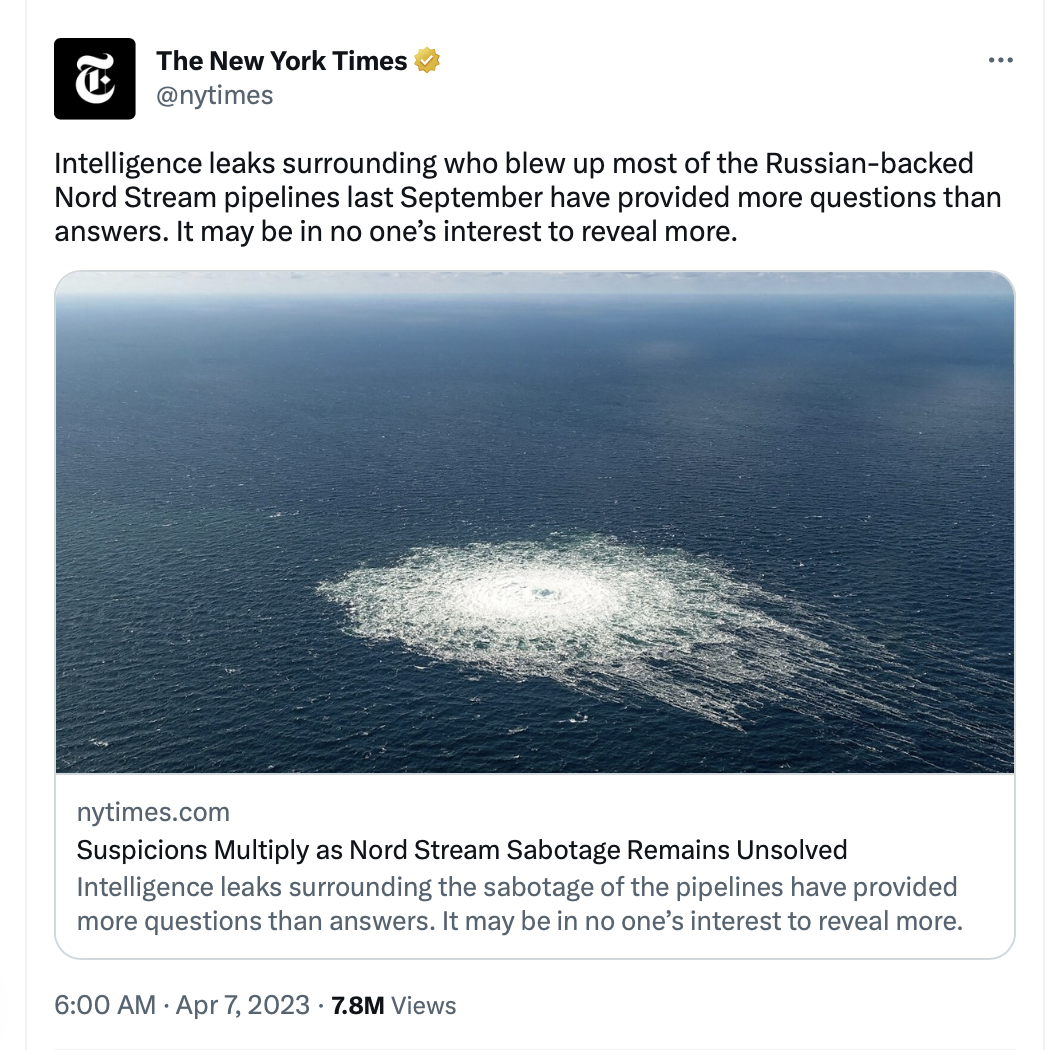
In the last few crazy years, when it has become clear that the corporate media is doing less and less journalism, this Tweet by the New York Times is perhaps the most haunting thing I've seen. The topic is "Who destroyed the Nord Stream Pipeline?" It's a simple question and it would be an obvious next step for the NYT to get to work and figure this out. But apparently not . . .
"Intelligence leaks surrounding who blew up most of the Russian-backed Nord Stream pipelines last September have provided more questions than answers. It may be in no one’s interest to reveal more."
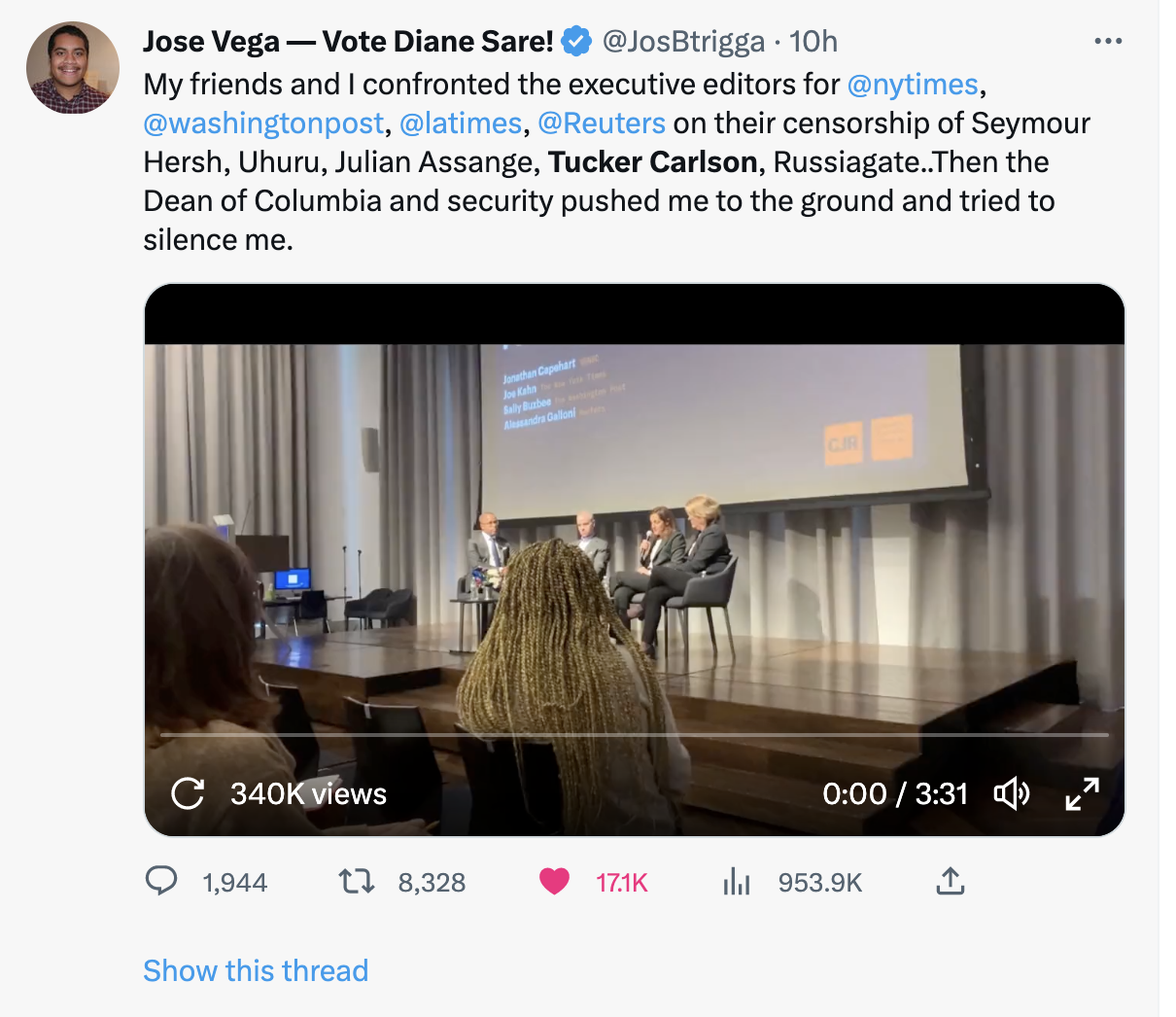
Jose Vega's epic confrontation of fake journalists:
My friends and I confronted the executive editors for @nytimes, @washingtonpost, @latimes, @Reuters on their censorship of Seymour Hersh, Uhuru, Julian Assange, Tucker Carlson, Russiagate..Then the Dean of Columbia and security pushed me to the ground and tried to silence me.
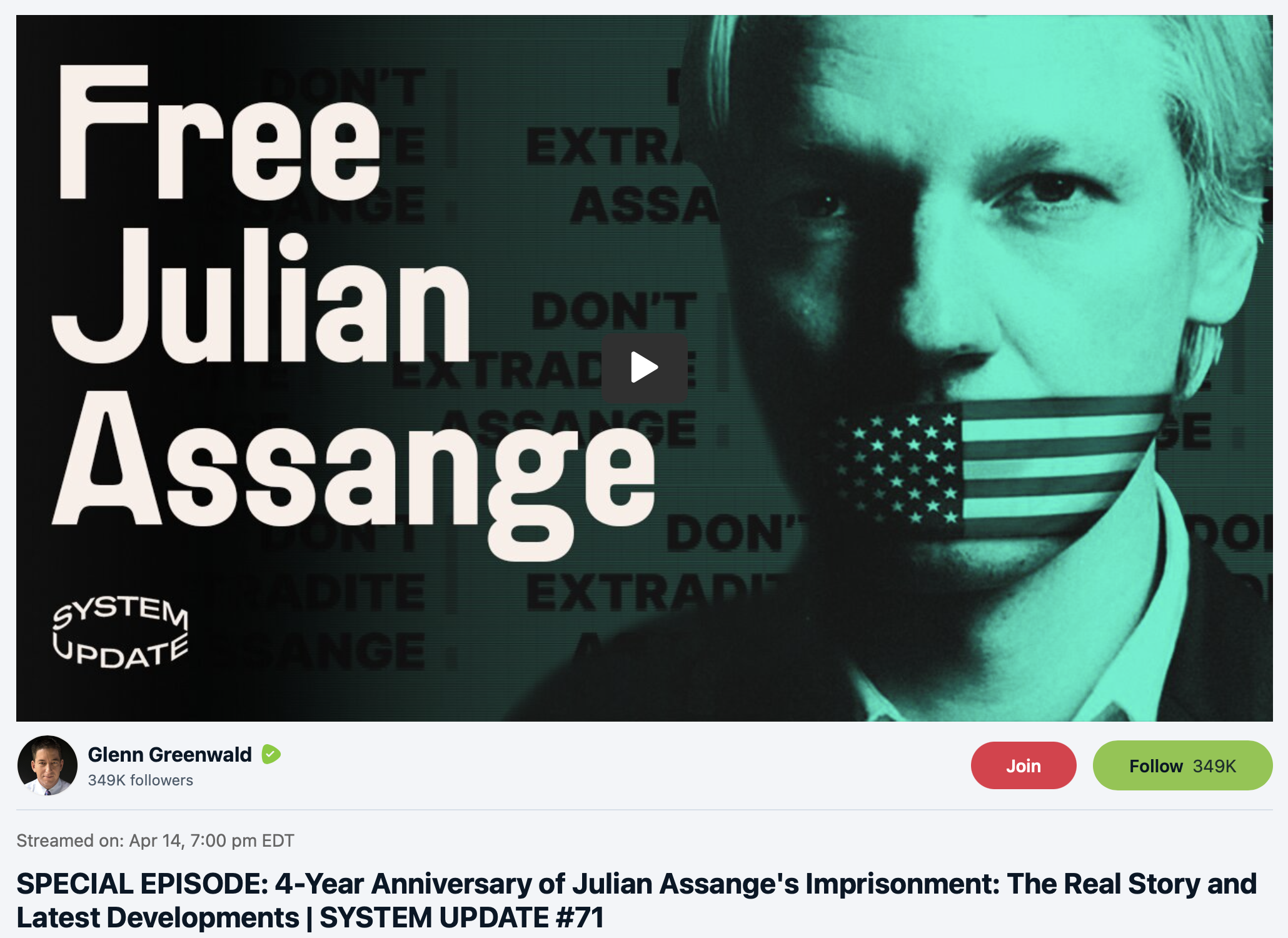
What you need to know about Julian Assange on the Fourth Anniversary of his Imprisonment. On Glenn Greenwald's System Update, the Free Speech Alternative to YouTube.
There's, I think, a very good strong case to make that Julian Assange is definitely one of the most consequential and intrepid journalists of the last, say, 50 years, if not the single most important pioneering journalist of his generation. He has almost certainly broken more major stories than almost every single employee of the mainstream media outlet combined. They don't hate Julian Assange, despite the fact that he's broken so many stories. They hate him precisely because of that – in part because he shined. He holds up a mirror showing what they really are. He is what they pretend to be.
While the mainstream media constantly publishes stories that they dress up as leaks but in fact are nothing more than propaganda messaging tasks given to them by the CIA and the FBI and Homeland Security, which pick up the phone and pick their favorite reporter and tell them what to go plant in the newspaper to disseminate propaganda to the American people, Assange never does that and never had to and never would. He shows the American people and the world the secrets the CIA and the FBI and the Pentagon and Homeland Security don't want you to see. And that's why those agencies hate him. And that's why the employees and the media outlets that serve those agencies also hate him. That is the reason that he's in prison.
Almost every single employee of The New York Times, The Washington Post, CNN and NBC, on a daily basis – you can pick up those newspapers or if you have the misfortune to listen to those networks, you will hear or read them saying – “anonymous officials told us” X, Y, and Z, they publish classified information all the time. But they don't end up like Julian Assange or Jack Teixeira – the 21-year-old member of the Massachusetts National Guard was hunted this week by The New York Times and The Washington Post and then arrested yesterday by the FBI because he is accused of having leaked classified documents.
The difference between the mainstream media on the one hand and Assange and Jack Teixeira and people like Edward Snowden on the other is that the mainstream media publishes leaks that are authorized, that the U.S. Security State wants you to see because they're forms of propaganda and that's why they're never punished. That's why they don't end up in prison. They get book deals; they get put on television and they're applauded by the U.S. government. The people who end up in prison are those who show you the secrets they want to hide. That's the main difference. It's the difference between being a propagandist and being a journalist. Julian Assange is a journalist, and that's the reason he's in prison.
Hello, I invite you to subscribe to Dangerous Intersection by entering your email below. You will have the option to receive emails notifying you of new posts once per week or more often.