About Trusting Wikipedia

I just learned about a 2021 article titled "Nobody should trust Wikipedia, says man who invented Wikipedia."

Excerpt:

"Larry Sanger, the man who co-founded Wikipedia, has cautioned that the website can’t always be trusted to give people the truth.

He said it can give a “reliably establishment point of view on pretty much everything.”

“Can you trust it to always give you the truth? Well, it depends on what you think the truth is,” said Mr Sanger, who co-founded Wikipedia in 2001 alongside Jimmy Wales.

He told Lockdown TV that “if only one version of the facts is allowed then that gives a huge incentive to wealthy and powerful people to seize control of things like Wikipedia in order to shore up their power. And they do that.”"

Continue ReadingAbout Trusting Wikipedia

Measuring First Amendment Ignorance

New report by FIRE indicates that many Americans who are celebrating the Fourth of July with BBQ and fireworks don't appreciate the meaning of the holiday.

In a recent AmeriSpeak panel conducted by the National Opinion Research Center at the University of Chicago, FIRE asked 1,140 Americans if they could name any of the specific rights protected by the First Amendment. The results were dismal.

Almost a third of Americans could not name a single enumerated right protected by the First Amendment and another 40% could name only one — usually freedom of speech. Among Americans who named one or more enumerated rights, roughly two-thirds (65%) named freedom of speech, about a quarter (26%) named freedom of religion, 20% named the right to assemble, 15% named freedom of the press, and 8% named the right to petition. Only 3% of Americans could name all five and, on average, could name 1.33 First Amendment rights. In other words, Americans’ knowledge of the First Amendment remains poor.

he AmeriSpeak panel is funded and operated by NORC, and is a probability-based panel designed to be representative of the U.S. household population. Although knowledge of the First Amendment was low across the board, some notable differences did emerge. Generally, males were able to name significantly more rights than females, although they still averaged less than two (1.47 and 1.23, respectively). Males were also significantly more likely to name four-of-five First Amendment rights than females were:

69% of males named freedom of speech compared to 61% of females. 24% of males named the right to assemble compared to 16% of females. 18% of males named freedom of the press compared to 12% of females. 11% of males named a right to petition compared to 5% of females.

These findings may reflect greater interest in the First Amendment among males. Other surveys have found that, compared to females, males are more likely to adopt an absolutist stance on the First Amendment and are more willing to allow the expression of statements that are offensive or hateful. Scholarship has long documented that males are also more opposed to censorship in a number of different content domains.

Liberals were significantly more likely to name at least one right and significantly more likely to name at least two rights compared to moderates and conservatives. One-third of conservatives and 27% of moderates could not name a single right, compared to 15% of liberals. Liberals also named significantly more rights on average than moderates did, although, as with males above, liberals still named less than two rights on average (1.56 and 1.28, respectively).

Generational differences are also evident. Americans aged 18-29 were significantly less likely to name free speech (55%) than other Americans, particularly those aged 45-59 (67%) and those aged 60 and older (70%). Those aged 18-29 (19%) and those aged 45-59 (21%) were also significantly less likely to name freedom of religion as a right guaranteed by the First Amendment, compared to Americans aged 30-44 (30%) and those aged 60 and older (29%). Thus, older Americans appear to be the most knowledgeable about the First Amendment, suggesting that knowledge may decline further as they age and represent a smaller overall portion of the American population.

Continue ReadingMeasuring First Amendment Ignorance

EFF: Internet Free Speech Depends Upon Many Weak Links

Tonight I tried to watch two shows on Rumble.com, but all I could see was this:
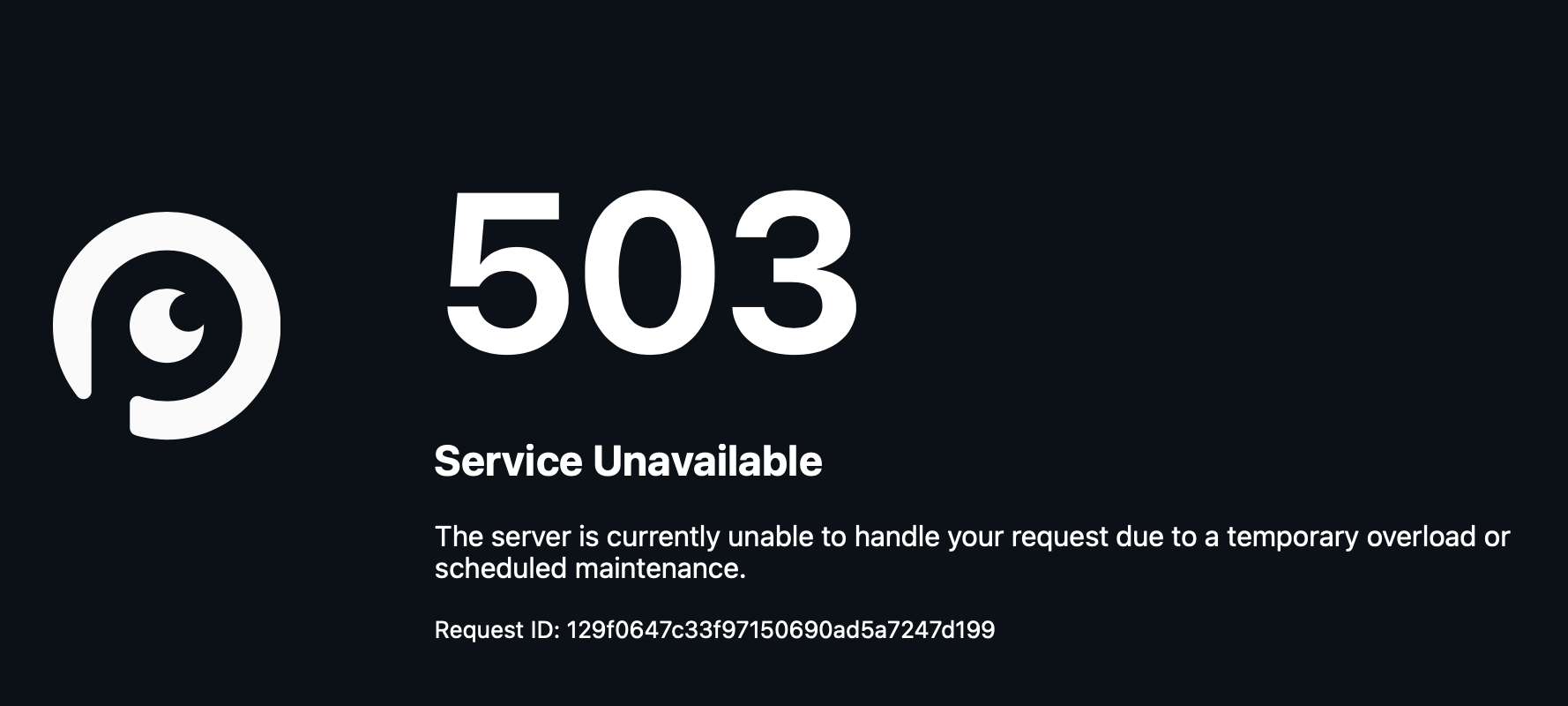
This might simply be an innocent technical issue. I hope so. When I see the entire network go down, however, I am concerned. Is this the result of an attack on Rumble.com?  I hope that things get fixed and that we are advised about what happened and why. In the meantime, I find myself thinking about this article by EFF:

I'm very much aware that if the Internet Hosts decided that they would exclude certain types of information, many websites, such as mine would disappear. That is one vulnerability of many. Here are the others:

Here is an excerpt from the EFF article:

Speech on the Internet requires a series of intermediaries to reach its audience. Each intermediary is vulnerable to some degree to pressure from those who want to silence the speaker. Even though the Internet is decentralized and distributed, "weak links" in this chain can operate as choke points to accomplish widespread censorship.

The Internet has delivered on its promise of low-cost, distributed, and potentially anonymous speech. Reporters file reports instantly, citizens tweet their insights from the ground, bloggers publish to millions for free, and revolutions are organized on social networks. But the same systems that make all of this possible are dangerously vulnerable to chokeholds that are just as cheap, efficient, and effective, and that are growing in popularity. To protect the vibrant ecosystem of the Internet, it's crucial to understand how weaknesses in the chain of intermediaries between you and your audience can threaten speech.

Each of the links above represents a link in the chain of intermediaries that directly facilitate or indirectly support speech on the Internet.

Website are also vulnerable as a result of "Shadow Regulation"

Shadow Regulations are voluntary agreements between companies (sometimes described as codes, principles, standards, or guidelines) to regulate your use of the Internet, often without your knowledge.

I don't like the fact that I have so little control and that my website could be quickly erased but for the willingness of all of these entities the cut backroom deals with each other, but that is a sad fact.

Continue ReadingEFF: Internet Free Speech Depends Upon Many Weak Links

What the News Media Got Wrong about Trump-Russia

These are excerpts from Part I of Jeff Gerth's Four-Part series at the Columbia Journalism Review, who previously worked for decades with the NYT.

Today, the US media has the lowest credibility—26 percent—among forty-six nations, according to a 2022 study by the Reuters Institute for the Study of Journalism. In 2021, 83 percent of Americans saw “fake news” as a “problem,” and 56 percent—mostly Republicans and independents—agreed that the media were “truly the enemy of the American people,” according to Rasmussen Reports. . . .

What follows is the story of Trump, Russia, and the press. Trump’s attacks against media outlets and individual reporters are a well-known theme of his campaigns. But news outlets and watchdogs haven’t been as forthright in examining their own Trump-Russia coverage, which includes serious flaws. Bob Woodward, of the Post, told me that news coverage of the Russia inquiry ” wasn’t handled well” and that he thought viewers and readers had been “cheated.” He urged newsrooms to “walk down the painful road of introspection.” . . .

On the eve of a new era of intense political coverage, this is a look back at what the press got right, and what it got wrong, about the man who once again wants to be president. So far, few news organizations have reckoned seriously with what transpired between the press and the presidency during this period. That failure will almost certainly shape the coverage of what lies ahead.

The title of Gerth's article: "The press versus the president, part one"

Continue ReadingWhat the News Media Got Wrong about Trump-Russia

The Psychological Traits of People who Seriously Support Free Speech

Many people say they support free speech, but only of a subset of those are willing to stand up and take flak in support of free speech in particular uncomfortable situations. How do these two groups differ?

Researchers Jeff Cieslikowski and Sean Stevens of FIRE have reviewed the relevant psychological research. High cognitive ability and emotional intelligence predict greater support for free speech. Here are a few excerpts from their recent article:

[P]eople with high cognitive ability also often exhibit greater intellectual humility. At its core, intellectual humility refers to whether a person is open to the idea that they might be wrong, and research has demonstrated that the relationship between cognitive ability and support for free speech is amplified if an individual also possesses more intellectual humility.

The most recent research extends these findings. Those higher in cognitive ability and emotional intelligence –– the ability to recognize emotions in oneself and others, and to use this emotional information to productively and positively guide one’s actions –– were more supportive of freedom of speech and less concerned with appearing "politically correct," which the researchers define as “using language (or behavior) to seem sensitive to others’ feelings, especially those others who seem socially disadvantaged.” The researchers suggest that those high in emotional intelligence favor free speech because the former correlates positively with psychological reactance –– the tendency for people to experience anxiety or distress when they perceive their freedom is threatened.

Those who strongly and consistently support free speech:

[P]ossess a unique perspective on the negative consequences of speech restrictions, and that these individuals are more likely to be concerned with how speech restrictions can backfire and be used to suppress the expression of disadvantaged or unpopular groups in society...

[P]rincipled support for free speech is rooted in the idea that all human beings are fallible. Therefore, we should be intellectually humble and open to the ideas of others, for we ourselves might be wrong. This suggests that individuals high in cognitive ability and emotional intelligence may be principled defenders of free speech, tolerating even the speech they abhor. They would likely agree with John Stuart Mill, who wrote:

The peculiar evil of silencing the expression of an opinion is, that it is robbing the human race; posterity as well as the existing generation; those who dissent from the opinion, still more than those who hold it. If the opinion is right, they are deprived of the opportunity of exchanging error for truth: if wrong, they lose, what is almost as great a benefit, the clearer perception and livelier impression of truth, produced by its collision with error.

Continue ReadingThe Psychological Traits of People who Seriously Support Free Speech