
Niece in Africa
I have a charming niece named Katja Boye. She and her family are currently traveling, working and studying in various parts of West Africa. Katja recently sent my family some of her digital images; I really enjoyed the many scenes and textures and colors of Africa. I also enjoyed the contrast of seeing images of my very light-skinned relatives (they are Norwegian, with their permanent home in Norway) mingling with the many dark-skinned Africans. 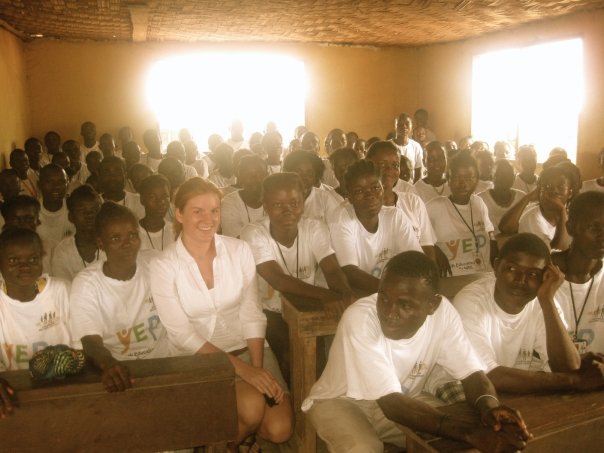 I asked Katja if she would grant me permission to share some of her photos on this website and she gave the go-ahead. I don't actually know these specific locations within West Africa yet - - perhaps Katja will write a comment and provide some further information.
Katja (she stands out in the photo to the right) is the daughter of Alida Jay Boye (my wife's sister), who you can see at the left side of the sand dune photo below. Alida is the co-author of a beautifully written and photographed book describing the people and the ancient manuscripts of Timbuktu, located in the African country of Mali. Yes, Timbuktu is a real place, it is surrounded by sand dunes, and here is an aerial shot of of the city. The title Alida's book is The Hidden Treasures of Timbuktu: Rediscovering Africa's Literary Culture. For many years, Alida has been "commuting" from Norway to Mali work on these manuscripts under the auspices of the United Nations. Here's more information about Alida's work.
I asked Katja if she would grant me permission to share some of her photos on this website and she gave the go-ahead. I don't actually know these specific locations within West Africa yet - - perhaps Katja will write a comment and provide some further information.
Katja (she stands out in the photo to the right) is the daughter of Alida Jay Boye (my wife's sister), who you can see at the left side of the sand dune photo below. Alida is the co-author of a beautifully written and photographed book describing the people and the ancient manuscripts of Timbuktu, located in the African country of Mali. Yes, Timbuktu is a real place, it is surrounded by sand dunes, and here is an aerial shot of of the city. The title Alida's book is The Hidden Treasures of Timbuktu: Rediscovering Africa's Literary Culture. For many years, Alida has been "commuting" from Norway to Mali work on these manuscripts under the auspices of the United Nations. Here's more information about Alida's work. 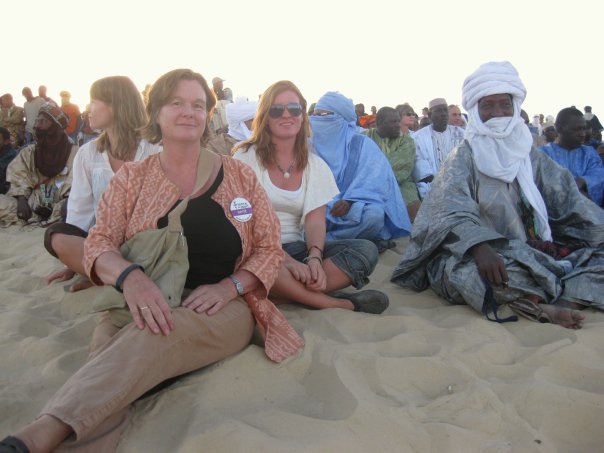 I don't claim to be able to read any of these manuscripts, but I do enjoy their physical beauty, which you can see here.
Those who can read the manuscripts recognize them to be a vast literary treasure created by Africans and collected by various people and institutions in Timbuktu, which for centuries served as a commercial crossroads in Africa. For more on Timbuktu and its famous manuscripts, consider this informative video.
Katja's father Thorvaldt (who works in a diplomatic capacity for the Norwegian government regarding several west African countries) and her sister Ebba (a student) have also spent considerable time working and studying in various parts of Africa. As you can see, the members of this family are quite comfortable traveling far from their cold homeland of Norway to warm Africa.
Click on the title to this post for the permalink version, which will allow you to see all 18 images.
Katja - thanks for letting me share these photos!
I don't claim to be able to read any of these manuscripts, but I do enjoy their physical beauty, which you can see here.
Those who can read the manuscripts recognize them to be a vast literary treasure created by Africans and collected by various people and institutions in Timbuktu, which for centuries served as a commercial crossroads in Africa. For more on Timbuktu and its famous manuscripts, consider this informative video.
Katja's father Thorvaldt (who works in a diplomatic capacity for the Norwegian government regarding several west African countries) and her sister Ebba (a student) have also spent considerable time working and studying in various parts of Africa. As you can see, the members of this family are quite comfortable traveling far from their cold homeland of Norway to warm Africa.
Click on the title to this post for the permalink version, which will allow you to see all 18 images.
Katja - thanks for letting me share these photos!