“Vaccines Work”
Sharyl Attkisson points out the error of those who insist "vaccines work."
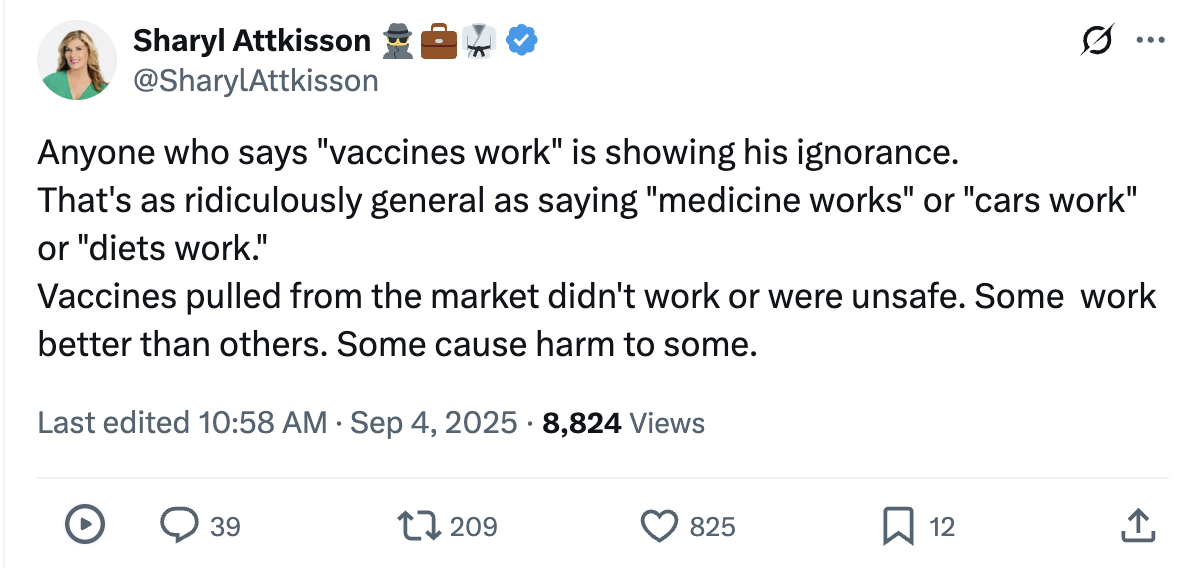

Sharyl Attkisson points out the error of those who insist "vaccines work."
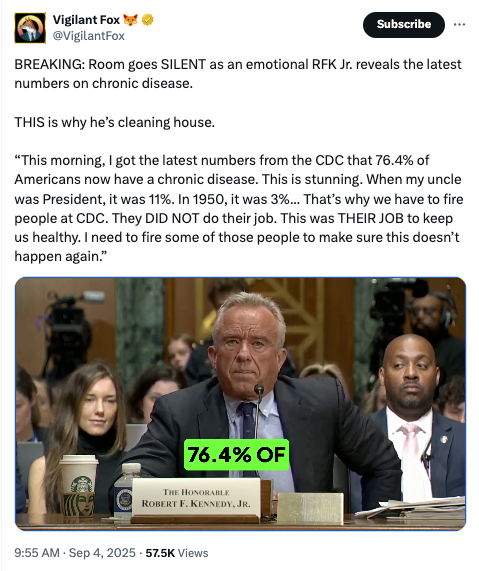
RFK, Jr. this morning:
Good morning. I got the latest numbers from CDC that 76.4% of Americans now have a chronic disease. This is stunning. My uncle was president was 11% 1950 was 3%. Today it's 76.4%. Eight out of 10 of our kids cannot qualify for military service. This is a national security issue. When my uncle was President, we spent zero on chronic disease. Today we spent $1.3 trillion it's the biggest cost. It's increasing, and all of the arguments that Republicans and Democrats have about single payer Obamacare or the various ways of allocate the health dollars--they're all like rearranging deck chairs on the Titanic. If we don't end this chronic disease, we are the sickest country in the world. That's why we have to fire people at CDC. They did not do their job. This was their job to keep us healthy. Thank you. I need to fire some of those people to make sure this doesn't happen again.
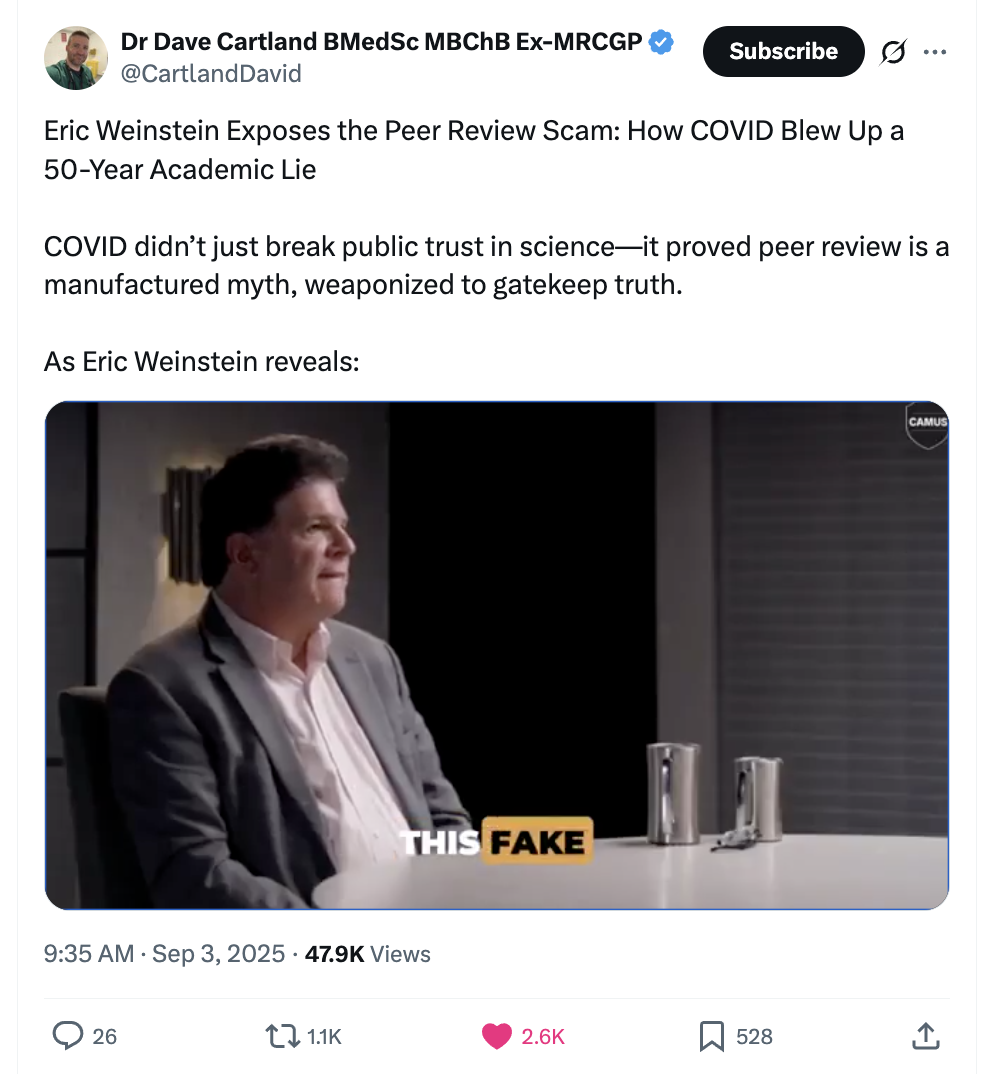
Eric Weinstein: "If you screwed up covid this badly by getting inside of the Lancet and Nature. Peer review is this fake thing that supposedly stretches back to the founding of the Royal Society. And it's very clear from the scholarship around it that it comes out of the period between 1965 and 1975 initiated by the Medicare Act, predicated on the need for editors for the journal expansion, founded by Pergamon Press and Robert Maxwell. By 1975 there's a giant battle between the [National Science Foundation] NSF and both fiscal and cultural conservatives against something called “Man: A Course of Study” (MACOS), where peer review was born in a Utah clinic. [It] came out of the medical literature because the federal government in 1965 with The Medicare Act picked up the need to pay for so many medical procedures. They wanted to say "Why are we assigning this many medical procedures?" The doctors circled the wagons and said, "We will peer review each other." Then in night, by 1975 the NSF was under the microscope, and they used peer review as a self defense of last resort to say we will be reviewing each other, right? Peer review is a myth."
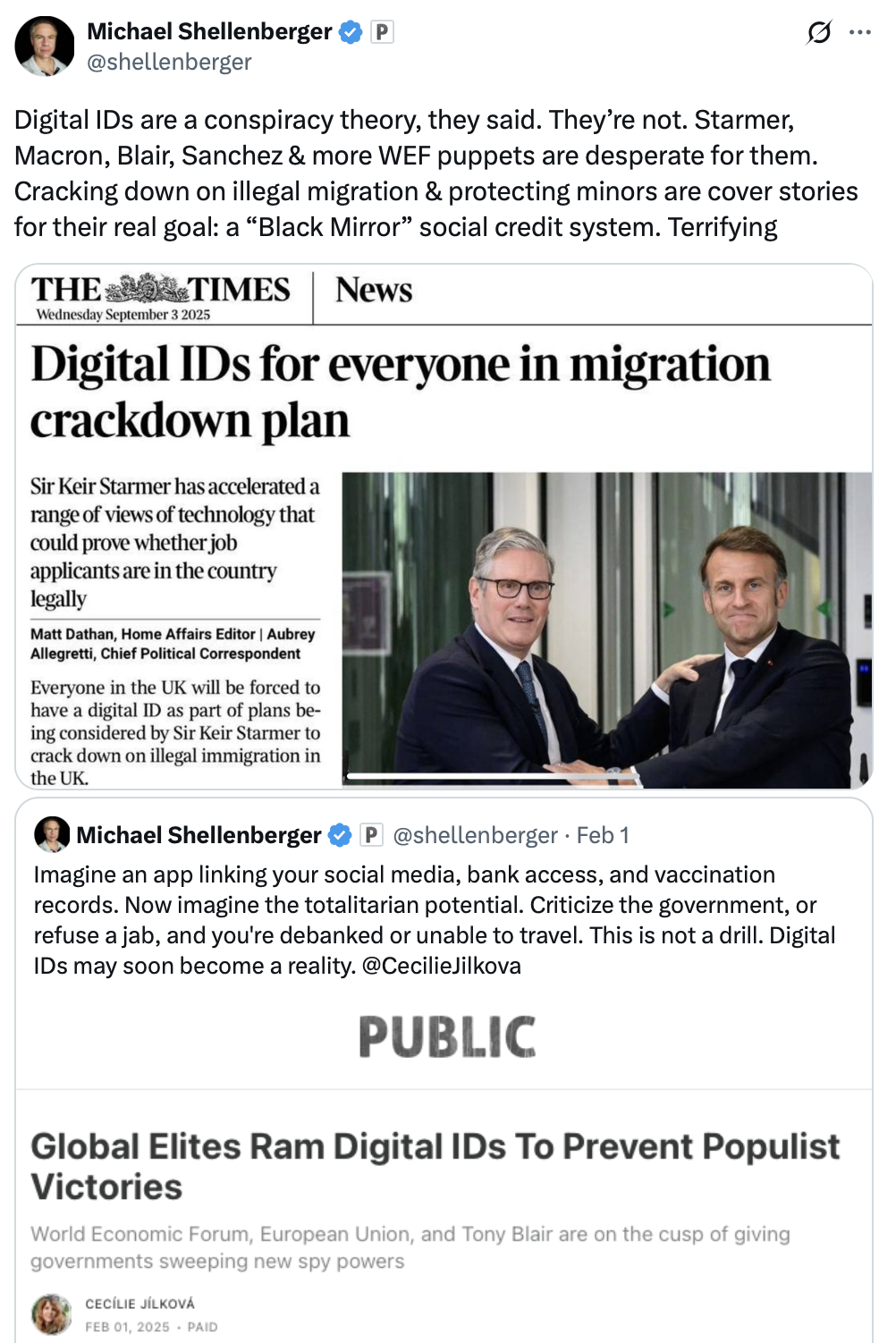
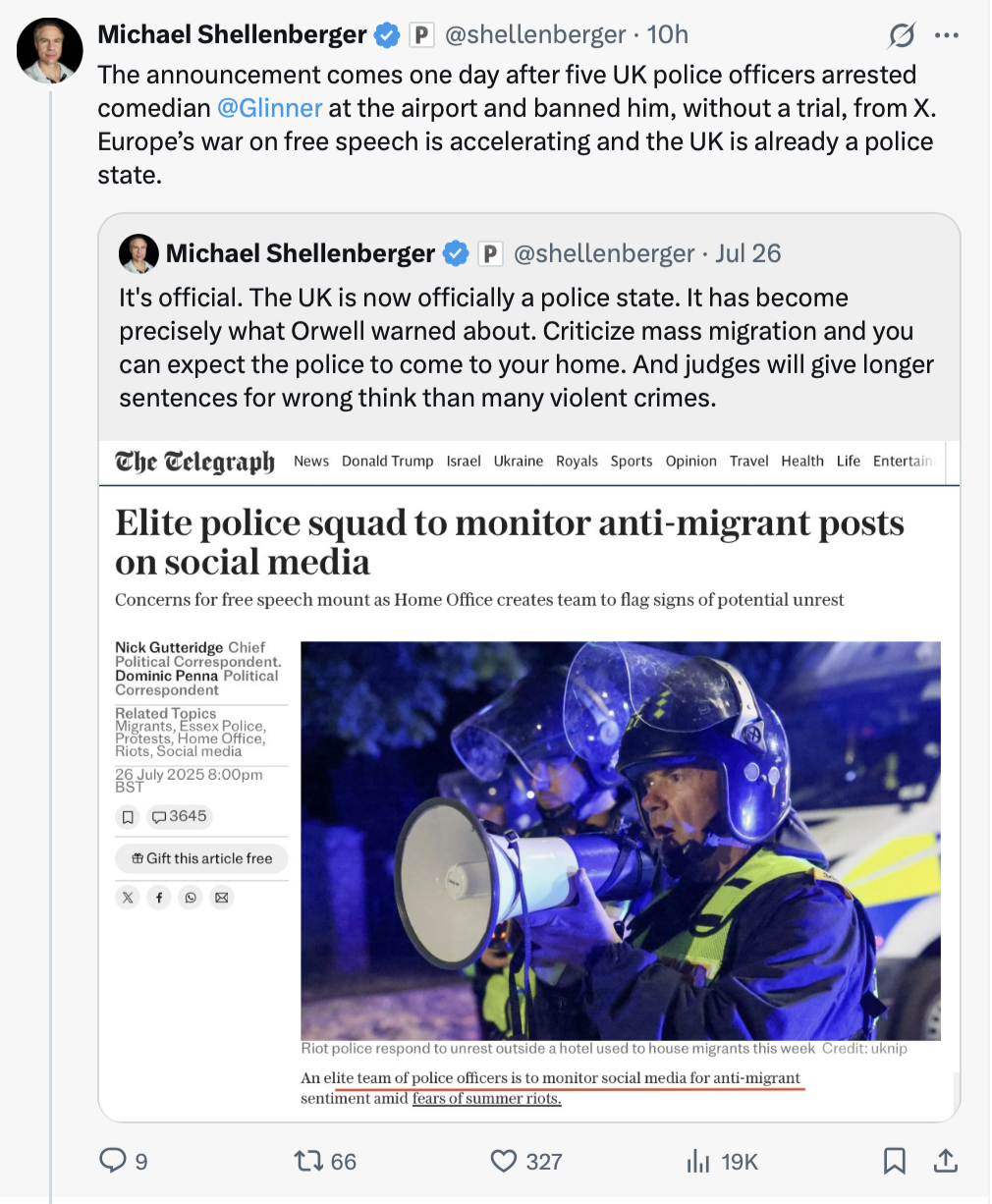
Michael Shellenberger reports. No wonder authoritarians of all stripes crave these powerful digital tools :
Next time someone tells you the simple story of slavery, suggest that they read this article by myth-buster Edward Campbell. The title: "The West Didn’t Invent Slavery: But It Fought to End It: Abolition and the birth of moral restraint." Here's an excerpt:
Slavery was the norm for over 5,000 years. Abolition was the rupture.In this essay, I challenge the comforting myth that history bends naturally toward justice. Instead, I trace the global story of slavery and argue that the real anomaly wasn’t oppression—it was restraint. The West didn’t invent slavery, but parts of it did something almost no civilization had done before: use power to end it.
Featuring the West Africa Squadron, the Haitian Revolution, and moral crusaders from Wilberforce to Tubman—this is a story about conscience, power, and the rare moments when they align.
Slavery is as old as civilization—dating back over 5,000 years. It was present in the earliest empires of Mesopotamia, Egypt, and China. For millennia, it was accepted as natural, necessary—even sacred. Every society practiced it; few questioned it. From pharaohs to emperors, slavery was a pillar of power. v Then—within barely a century—it virtually vanished from the earth. This essay is about the exception that proved the rule.
Slavery was the norm. Abolition was the rupture.