About the Creation of the Peer Review Process
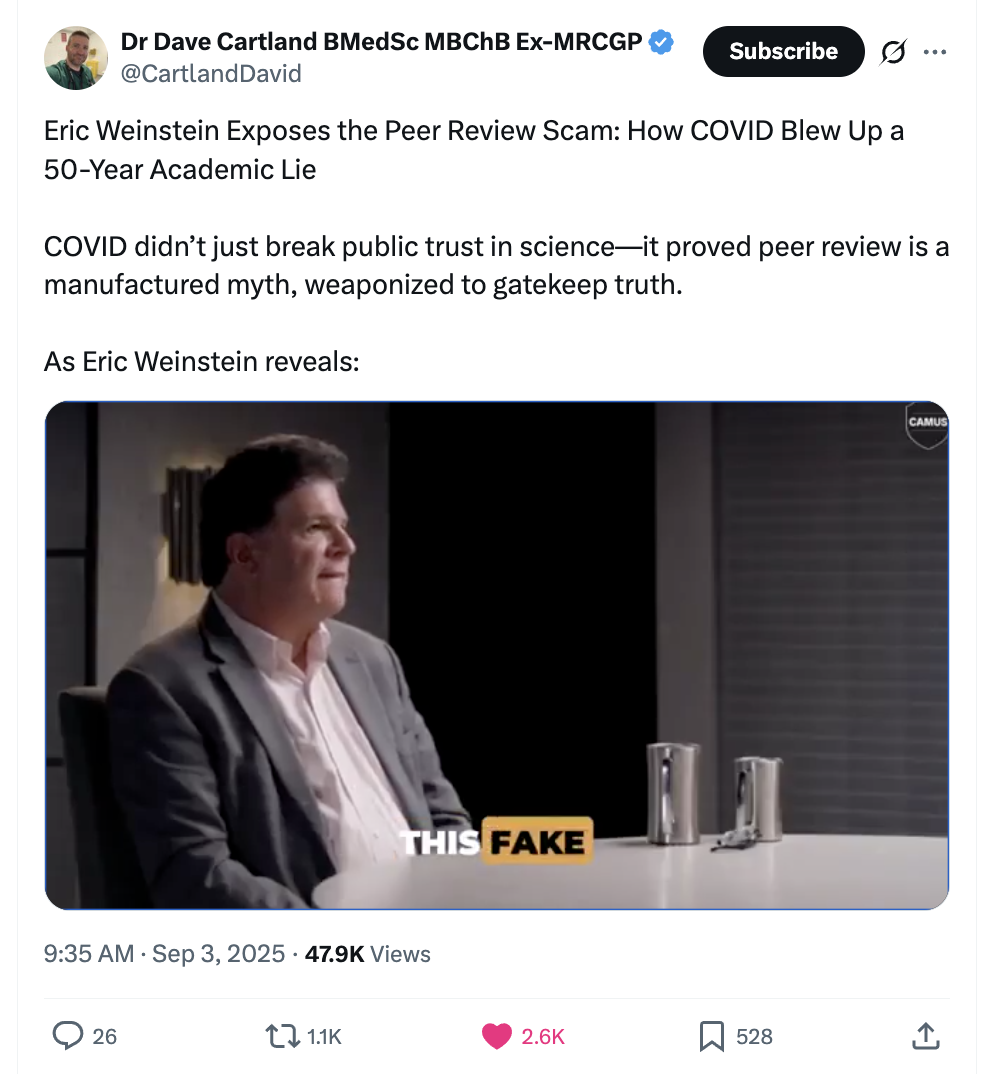
Eric Weinstein: "If you screwed up covid this badly by getting inside of the Lancet and Nature. Peer review is this fake thing that supposedly stretches back to the founding of the Royal Society. And it's very clear from the scholarship around it that it comes out of the period between 1965 and 1975 initiated by the Medicare Act, predicated on the need for editors for the journal expansion, founded by Pergamon Press and Robert Maxwell. By 1975 there's a giant battle between the [National Science Foundation] NSF and both fiscal and cultural conservatives against something called “Man: A Course of Study” (MACOS), where peer review was born in a Utah clinic. [It] came out of the medical literature because the federal government in 1965 with The Medicare Act picked up the need to pay for so many medical procedures. They wanted to say "Why are we assigning this many medical procedures?" The doctors circled the wagons and said, "We will peer review each other." Then in night, by 1975 the NSF was under the microscope, and they used peer review as a self defense of last resort to say we will be reviewing each other, right? Peer review is a myth."
Continue ReadingAbout the Creation of the Peer Review Process

The Complex Story of Slavery and Abolition

Next time someone tells you the simple story of slavery, suggest that they read this article by myth-buster Edward Campbell. The title: "The West Didn’t Invent Slavery: But It Fought to End It: Abolition and the birth of moral restraint."  Here's an excerpt:

Slavery was the norm for over 5,000 years. Abolition was the rupture.

In this essay, I challenge the comforting myth that history bends naturally toward justice. Instead, I trace the global story of slavery and argue that the real anomaly wasn’t oppression—it was restraint. The West didn’t invent slavery, but parts of it did something almost no civilization had done before: use power to end it.

Featuring the West Africa Squadron, the Haitian Revolution, and moral crusaders from Wilberforce to Tubman—this is a story about conscience, power, and the rare moments when they align.

Slavery is as old as civilization—dating back over 5,000 years. It was present in the earliest empires of Mesopotamia, Egypt, and China. For millennia, it was accepted as natural, necessary—even sacred. Every society practiced it; few questioned it. From pharaohs to emperors, slavery was a pillar of power. v Then—within barely a century—it virtually vanished from the earth. This essay is about the exception that proved the rule.

Slavery was the norm. Abolition was the rupture.

Continue ReadingThe Complex Story of Slavery and Abolition

Greg Lukianoff Discusses Free Speech at TED

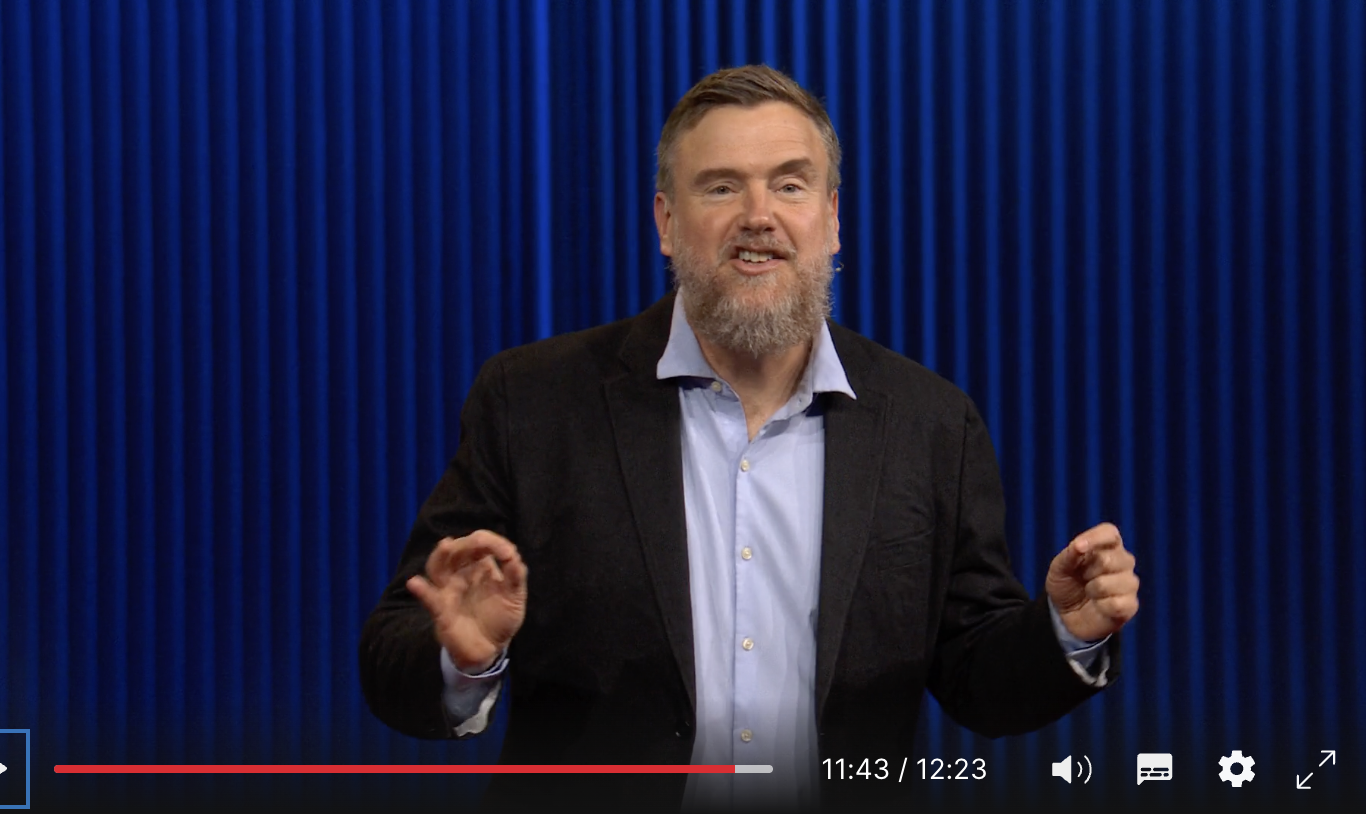
Greg Lukianoff began his TED talk with this: "2023 and 2024 were the two worst years for mob censorship and shout downs on record."

He then offered these Four Truths about free speech:

1. You are not safer for knowing LESS about what people really think.

2. Free Speech Cures Violence (Free Speech is the best alternative to violence).

3. Free Speech protects the powerless (free speech is the best check on power ever invented).

4. Even "bad" people can have good ideas (and good people aren't always right). ("Just because I hate your guts doesn't mean you are wrong.") ("The way we figure out truth ... doesn't work if you just talk to people your already agree with.").

Greg ended his talk with this gem:

"To understand the world it's crucial to know what people really think . . . For that, we need free speech."

Continue ReadingGreg Lukianoff Discusses Free Speech at TED