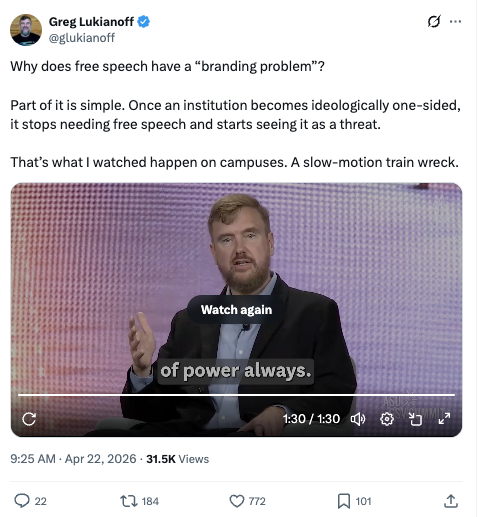
Q: “I’m really curious to hear from you why you think free speech has the branding issue that you know it tends to have, and why for young people, there’s this perception that you know is warped. ”
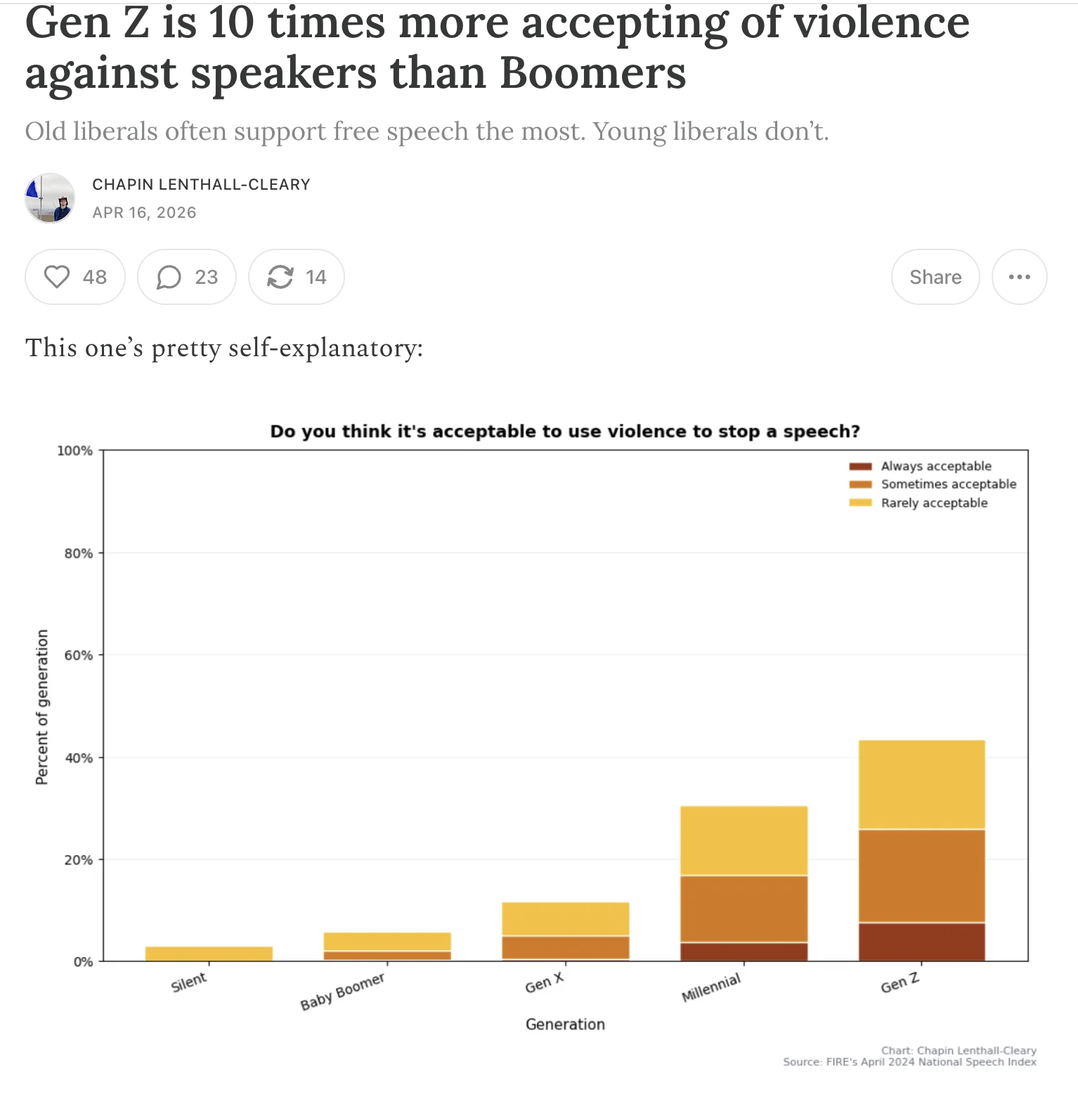
Greg Lukianoff: “This is probably a rough thing to say in a group full of educators, but I do think that a lot of the quote, unquote, branding issue with freedom of speech came out of K through PhD. When I was working at the ACLU back in 1999 I could see something happening, what I called the slow motion train wreck on college campuses in particular. We qualified for public assistance when I was a kid, and then I ended up at a place like Stanford Law School. And this was definitely a very weird experience for me, and it was the first time I really ran into kids who were pretty mediocre, a little ambivalent about freedom of speech. Working Class liberals were very pro freedom of speech. I thought that’s what made a liberal, a liberal. But it was only when I started meeting more upper class people who came from, you know, the 1% and tended to go to the fanciest schools, that I started really running into this very anti liberal kind of idea, and that’s a very typical dynamic that essentially, once your politics become a super majority of an institution–you want free speech when you’re the minority, because free speech protects minority opinions. You don’t need it to protect the majority. The popular vote protects the majority power. And in higher ed, there was this intentional, clear shift that free speech started being problematized partially because the people in charge of higher ed kind of thought, well, if I’m the one deciding what will get you punished and what won’t, I can be trusted with that. And that’s the temptation of power always.”
And speaking of students: