
Rob Henderson coined the term “Luxury Beliefs” as follows:
Luxury beliefs are ideas and opinions that confer status on the upper class while inflicting costs on the lower classes.
Here, Rob offers a more expansive discussion:
In addition to my own experiences with social mobility, my luxury beliefs idea stems from Thorstein Veblen’s work, particularly his 1899 book, The Theory of the Leisure Class. Veblen, a sociologist and economist, described how the elites of his era displayed their status through conspicuous consumption, such as wearing delicate, expensive clothing, carrying pocket watches, or attending lavish ballroom events. While material possessions still play a role in signaling status today, I argue that they have become a noisier indicator of wealth. A century ago, one could easily distinguish the rich from the poor based on appearance alone. However, in our wealthier modern society, where access to goods is more widespread, it’s harder to gauge someone’s wealth at a glance.
Instead, status is increasingly expressed through what I call luxury beliefs, which have largely replaced luxury goods. These beliefs reflect what sociologist Pierre Bourdieu termed cultural capital. Elites invest in attending prestigious schools and universities, where they adopt the mannerisms, vocabulary, habits, and fashionable opinions of the upper class. This process enculturates them into the elite and sets them apart from the broader population. For example, while the conventional view might support law enforcement, someone seeking to signal their elite status might advocate for abolishing the police or reimagining law enforcement with ideas like hiring “violence interrupters.” Such unconventional or avant-garde views serve as a way to distinguish oneself from the masses and signal a superior social position.
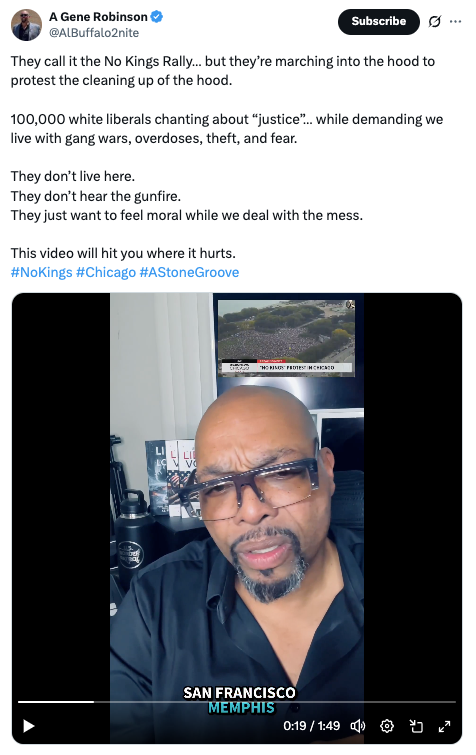
Today, I noticed this post by A Gene Robinson, who doesn’t use the term “luxury beliefs,” but is angry about non-stop high crime in Chicago contrasted with what he considered the detached cheap signaling of those who participated in the Chicago No Kings Rally:
I asked Grok to compare the economic circumstances of those in Chicago’s crime ridden neighborhoods to the circumstances of people who work for corporate media:
Corporate media workers earn 2–5 times more than residents in these Chicago neighborhoods ($60,000+ vs. $25,000–$50,000), enabling comfortable lifestyles with savings, travel, and leisure. They benefit from employer perks like health insurance and flexible time off, contrasting with reliance on public aid in high-crime areas, where poverty rates are 2–3 times higher (40%+ vs. national 12%). Media lifestyles involve professional growth and urban amenities, while these neighborhoods face survival challenges, unemployment-driven desperation, and violence that perpetuates economic stagnation. This disparity highlights broader urban inequalities, where media professionals might even report on these communities from a position of relative privilege.
Then I asked Grok to compare the economic circumstances of those in Chicago’s crime-ridden neighborhoods to those who marched in the Chicago no-kings rally:
The economic divide between residents of Chicago’s crime-ridden neighborhoods and No Kings rally marchers is stark, highlighting urban inequalities in race, class, and opportunity. Neighborhood residents endure entrenched poverty, with incomes 2–4 times lower than the implied stability of rally participants, who benefit from assets like homes and retirement funds accumulated over decades.
While the former face unemployment, reliance on aid, and violence-linked economic stagnation, marchers—often older, white, and from more affluent backgrounds—enjoy financial security enabling activism without personal economic risk.
This contrast underscores how protests like No Kings may draw from privileged demographics, potentially overlooking the direct economic hardships in the city’s most vulnerable areas.
[Supp Nov 1, 2025]
Illustration of Luxury beliefs in action:
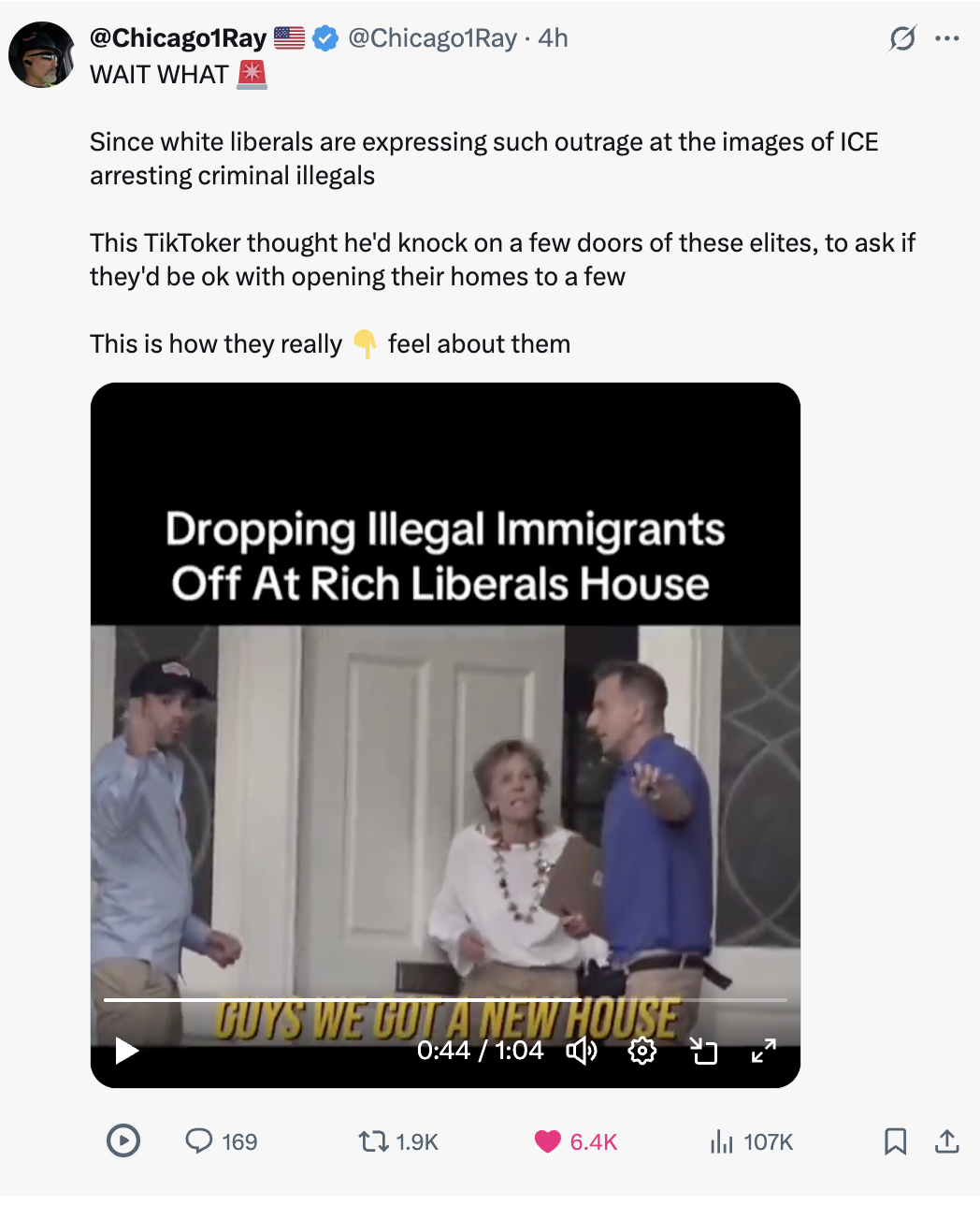
Also consider how the rich folks at Martha’s Vinyard treated immigrants.

