
Cool new museum wing, but I don’t get the art.
The St. Louis Art Museum has spent a ton of money, $160M, on a brand new wing, which I visited Sunday. It's spacious and bright. It's an inviting space for viewing art. There were a few dozen works of art in the new wing, and here are but a few:
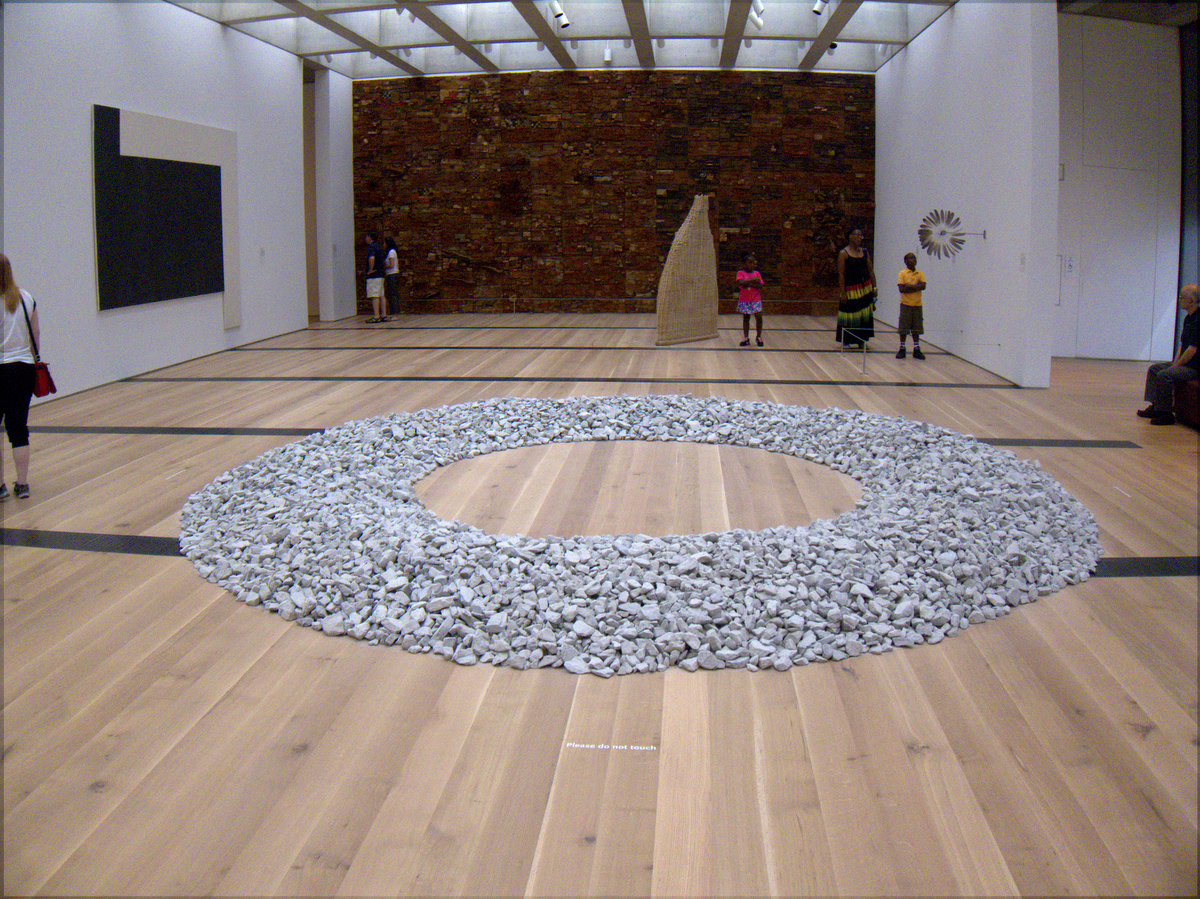
Mississippi Circle. These are limestone rocks.
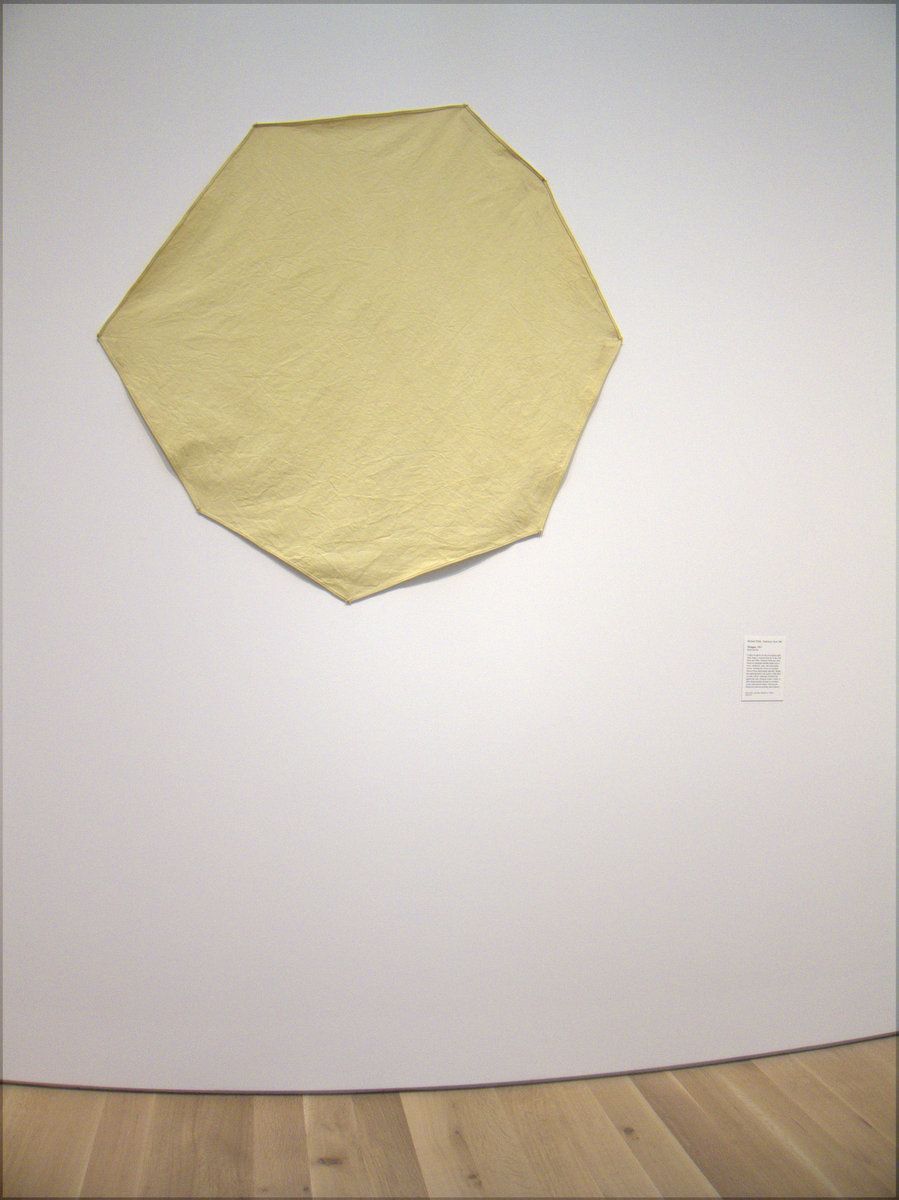
 This piece is called Octagon, and it is a dyed canvas.
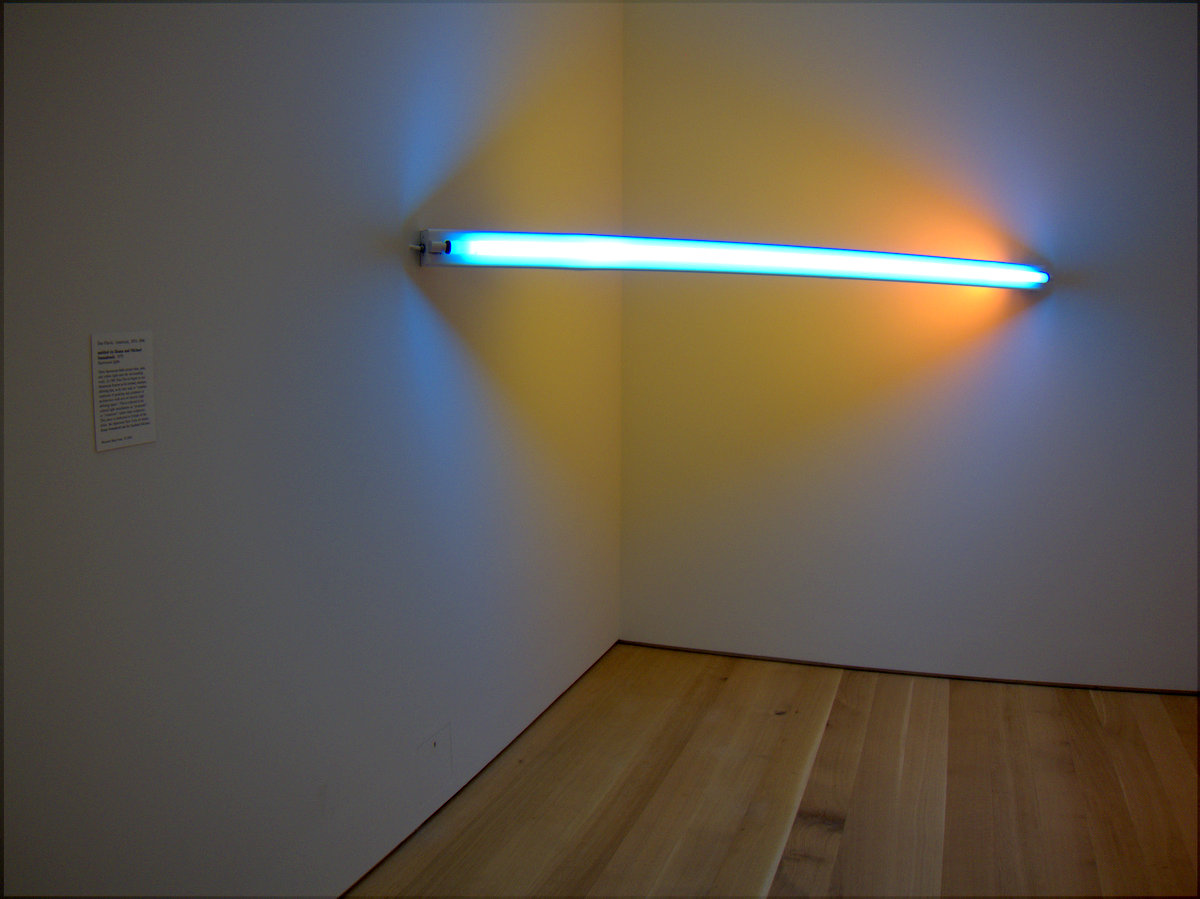
 This work of art is called Fluorescent Lights. It is made of a long fluorescent light.
 You can probably already guess my reaction: The Emperor Has No Clothes. I hate to feel and sound so negative, but very few of the works of "art" in the new wing caused any reaction in me other than sadness that they had spend so much to display such unimpressive things. I imagined all the groupthink that went in to the planning. I am sad to think that there are so many talented artists out there, in so many new and alternative media, yet the above efforts are the things that get the primo space in the St. Louis art museum. This is most certainly art that does not offend. Perhaps that is the point--after all, the museum agenda is controlled by well-to-do people. We certainly don't want art that spawns social justice. Maybe we are filling this space with stuff, so that we don't need to make difficult decisions about what kind of challenging art would take its place.
this display makes me want to administer a secret ballot survey to those visitors who view these works. That survey would include questions like these (along with my predicted answers:
1. Do you consider the above 3 items works of art? (22% yes).
2. Do you consider the above 3 items impressive works of art? (3% yes).
3. Should these works be replaced by something else? (95% would say yes with regard to 75% of these works)
Again, I am saddened to write this. I want to be proud of my city's new art museum.
You can probably already guess my reaction: The Emperor Has No Clothes. I hate to feel and sound so negative, but very few of the works of "art" in the new wing caused any reaction in me other than sadness that they had spend so much to display such unimpressive things. I imagined all the groupthink that went in to the planning. I am sad to think that there are so many talented artists out there, in so many new and alternative media, yet the above efforts are the things that get the primo space in the St. Louis art museum. This is most certainly art that does not offend. Perhaps that is the point--after all, the museum agenda is controlled by well-to-do people. We certainly don't want art that spawns social justice. Maybe we are filling this space with stuff, so that we don't need to make difficult decisions about what kind of challenging art would take its place.
this display makes me want to administer a secret ballot survey to those visitors who view these works. That survey would include questions like these (along with my predicted answers:
1. Do you consider the above 3 items works of art? (22% yes).
2. Do you consider the above 3 items impressive works of art? (3% yes).
3. Should these works be replaced by something else? (95% would say yes with regard to 75% of these works)
Again, I am saddened to write this. I want to be proud of my city's new art museum.