
On marrying the wrong person

The Philosopher's Mail offers some wisdom here:

All of us are crazy in very particular ways. We’re distinctively neurotic, unbalanced and immature, but don’t know quite the details because no one ever encourages us too hard to find them out. An urgent, primary task of any lover is therefore to get a handle on the specific ways in which they are mad. They have to get up to speed on their individual neuroses. They have to grasp where these have come from, what they make them do – and most importantly, what sort of people either provoke or assuage them. A good partnership is not so much one between two healthy people (there aren’t many of these on the planet), it’s one between two demented people who have had the skill or luck to find a non-threatening conscious accommodation between their relative insanities. The very idea that we might not be too difficult as people should set off alarm bells in any prospective partner. The question is just where the problems will lie: perhaps we have a latent tendency to get furious when someone disagrees with us, or we can only relax when we are working, or we’re a bit tricky around intimacy after sex, or we’ve never been so good at explaining what’s going on when we’re worried. It’s these sort of issues that – over decades – create catastrophes and that we therefore need to know about way ahead of time, in order to look out for people who are optimally designed to withstand them. A standard question on any early dinner date should be quite simply: ‘And how are you mad?’
Continue ReadingOn marrying the wrong person

Map to NSA programs by Propublica

Per ProPublica,

This is a plot of the NSA programs revealed in the past year according to whether they are bulk or targeted, and whether the targets of surveillance are foreign or domestic. Most of the programs fall squarely into the agency’s stated mission of foreign surveillance, but some – particularly those that are both domestic and broad-sweeping – are more controversial.

Continue ReadingMap to NSA programs by Propublica

How pervasive are binding pre-dispute arbitration clauses imposed by for-profit businesses upon consumers? Herman Scwartz of The Nation reports:

Two reports issued at the end of last year show how effective the Court’s arbitration rulings have been. Last December, the Consumer Financial Protection Bureau (CFPB) issued a preliminary report, which found that contract clauses mandating pre-dispute arbitration are a “common feature of consumer financial contracts”; a final report is due by year’s end. The agency found such clauses in over 50 percent of credit card loans, 81 percent of prepaid charge cards and in checking accounts covering 44 percent of all insured deposits. The CFPB found further that about 90 percent of such contracts, including almost all credit card loans, insured deposits and prepaid cards, also prohibit participation in current or future class or other joint actions in both judicial and arbitration proceedings. This usually forces consumers who have been injured in small amounts to drop the matter entirely, even though the defendant may have harmed many others the same way, for too little is at stake for each individual to justify the time, trouble and expense of individual arbitration. . . . These two clauses are not just in consumer financial contracts, but are standard in cellphone and nursing home contracts, individual employment contracts, shipping agreements, passenger tickets and in many other areas. They have also been imported into the exploding commercial traffic on Internet websites. When consumers click their assent to the conditions imposed by a seller online, few if any realize they are often acceding to these limitations on their rights to a judicial resolution and a class action. Some merchants have gone so far as to claim that just opening a box for a computer, for example, is enough to constitute the necessary assent to such conditions in an “agreement” placed in the box.
What is the bottom line?
The Supreme Court has given financial institutions, businessmen, unscrupulous employers and others a license to do wrong. As the California Supreme Court put it, they have been given an “exemption from responsibility for [their] own fraud.”

Continue Reading

Hillary Clinton: Fool or Liar?

This, from The Nation:

On Saturday, a carefully vetted four-month investigation by the Washington Post based on material made available by Snowden revealed that while Clinton was in the government, the NSA had collected a vast trove of often intimate Internet correspondence and photos of innocent Americans, including many users of Facebook, Google, Yahoo, Microsoft and other leading Internet companies. The Post reported many files “described as useless by the [NSA] analysts but nonetheless retained... have a voyeuristic quality. They tell stories of love and heartbreak, illicit sexual liaisons, mental-health crises, political and religious conversions, financial anxieties and disappointed hopes.” The Post concluded after four months of reviewing the documents and checking with government agencies that the material supplied by Snowden was invaluable in evaluating the NSA program: “No government oversight body, including the Justice Department, the Foreign Intelligence Surveillance Court, intelligence committees in Congress or the President’s Privacy and Civil Oversight Board, has delved into a comparably large sample of what the NSA actually collects—not only from its targets but from people who may cross a target’s path.” Did Secretary of State Clinton know that such massive spying on the American people was going on and, if not, why isn’t she grateful that Snowden helped to enlighten her? With her scurrilous attacks on Snowden, Hillary Clinton is either a fool or a liar.

Continue ReadingHillary Clinton: Fool or Liar?

Photos from Grand Canyon, Zion and Bryce

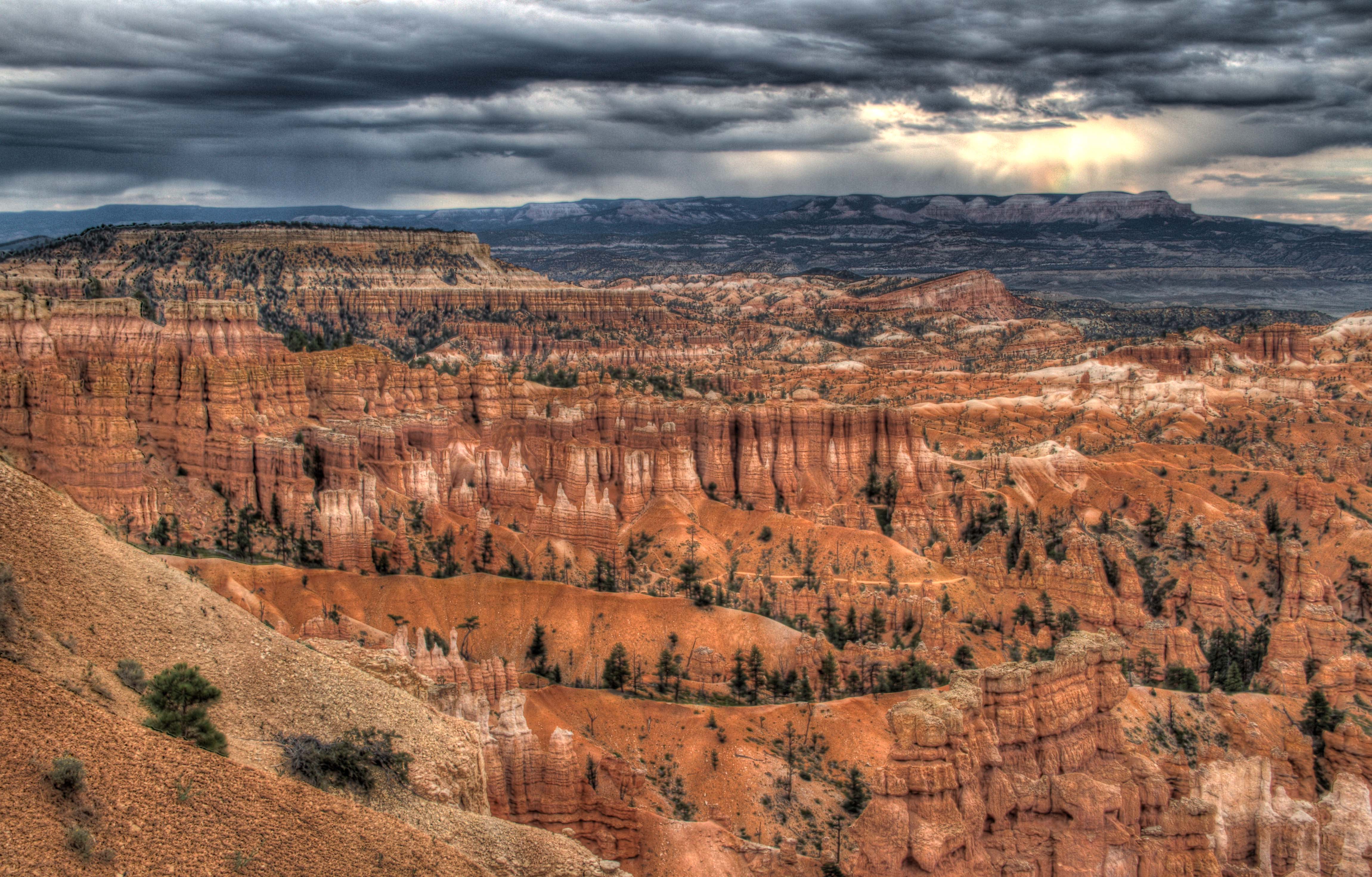
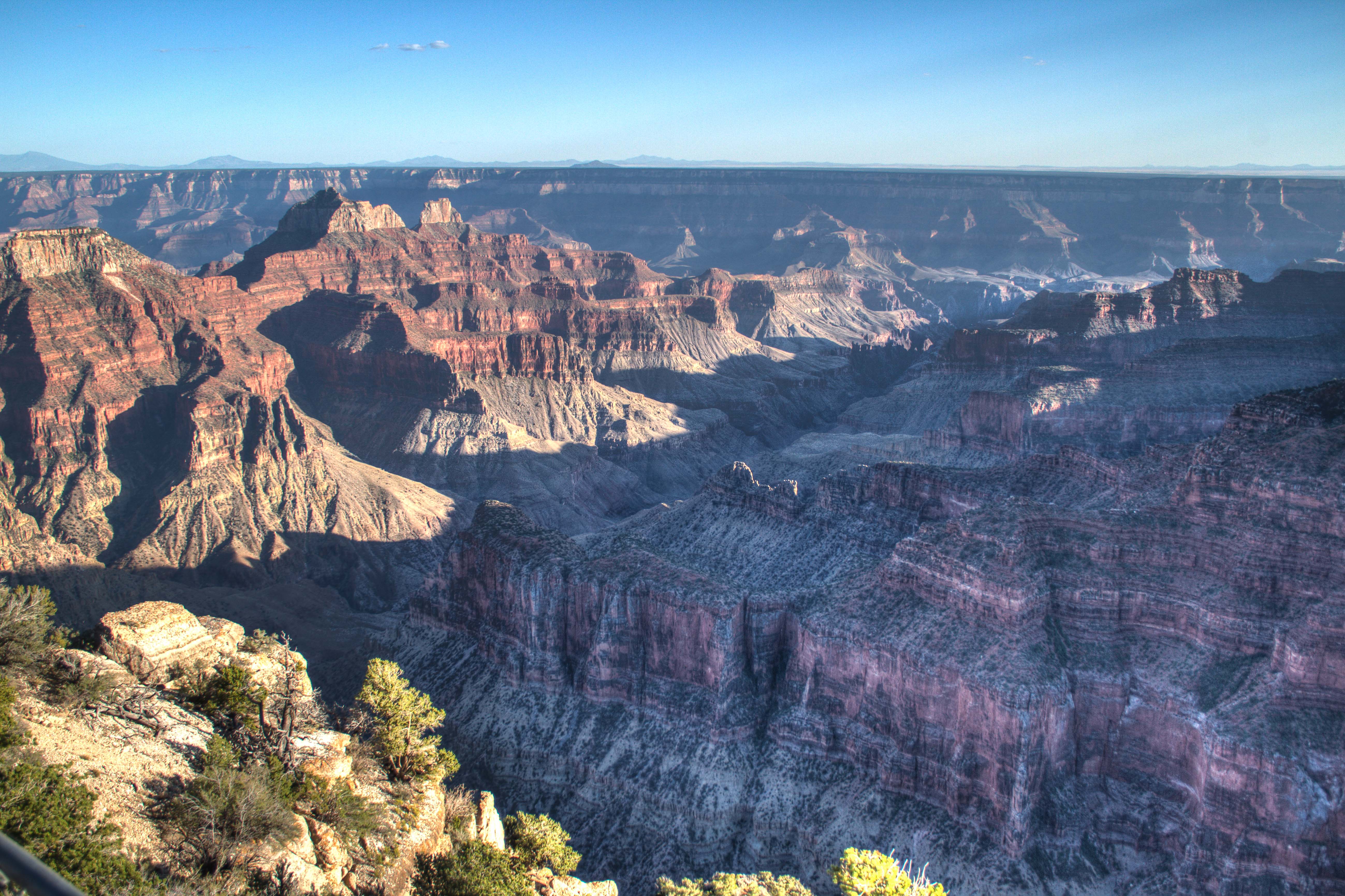
IMG_9299_300_301_Bryce at Sunset HDR final IMG_8120_1_2_HDR HDR final   I recently returned from a trip to the above three national parks. I loved working to compose good shots, a task made easy by the trail designers. I've uploaded my recent photos from Grand Canyon North Rim, Zion Park and Bryce in higher res format to to a Flickr album. Feel free to download any or all of these to use them as a screen saver or for any other non-commercial use. I use a Canon 7D. There are a couple of things I have done here that helped out. One is that I worked hard to compose the photos--I wasn't just snapping pics. This required a lot of hiking, and sometimes climbing off the trail out onto an outcropping. It wasn't dangerous, but I did need to be careful out there This let me get rid of foreground trees, bushes and other distractions. Second, I shot HDR. This means I shot 3 pics of the same scene, bracketing the shutter speed (dark, med, light). I then combined the 3 pics in post-processing with a program called Photomatix, which evens out the lighting. This is amazing software that allow you to approach the HDR with many settings, some of them a bit like a painting,and others straightforward. I then further cropped and straightened and did minor sharpening with Lightroom, another amazing piece of software. Most of these were shot through a new $300 Canon lens that zooms from 18-10mm. That allowed me to squeeze these scenes into one frame, though there is some distortion on the edges at the 10mm setting. Mostly, it was a matter of getting to these places, which required hours of hiking for some of the photos (though others were easy access). I'm about to add the night shot from the north rim at Flickr - it was a long exposure shot where I added foreground lighting in live time with a flashlight. I also obtained the blueish stars by setting my white-balance to tungsten. It involved lots of experimenting, and I did take a lot of shots that didn't work out. That is the main "trick." Don't show people your shots that don't work out well.

Continue ReadingPhotos from Grand Canyon, Zion and Bryce