
Your life in three-second intervals

According to this article in Science, Psychologist Emese Nagy has noticed that all hugs that occurred at the Olympics lasted about 3 seconds. Then he noticed many other things that took three seconds. It seems that our feeling of "nowness" lasts about three seconds:

Crosscultural studies dating back to 1911 have shown that people tend to operate in 3-second bursts. Goodbye waves, musical phrases, and infants' bouts of babbling and gesturing all last about 3 seconds. Many basic physiological events, such as relaxed breathing and certain nervous system functions do, too. And several other species of mammals and birds follow the general rule in their body-movement patterns. A 1994 study of giraffes, okapis, roe deer, raccoons, pandas, and kangaroos living in zoos, for example, found that although the duration of the animals' every move, from chewing to defecating, varied considerably, the average was, you guessed it, 3 seconds. "What we have is very broad research showing that we experience the world in about these 3-second time frames," says developmental psychologist Emese Nagy of the University of Dundee in the United Kingdom.
Continue ReadingYour life in three-second intervals

Fallible stories

At Vital Concerns for the World, Anthropology Professor Robert Canfield points to the recent disclosures about Greg Mortensen's best seller, Three Cups of Tea, as further evidence that we need to be wary about the claims on which we base our social policy:

Once more we have learned that the stories we like to believe are not exactly true. Again it turns out that the stories we embrace have been shaped by the interests and agendas of fallible human beings like ourselves. Much of what we “know” about our world comes to us already misshapen by the interests of those who pass it on to us.
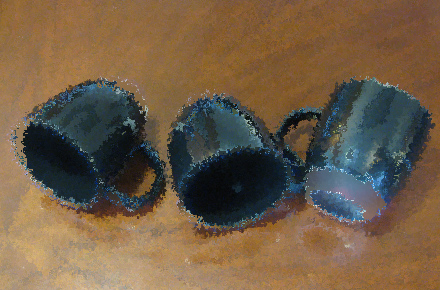
The recent revelations about Mortensen remind us that we are easily suckered by claims that support our existing beliefs and desires. Cognitive scientists have long shown that human beings are constant prey to the confirmation bias. Vigilance about claims, then, especially fantastic claims, should [caption id="attachment_17551" align="alignright" width="150" caption="Image by Erich Vieth"][/caption] never go on vacation. Canfield's quote also reminds me of Carl Sagan's caveat: "Extraordinary claims require extraordinary evidence." We need to be especially wary about tall claims from the far corners of the world where evidence gathering is sparse to non-existence. Three Cups of Tea, like all too many stories these days, is a story about how to spin and embellish a story.

Continue ReadingFallible stories

Perceived prevalence of atheists reduces prejudice against atheists

Will Gervais has recently published "Finding the Faithless: Perceived Atheist Prevalence Reduces Anti-Atheist Prejudice" in the Personality and Social Psychology Bulletin. he wondered whether a perceived increase in the number of atheists would lead to increased prejudice against atheists. He has found the opposite. Evidence or belief that atheists are prevalent actually reduces prejudice against atheists. Therefore, atheists would be advised to remind others that they are atheists so that others tend to believe that there are significant numbers of atheists out there. At The Intersection, Chris Mooney suggests that atheists should nonetheless avoid being confrontational, because confrontation tends tend "to prompt negative emotional reactions, and thus defensiveness and inflexibility." That is the combination I have settled into over the past couple of years. I don't hesitate to tell others that I am a non-theist (I avoid the use of the word atheist because is suggests that I hold all of the same views as the "new atheists" (which I don't, though there is considerable overlap). When I make it clear that I am a non-theist to a theist, however, I do so in a non-confrontational way, which, in my experience, invites much more productive dialogue. See my five part series, Mending Fences (start here), for my views in detail. How prevalent are atheists worldwide? Here one of the opening paragraphs from the Gervais study: But they are numerous. Globally, atheists are 58 times more numerous than Mormons, 41 times more numerous than Jewish people, and twice as numerous as Buddhists; nonbelievers constitute the fourth largest religious group in the world, trailing only Christians, Muslims, and Hindus. Despite the prevalence of atheists and the popular attention atheism is receiving, there is little scientific research on atheism and attitudes toward atheists. Yet religious belief is declining in the postindustrial world, and the percentage of Americans with no religious affiliation has nearly doubled since 1990. Under billboards reading, for example, “Don’t Believe in God? You Are Not Alone,” American atheists are increasingly making their numbers known. What effects might the increasing numbers and visibility of atheists have on attitudes toward atheists? This straightforward question has important implications not only for the specific social psychology of atheism and attitudes toward atheists but also for the broader social psychological understanding of the relationship between prejudice and perceived outgroup size, possibly suggesting a novel approach to prejudice reduction. [Citations omitted]

Continue ReadingPerceived prevalence of atheists reduces prejudice against atheists

What is it about libertarians?

Ronald Baily of Reason has gathered recent psychological research examining the personality characteristics of libertarians. He notes that Jonathan Haidt has had to revamp his left/right political ideology analysis to accommodate libertarians. They are different from the left and the right. What did Haidt find?

“Libertarians share with liberals a distaste for the morality of Ingroup, Authority, and Purity characteristic of social conservatives, particularly those on the religious right,” Haidt et al. write. Libertarians scored slightly below conservatives on harm and slightly above on fairness. These results suggest that libertarians are “likely to be less responsive than liberals to moral appeals from groups who claim to be victimized, oppressed, or treated unfairly.”

There is a lot of good stuff in this article, including this additional survey of the ways in which they are different than those on the traditional left and right:
Another survey, the Schwartz Value Scale, measures the degree to which participants regard 10 values as guiding principles for their lives. Libertarians put higher value on hedonism, self-direction, and stimulation than either liberals or conservatives, and they put less value than either on benevolence, conformity, security, and tradition. Like liberals, libertarians put less value on power, but like conservatives they have less esteem for universalism. Taking these results into account, Haidt concludes that “libertarians appear to live in a world where traditional moral concerns (e.g., respect for authority, personal sanctity) are not assigned much importance.” Haidt and his colleagues eventually recognized that their Moral Foundations Questionnaire was blinkered by liberal academic bias, failing to include a sixth moral foundation, liberty. They developed a liberty scale to probe this moral dimension. Unsurprisingly, the researchers found that libertarians dramatically outscored liberals and conservatives when it came to putting a high value on both economic and lifestyle liberty. Haidt and his colleagues conclude, “Libertarians may fear that the moral concerns typically endorsed by liberals or conservatives are claims that can be used to trample upon individual rights—libertarians’ sacred value.”

Continue ReadingWhat is it about libertarians?

Intelligence can exacerbate motivated reasoning

At The Intersection (no relation), Chris Mooney points out that Intelligence doesn’t protect us from Motivated reasoning. In fact, intelligence can invite this problem. What is "motivated reasoning"?

In motivated reasoning, memory searches, interpretations of incoming information, evaluations of arguments, and even perception, are biased in such a way that we will be more likely to arrive at a desired conclusion (called a directional motivation . . . ). The way this is achieved, in essence, is by limiting the information that is retrieved from long term memory into current working memory (the store of information that is available for current processing), thereby biasing the information available for supporting or evaluating conclusions and arguments, as well as interpreting incoming information.
Climate-change denial is a good place to observe motivated reasoning in action: [More . . . ]

Continue ReadingIntelligence can exacerbate motivated reasoning