On the Criminalization of Comedy
Andrew Doyle offers a sharp analysis on the criminalization of comedy.
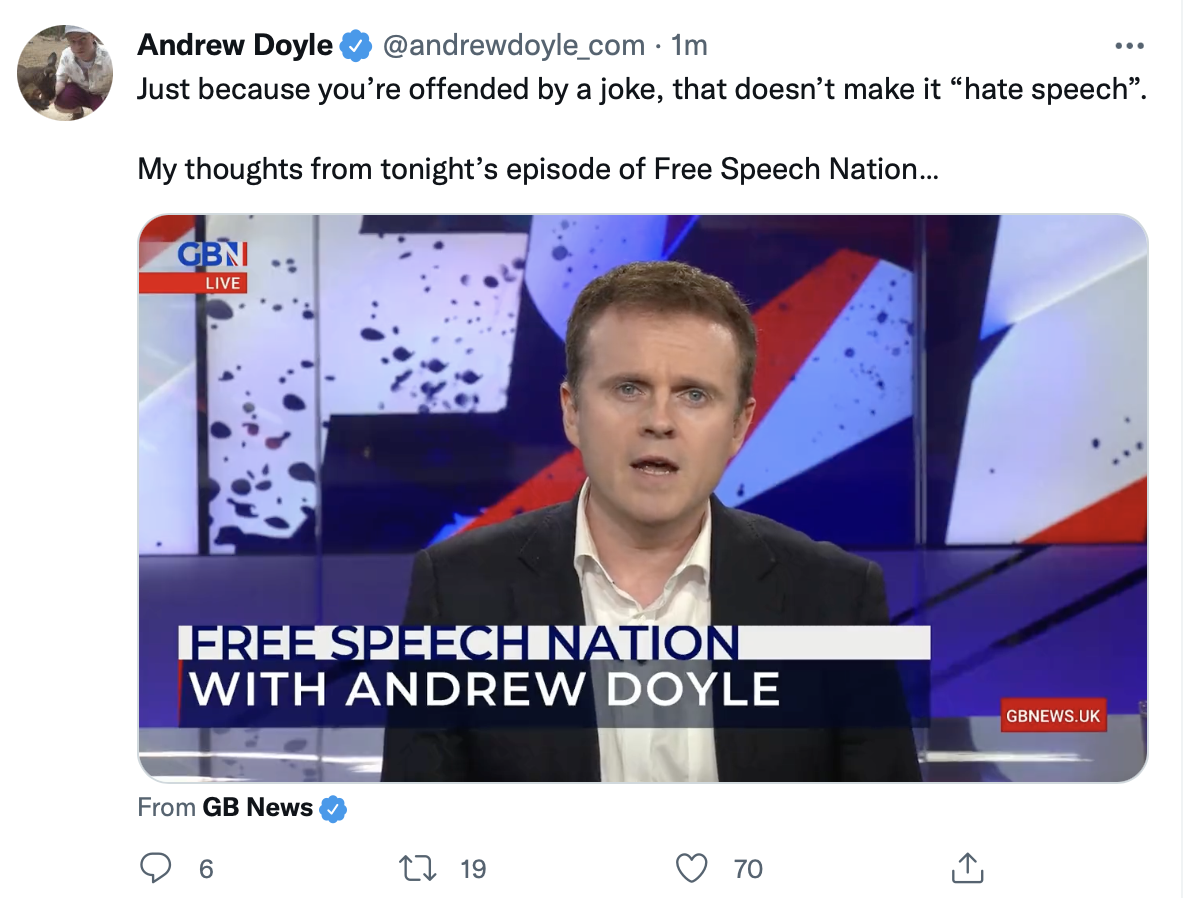

Andrew Doyle offers a sharp analysis on the criminalization of comedy.
The NYT decides that it's now safe to have a real conversation on this important issue:
"Even nomenclature is contentious. Descriptive phrases such as “biological woman” and “biological man” might be seen as central to discussing differences in performance. Many trans rights activists say such expressions are transphobic and insist biology and gender identity are largely social constructs.Some trans activists try to silence critics, whom they derisively call TERFs, which stands for trans-exclusionary radical feminists. A spokeswoman for a gay rights group urged a reporter not to “platform” — that is not to quote — those she said held objectionable views, including Martina Navratilova, the retired tennis legend, a champion of liberal and lesbian causes. Ms. Navratilova argues that transgender female athletes possess insurmountable biological advantages.
“So I’m a ‘TERF’ — OK, that’s the way you want to go?” Ms. Navratilova said in response. “I played against taller women, I played against stronger women, and I beat them all. But if I faced the male equivalent of Lia in tennis, that’s biology. I would have had no shot. And I would have been livid.”
John McWhorter, writing at the NYT:
[C]onsider what Nicholas Kristof wrote for The Times in 2017: "In a typical year, more preschoolers are shot dead in America (about 75) than police officers are.” The carnage continues, and for the most part, Republican elected officials don’t appear to care, presumably because not enough of their constituents are willing to vote them out. As much as I value trying to see where the other side is coming from on a given issue, my curiosity and compassion have limits, and here I see true immorality — be it as a student of civics, language or just plain life — in the lack of interest some of our officials have in preventing the violence we routinely see.
This is the latest installment of a fascinating exchange of ideas at FIRE's First Amendment News. This installment was written by Ira Glasser, former Executive Director of the ACLU. This conversation was provoked by Florida's repeal of Disney's special tax status in response to Disney's criticism of Florida's Parental Rights in Education bill, misnamed the “Don’t Say Gay” law by many on the left.
I'm repeatedly struck by the ill-thought tactics of many people who try to mess with the First Amendment. These tactics usually amount to "Free speech for me, but not for thee." The First Amendment is a boomerang, however. It is an equal-opportunity provision that doesn't (and shouldn't) care about who is speaking or the content of particular speech. Your well-intended tweaks and restrictions of the First Amendment (here, in the form of Citizens United) can come back and hit you upside your head. What follows is an excerpt of Glasser's latest comment:
But two liberal law professors who had spent 12 years vigorously opposing the Citizens United decision — my longtime colleagues Burt Neuborne and Erwin Chemerinsky — leaped into the fray supporting the First Amendment right of the Disney corporation to express its views on that legislation and opposed the state’s attempt to retaliate. When I chided them for it in light of their long opposition to Citizens United, they responded with a blizzard of legal distinctions that, however interesting and important, were disconnected from the political realities that resulted in the broad law that Citizens United struck down, and unresponsive to my question.
Buried in that blizzard, however, was the answer to my question, almost as an aside: “Citizens United,” they now declare, “was rightly decided on its facts.”
Floyd Abrams then replied, saying he was startled to discover that they now said they believed that “Citizens United was rightly decided on its facts” because for 12 years, or ever since Citizens United was decided, they had vigorously and consistently criticized that decision as having been wrongly decided.
I, too, was startled. What had changed? Certainly, the facts of that case hadn’t changed since the case was decided. Moreover, if Burt and Erwin had ever before proclaimed that Citizens United had been rightly decided in the many public fora where they discussed that decision, I missed it, and apparently, Floyd Abrams did, too.
So if the facts of the case haven’t changed, what has?
We can only speculate.
But in any case, we now have two accomplished liberal law professors saying: 1) that Citizens United was rightly decided; and 2) that a business corporation like Disney has a First Amendment right to express its views on a contentious law.
I need to fall on the sword here too. I got caught up in the anti-Citizens United wave years ago and posted several regrettable posts (at this site) indicating positions I no longer hold. The turning point for me was a very slow and careful read of the Citizens United opinion combined with sober consideration of impossible real world challenges we would have faced had Citizens United had been decided the opposite way.