
Scalia’s Problem

Recently, Justice Antonin Scalia shot his mouth off about another bit of “social” judicial opinion and managed to be correct to a fault again. Here is the article. Basically, he is of the opinion that if a specific term or phrase does not appear in the Constitution, then that subject is simply not covered. Most famously, this goes to the continuing argument over privacy. There is, by Scalia’s reasoning (and I must add he is by no means alone in this—it is not merely his private opinion), no Constitutionally-protected right to privacy. As far as it goes, this is correct, but beside the point. The word “private” certainly appears, in the Fifth Amendment, and it would seem absurd to suggest the framers had no thought for what that word meant. It refers here to private property, of course, but just that opens the debate to the fact that there is a concept of privacy underlying it. The modern debate over privacy concerns contraception and the first case where matters of privacy are discussed is Griswold v. Connecticut, 1965. That case concerned the right of a married couple to purchase and use contraception, which was against the law in that state (and others). The Court had to define an arena of privacy within which people enjoy a presumed right of autonomous decision-making and into which the state had no brief to interfere. Prior to this, the Court relied on a “freedom of contract” concept to define protected areas of conduct. Notice, we’re back in the realm of property law here. People who insist that there is no “right to privacy” that is Constitutionally protected seem intent on dismissing any concept of privacy with which they disagree, but no doubt would squeal should their own self-defined concept be violated. Therein lies the problem, one we continue to struggle with. But it does, at least in Court tradition, come down to some variation of ownership rights—which is what has made the abortion debate so difficult, since implicit in it is the question of whether or not a woman “owns” her body and may therefore, in some construction of freedom of contract, determine its use under any and all circumstances. [More . . . ]
Continue ReadingScalia’s Problem

Rightward shift of John Roberts Court documented

This from Raw Story:

A study has found that the Supreme Court under Chief Justice John Roberts has undergone a fundamental shift in its outlook, ruling in favor of businesses much more often than previous courts. According to the Northwestern University study, commissioned for the New York Times, the Roberts court has sided with business interests in 61 percent of relevant cases, compared to 46 percent in the last five years of Chief Justice William Rehnquist, who passed away in 2005.

Continue ReadingRightward shift of John Roberts Court documented

New chapter on arbitration in Missouri

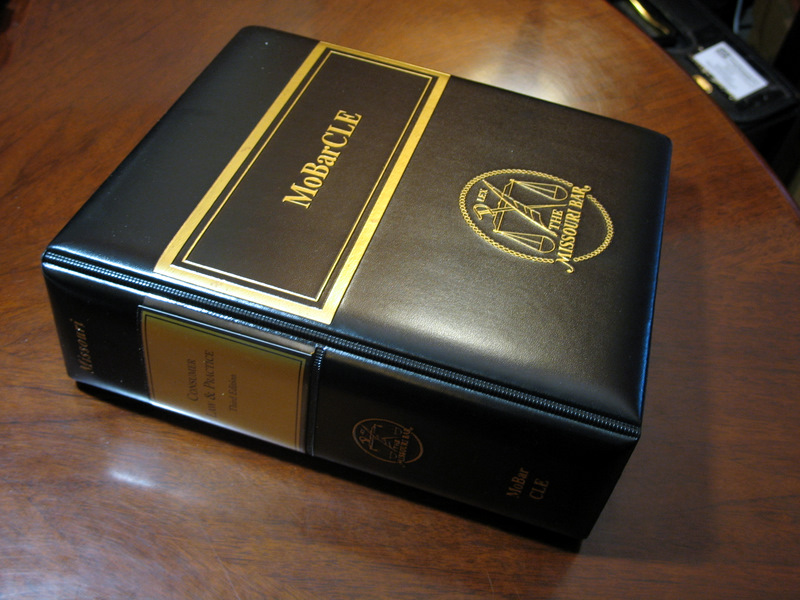
I know that this is a shameless self-promotion, but here goes. I've often ranted about the way unscrupulous businesses take advantage of consumers by inserting horrendously unfair mandatory arbitration clauses in their contracts. A new Missouri CLE Deskbook for lawyers was released yesterday and it features a highly detailed chapter on arbitration clauses. I was one of two co-authors, along with John Campbell with whom I have the honor of working at the Simon Law Firm in St. Louis, Missouri. This manual is geared to help Missouri consumer lawyers, but it could be valuable for anyone who wants to know the state of the law of consumer arbitration. It worth noting that Missouri law has paralleled the arbitration law of many other states, especially on the issue of unconscionability (John and I argued for the winning side of the August 31, 2010 case decided by the Missouri Supreme Court, Brewer v. Missouri Title Loans). If you are interested in taking a look at this chapter, I would assume that you will soon be able to find this book in most law libraries and on the library shelves of many law firms. For a glimpse of how complicated this topic of arbitration has gotten, I'm printing out the Table of Contents below: [More . . . ]

Continue ReadingNew chapter on arbitration in Missouri

Justice Isn’t Boring

I'd heard about this Boring case a couple of years ago, and it finally has reached a verdict. In essence, Google's Street View crew accidentally drove up and filmed a private road, and the owners had nothing better to do than sue. I'm picturing some legal adviser drooling over Google's coffers and thinking they had an angle to get something substantial in the form of a settlement. But the case was pretty weak, with several judges simply stripping off charges, until they were left with second degree trespass. But they won! They beat Google! As Geek.com puts it: Boring couple win $1 compensation for Street View trespassing.

Continue ReadingJustice Isn’t Boring

Matt Taibbi reports from his front row seat at a foreclosure court trial docket

Matt Taibbi's newest article should be required reading for anyone who wants to support the desires of banks to expeditiously foreclose on home loans. Taibbi showed up at a Florida foreclosure docket to give an insider's view. You will be amazed at the conduct of the judge (it is described toward the end of Taibbi's article). Here's the link: Courts Helping Banks Screw Over Homeowners: Retired judges are rushing through complex cases to speed foreclosures in Florida. Here's an excerpt:

At worst, these ordinary homeowners were stupid or uninformed — while the banks that lent them the money are guilty of committing a baldfaced crime on a grand scale. These banks robbed investors and conned homeowners, blew themselves up chasing the fraud, then begged the taxpayers to bail them out. And bail them out we did: We ponied up billions to help Wells Fargo buy Wachovia, paid Bank of America to buy Merrill Lynch, and watched as the Fed opened up special facilities to buy up the assets in defective mortgage trusts at inflated prices. And after all that effort by the state to buy back these phony assets so the thieves could all stay in business and keep their bonuses, what did the banks do? They put their foot on the foreclosure gas pedal and stepped up the effort to kick people out of their homes as fast as possible, before the world caught on to how these loans were made in the first place. . . . When you meet people who are losing their homes in this foreclosure crisis, they almost all have the same look of deep shame and anguish. Nowhere else on the planet is it such a crime to be down on your luck, even if you were put there by some of the world's richest banks, which continue to rake in record profits purely because they got a big fat handout from the government. That's why one banker CEO after another keeps going on TV to explain that despite their own deceptive loans and fraudulent paperwork, the real problem is these deadbeat homeowners who won't pay their fucking bills. And that's why most people in this country are so ready to buy that explanation. Because in America, it's far more shameful to owe money than it is to steal it.

Continue ReadingMatt Taibbi reports from his front row seat at a foreclosure court trial docket