
The misconduct of Columbus is Bible based.

From Bible Funmentionables, we learn that Columbus was acting on the authority of the Bible when government officials fail to mention when they are celebrating Columbus Day. Michael G. Morris of Bible Funmentionables explains:

Hate to ruin your Columbus Day festivities, but what better time to explore one of the worst first impressions in human history and how it was all seemingly condoned by the Good Book. Columbus’ own stated purpose for his voyage (to India) was to find people who belonged to
“the sect of Mahoma [Islam] and to all idolatries and heresies, with a view that they might be converted to our holy faith.”
Continue ReadingThe misconduct of Columbus is Bible based.

Myths of Authority in Practice

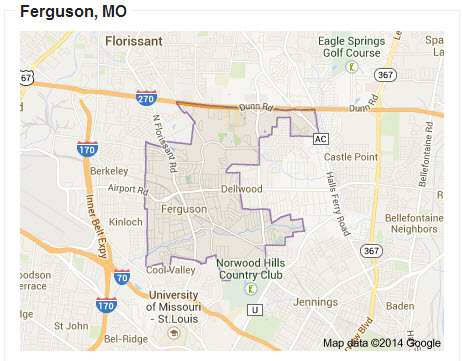
I’ve been trying to come to terms with Ferguson since it began. The shooting of Michael Browne sparked a response that surprised many people and the counter responses have been equally surprising among certain people, not so much among certain others. Every time I start to write something I find what I intended to say had already been said better elsewhere. [More . . . ]

Continue ReadingMyths of Authority in Practice

Short history of the NRA and the Second Amendment

The Brennan Center for Justice recently published this history of the Second Amendment and the NRA. The Second Amendment was construed entirely differently in years past than it is now. The NRA was an entirely benign organization until a few decades ago. It's amazing to see how something can evolve into its opposite, but that is par for the course for a symbolic species like human animals.

In the end, it was neither the NRA nor the Bush administration that pressed the Supreme Court to reverse its centuries-old approach, but a small group of libertarian lawyers who believed other gun advocates were too timid. They targeted a gun law passed by the local government in Washington, D.C., in 1976—perhaps the nation’s strictest—that barred individuals from keeping a loaded handgun at home without a trigger lock. They recruited an appealing plaintiff: Dick Heller, a security guard at the Thurgood Marshall Federal Judiciary Building, who wanted to bring his work revolver home to his high-crime neighborhood. The NRA worried it lacked the five votes necessary to win. The organization tried to sideswipe the effort, filing what Heller’s lawyers called “sham litigation” to give courts an excuse to avoid a constitutional ruling. But the momentum that the NRA itself had set in motion proved unstoppable, and the big case made its way to the Supreme Court. The argument presented in District of Columbia v. Heller showed just how far the gun rights crusade had come. Nearly all the questions focused on arcane matters of colonial history. Few dealt with preventing gun violence, social science findings or the effectiveness of today’s gun laws—the kinds of things judges might once have considered. On June 26, 2008, the Supreme Court ruled 5-4 that the Second Amendment guarantees a right to own a weapon “in common use” to protect “hearth and home.” Scalia wrote the opinion, which he later called the “vindication” of his judicial philosophy. After the decision was announced, Heller stood on the steps of the court for a triumphant press conference. Held aloft behind him was a poster bearing that quote from Patrick Henry, unearthed by the scholars who had proven so important for the successful drive: “Let every man be armed.”

Continue ReadingShort history of the NRA and the Second Amendment