That psychopath in the mirror

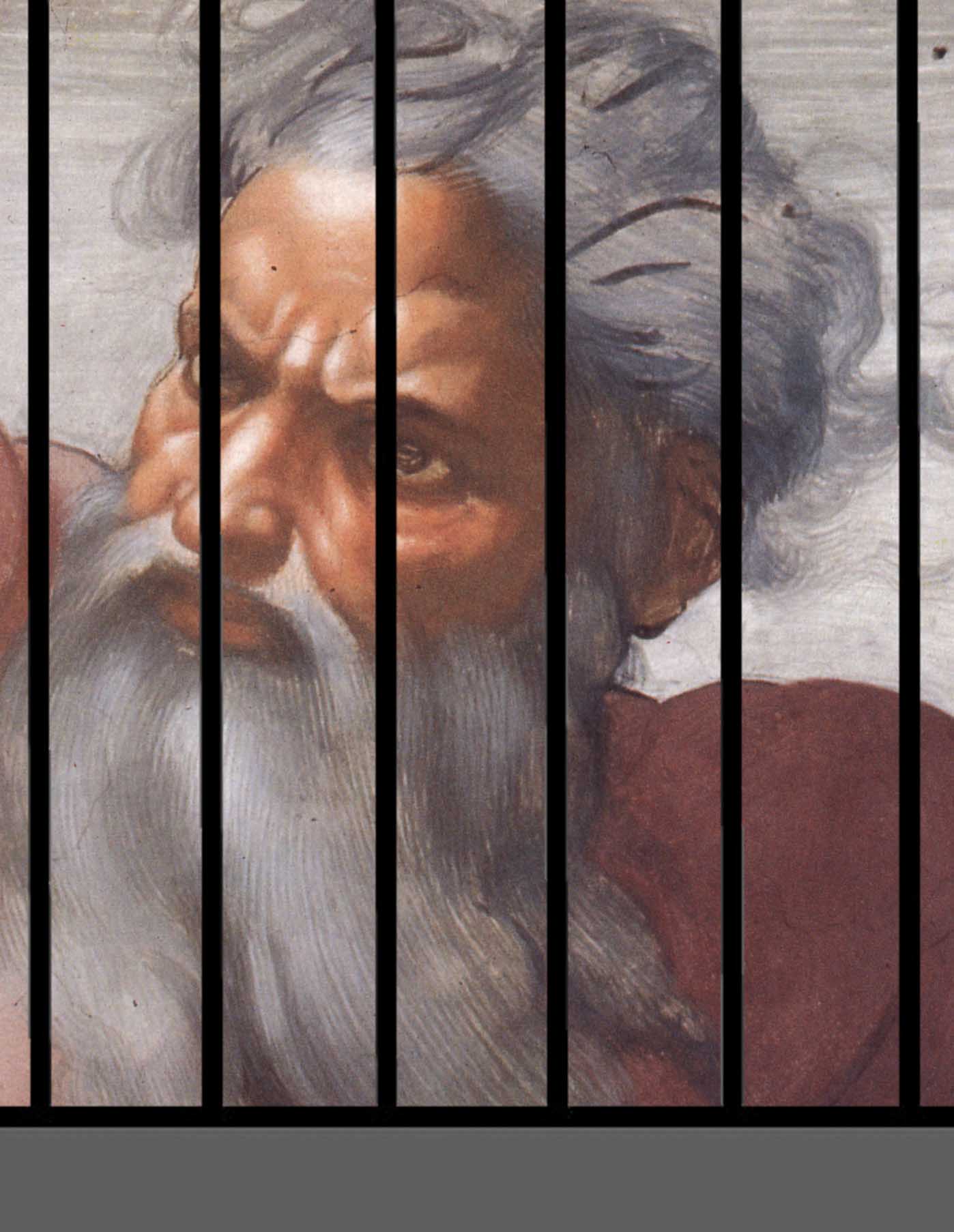
In the September/October 2010 edition of Scientific American Mind, I recently read an article titled "Inside the Mind of a Psychopath," by Kent Kiehl and Joshua W Buckholtz. Who are psychopaths? The authors claim that psychopaths are people whose brains have "gone wrong." They claim that psychopaths make up .5 to 1% of the general population, adding up to 250,000 psychopaths living freely in the United States. They offer a list of criteria for determining whether a person is a psychopath, mentioning that "everyone falls somewhere on the psychopathic continuum." What are the basic symptoms?

One of the most striking peculiarities of psychopaths is that they lack empathy; they are able to shake off as mere tinsel the most universal social obligations. They lie and manipulate yet feel no compunction or regrets-in fact, they don't feel particularly deeply about anything at all. So much for the way regular people make sense of the world is through emotion. It informs our gut decisions, our connections to people and places, our sense of belonging and purpose. It is almost impossible to imagine life without findings-until you meet a psychopath. But psychopaths often cover up their deficiencies with a ready and engaging charm, so it can take time to realize what you are dealing with.
Fair enough, but I'd like to focus on that idea that all of us fall along this continuum. [More . . .]

Continue ReadingThat psychopath in the mirror

The Pope speaks. Richard Dawkins replies.

Only a few weeks ago, the Pope arrived at Edinburgh to blame people like me (I don't belong to a religion) for the Nazi holocaust. These outrageous claims constitute the kind of abject bigotry that can lead to ostracism and violence against those of us who, sincerely and after careful consideration of the evidence, do not believe in supernatural beings. As reported by The U.K. Guardian:

Benedict XVI used the first papal state visit to Britain to launch a blistering attack on "atheist extremism" and "aggressive secularism", and to rue the damage that "the exclusion of God, religion and virtue from public life" had done in the last century. The leader of the Roman Catholic church concluded a speech, made before the Queen and assembled dignitaries at the Palace of Holyroodhouse in Edinburgh, with the argument that the Nazi desire to eradicate God had led to the Holocaust and a plea for 21st-century Britain to respect its Christian foundations.
Incredibly, he described pedophilia as an 'illness' whose sufferers had "lost their free will." The Guardian article is well worth a read. It offers a fascinating look into the corrupted soul of the Vatican. Richard Dawkins had more than a few pointed things to say about the Pope and his church. In fact, his speech took the form of an sharp indictment. I couldn't agree more with Dawkins, even though it somewhat pains me to say this. You see, I was raised Catholic and I have many friends who are still practicing Catholics who are generous, kind and thoughtful. It's a pity that their spiritual leader would rather blame secularists and allow millions of people to die by depriving them of condoms, than to own up to the mass-rape perpetrated and covered up by many of the "leaders" of his Church. On top of that, consider the Catholic Church's systemic disparagment of women. Such horrifically screwed up priorities. For many years, the Vatican has annoyed me with its pomposity and hypocrisy, exacerbated by the way the mass media fawns over so many things that Popes utter, rarely pointing out the vagueness or the absurdities. I'm afraid that I've now reached a tipping point. It's time to completely disregard the fact that the Pope is revered by so many others. Despite the fact that the Pope dresses up in expensive clothes and that he works extremely hard to obscure his absurdities with impenetrable language allegedly based on ancient books, he plainly stands before us as a man whose head is filled with numerous terrible ideas. Here's what Dawkins had to say:

Continue ReadingThe Pope speaks. Richard Dawkins replies.

God is good

Prologue: This post does not apply to Christians who conclude that "God" was evil to the extent that "He" killed babies. Nor does it apply to Christians who don't believe that the Old Testament is literally true, and further conclude that "God" never actually killed babies as described in the Old Testament. In short, this post applies only to those who believe that A) God really killed numerous little babies, and B) that God is nonetheless "good." Whenever I hear believers proclaim that “God” is “good” I am puzzled. How could it possibly be that an all-knowing and omnipotent being could engage in the many atrocities attributed to “God” in the bible? For example, how can killing little babies ever be considered to be good? Here are 1,199 more examples of cruelty from the Bible. Anyone but “God” who engaged in such behavior would be universally proclaimed to be evil, not good. There’s no way to avoid this conundrum for believers, especially for Bible literalists. The God they repeatedly praise purportedly killed many thousands of innocent people, including countless numbers of babies. Consider also, that other Bible passages show little regard for the lives of infants and fetuses. The above passages cause me to consider this question: Do believers sincerely believe their claims that “God” is “good,” or are they merely being practical in the face of the threat of hell? To what extent is it that it is the perceived threat of hell causes it to seem “true” that a baby-killing God is “good”? Sam Harris raises a similar issue at page 33 of his new book, The Moral Landscape (2010):

What if a more powerful God would punish us for eternity for following Yahweh’s law? Would it then make sense to follow Yahweh’s law “for its own sake”? The inescapable fact is that religious people are as eager to find happiness and to avoid misery as anyone else: many of them just happen to believe that the most important changes in conscious experience occur after death (i.e., in heaven or in hell).

Indeed, what if a bigger stronger god named Kyle came along and smote Yahweh, showing all the world Yahweh’s lifeless supernatural “corpse” while declaring “God is Dead!” (Were this ever to happen, it would likely make atheist Friederick Nietzsche jostle in his grave). Wouldn’t believers quickly modify their existing hymnals, scratching out “God” and inserting “Kyle”? What might they do to the traditional hymn, “God is so Good”? Something like this? [More . . . ]

Continue ReadingGod is good

A terrifyingly wonderful gift

At TED Stacy Kramer tells a three-minute story about an unwanted gift that thoroughly enriched her life. In an earlier wordier post, I explored this same idea, but perhaps it's now time to add Stacy's type of gift to my list of "bad" things. Bad things often open good doors--I'm certain of this. Obstacles often provoke us to pick better solutions that we otherwise would have--perhaps this idea is sometimes captured by the term exaptation. Thus, in our wild and wacky world, down can sometimes be up, and it often has nothing to do with George Orwell. In many cases, it's part of the natural order that unveils itself only piece by piece to short-sighted human animals like you and me.

Continue ReadingA terrifyingly wonderful gift

Culture as a collective fabrication facilitating our quest for immortality

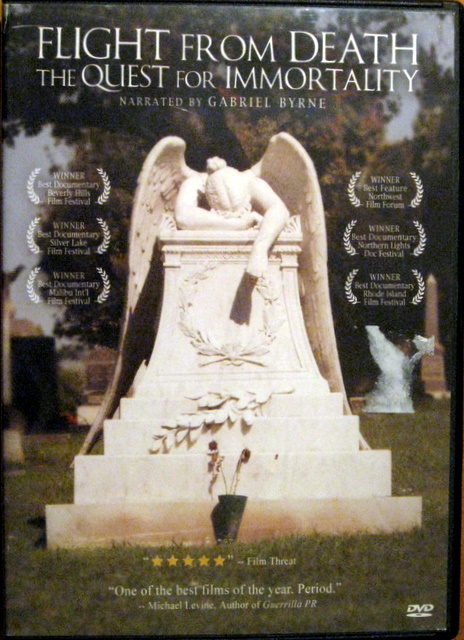
I often wonder how people are capable of simply going about their business, chatting about last night’s sporting event, working on crossword puzzles or thinking about buying a new car, despite the fact that they will be dead someday, maybe even someday soon. And for those with children, their children will also be dead a few decades later. How can we possibly live with those dreaded thoughts hanging over us? In fact, every person now living will likely be dead in 150 years. How can we engage in mundane things like gossiping, consuming, traveling and amusing ourselves when every person on the planet is facing annihilation? How do we put death out of our minds so easily? Ernest Becker would suggest that I have it all backwards. According to Becker, people intensely amuse and distract themselves, and immerse themselves in culture, because they are anxious about death. They are not necessarily consciously aware of their impending deaths, but they feel it deeply, and their minds grind and sputter on this topic, under the surface, unconsciously. We do the best we can to deal with this terrifying thought that we will all be dead, and the best we can think of doing is to distract ourselves with the many bright and shiny bigger-than-us, bigger-than-life things offered by culture. We put these things on a pedestal and then we cling to them as if they were life preservers. We embellish our cultural treasures with accolades recognizing their “eternal” significance. “Strawberry Fields Forever,” Babe Ruth, stamp collections, being a trivia pursuit star, triathlons, Michelangelo’s David. And for some of us, Jesus Christ loves us and He will let us live with him forever in heaven. According to Becker, these cultural mainstays are important for keeping us steady, even while death (and the threat of death) lurks around every corner. I recently had the opportunity to watch the highly acclaimed low-budget 90-minute 2005 documentary titled "Flight from Death: the Quest for Immortality,” produced by Patrick Shen and Greg Bennick. The film is based on the works of Ernest Becker’s “terror management theory,” (TMT) on which I’ve written several times (see here and here). Even though I was well acquainted with the works of Becker prior to viewing this video, I found the film to be transformative, in that it offers a schematic of underlying “hydraulics” that help us to understand many things that otherwise seem so puzzling about culture. I’d highly recommend “Flight from Death” whether or not you sometimes find it stunning that you live on a planet where mobile intestinal tracks scurry about, drive buses and even serve you meals at your local restaurant. Here’s the trailer. Even though I was already familiar with Becker’s theory and many of the experiments substantiating Becker’s theory, I found the film illuminating. “Flight From Death” includes well-chosen imagery and music to accompany the interviews with thoughtful and eccentric people from a wide variety of backgrounds (including psychologist Sheldon Soloman and writer Sam Keen, among others). [More . . . ]

Continue ReadingCulture as a collective fabrication facilitating our quest for immortality