FIRE’s Position on TikTok Litigation

Excerpt from FIRE's recent Amicus Brief:

Never before has Congress taken the extraordinary step of effectively banning a communications platform, let alone one used by half the country. But this spring, Congress did exactly that when it passed the Protecting Americans from Foreign Adversary Controlled Applications Act. The law not only threatens TikTok’s U.S. operation but also exposes other online platforms to burdensome restrictions, including potential bans, if they have even tenuous connections to certain foreign countries.

TikTok and its users quickly filed lawsuits in the U.S. Court of Appeals for the D.C. Circuit, which the act gives exclusive jurisdiction for challenges to the law. FIRE, joined by the Institute for Justice and the Reason Foundation, filed an amici curiae — “friend of the court” — brief supporting the plaintiffs. We argued the law violates the First Amendment in two ways.

First, it explicitly targets a specific communications platform — and the users who speak and access content on it — for the purpose of silencing opinions and ideas that lawmakers oppose. Such attempts to suppress disfavored views strike at the heart of the First Amendment.

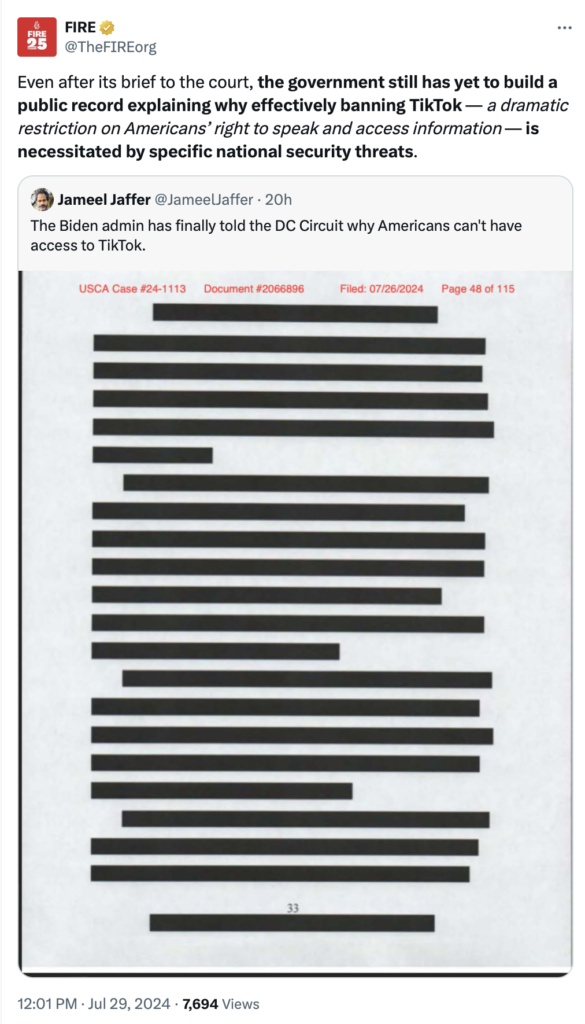
Second, to the extent the law is motivated by national security concerns, Congress has failed to build a public record explaining why such a dramatic restriction of Americans’ right to speak and access information is necessary to address those concerns. (However, the court will not consider the brief for procedural reasons explained in the note following this article.)

Recent development:

Continue ReadingFIRE’s Position on TikTok Litigation

We Need More Hands-On Education Like This

I'm not being sarcastic. I think that the lack of hands-on know-how is damaging our children. They are not well-prepared for this world by clicking at their laptop computers and using their credit cards to hire other people to do so many of the physical things they need and want.

Thus,this video made my day:
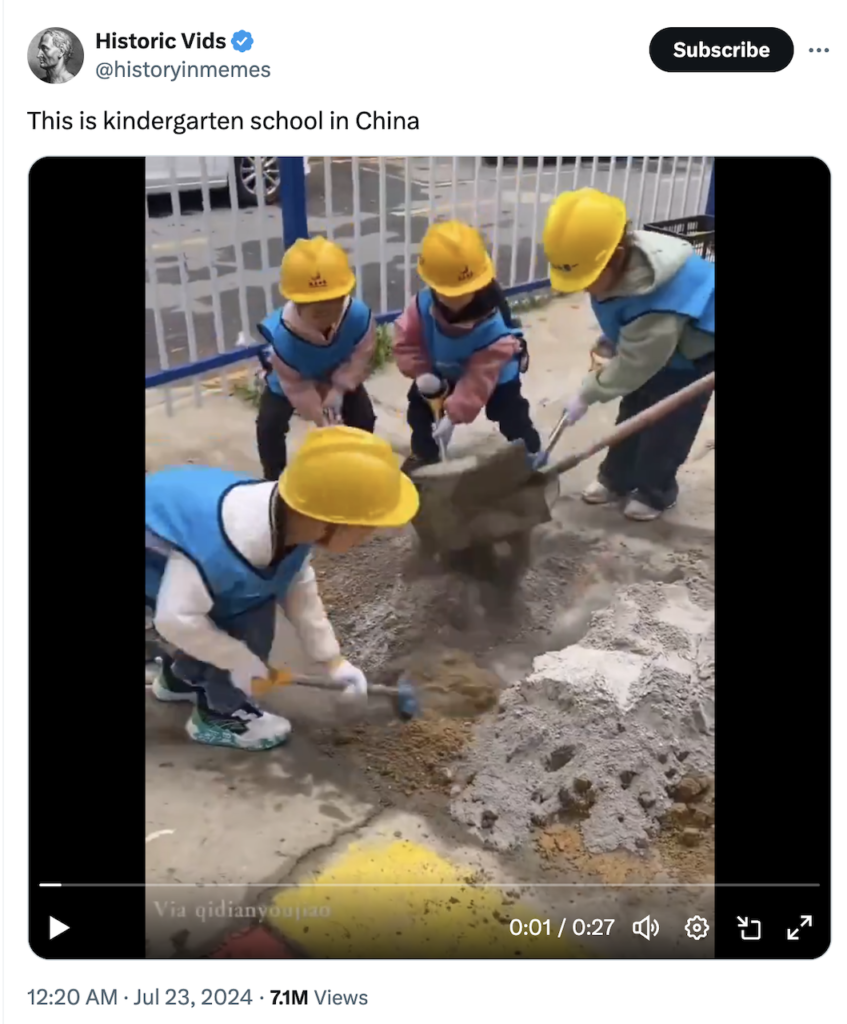
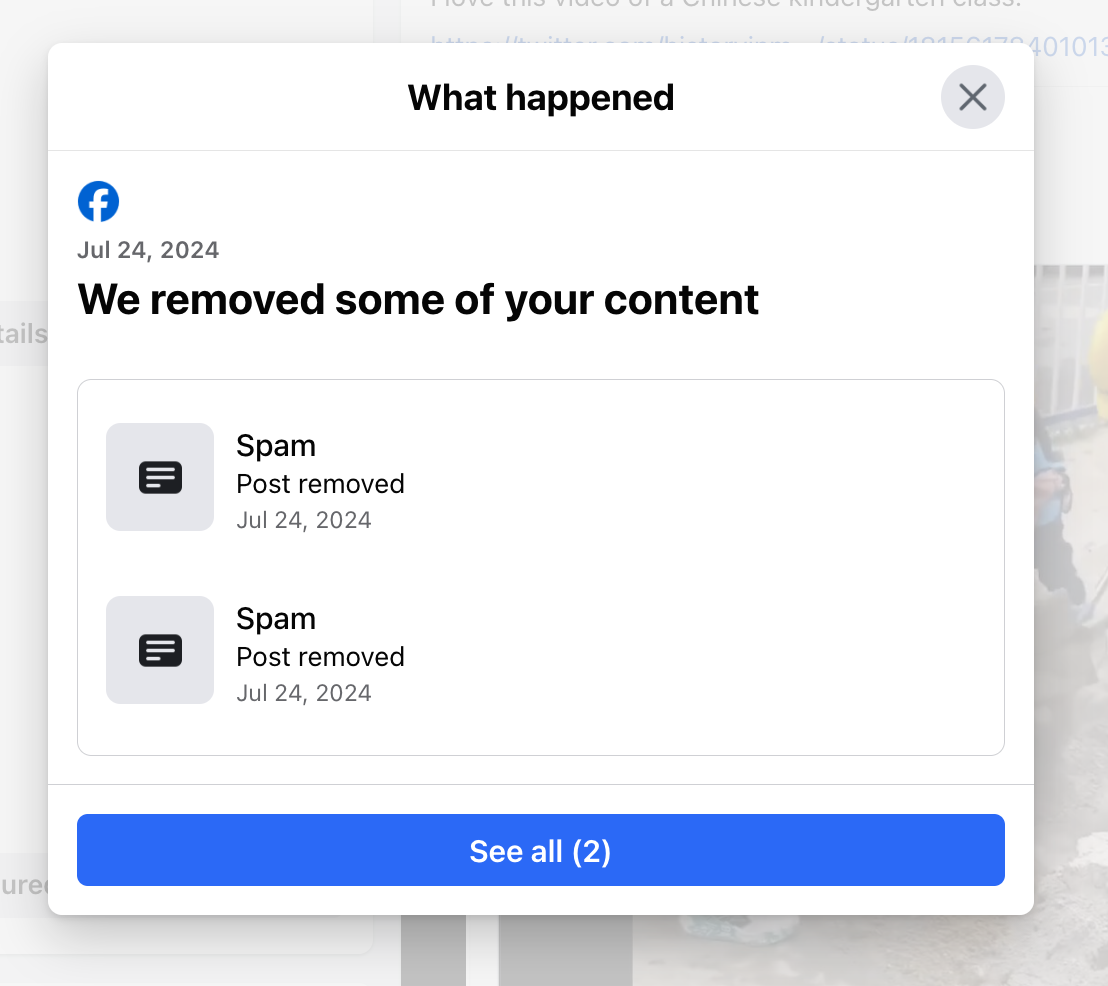
I posted this on FB twice and FB took it down twice because it was "spam." I had merely posted this image with the link to Twitter, along with a comment that I enjoyed seeing this video of a Chinese kindergarten class:
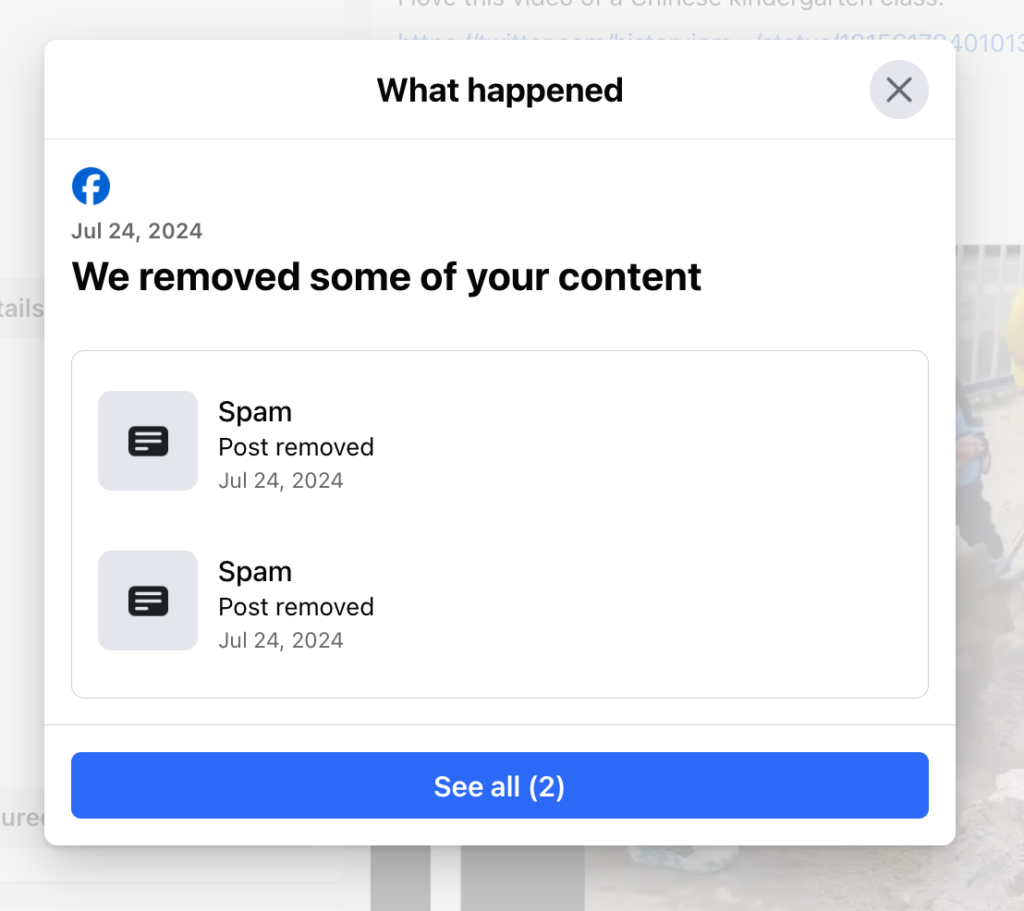
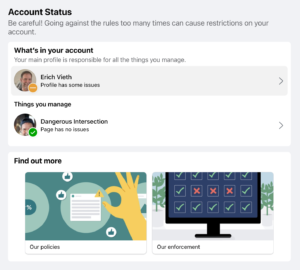
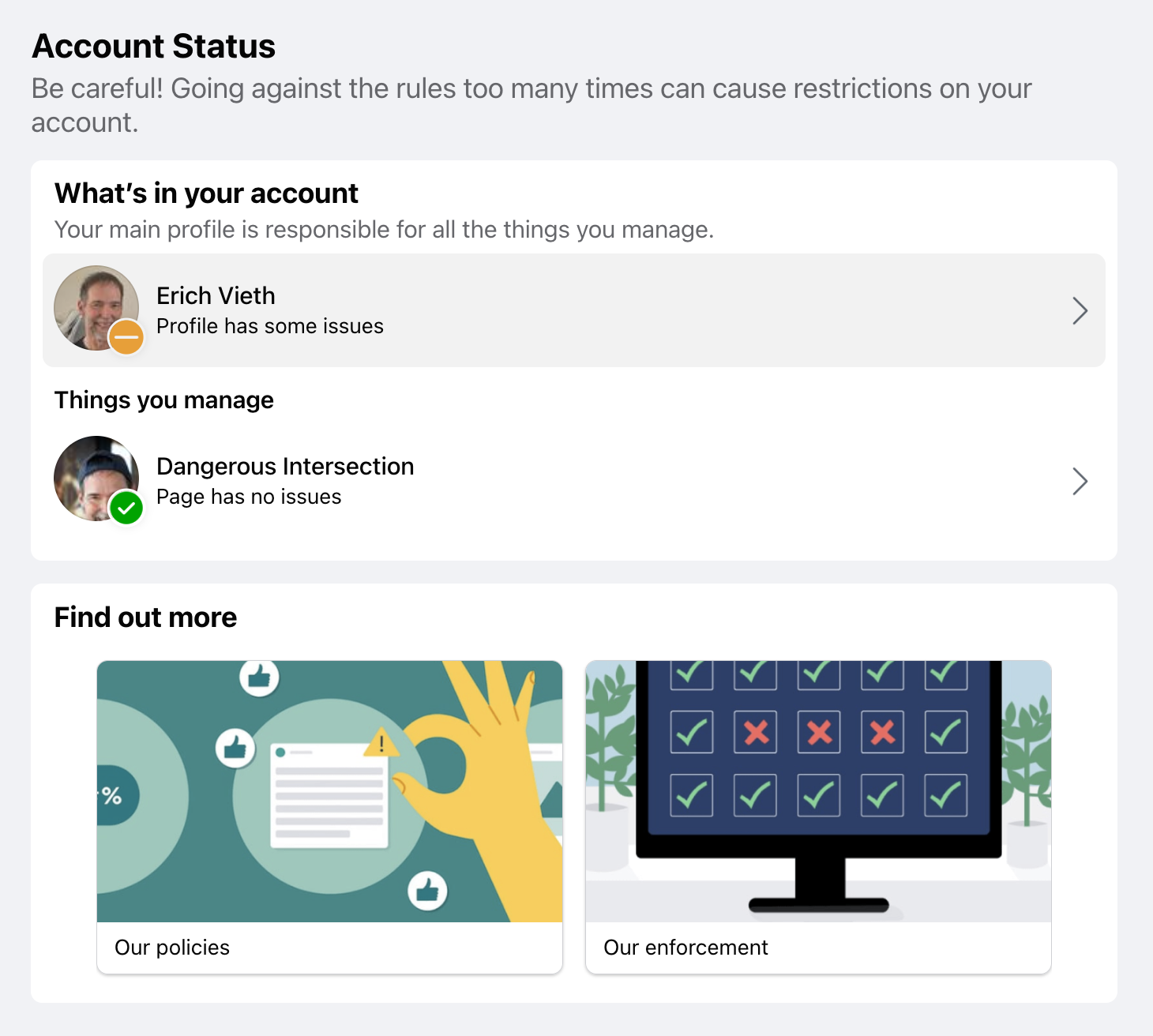
This is the third time this month that FB has deleted my non-spam posts as "spam."

Here's how Facebook defines "Spam":

Spam Policy details

Policy Rationale We do not allow content that is designed to deceive, mislead, or overwhelm users in order to artificially increase viewership. This content detracts from people's ability to engage authentically on our platforms and can threaten the security, stability and usability of our services. We also seek to prevent abusive tactics, such as spreading deceptive links to draw unsuspecting users in through misleading functionality or code, or impersonating a trusted domain.

Online spam is a lucrative industry. Our policies and detection must constantly evolve to keep up with emerging spam trends and tactics. In taking action to combat spam, we seek to balance raising the costs for its producers and distributors on our platforms, with protecting the vibrant, authentic activity of our community.

Continue ReadingWe Need More Hands-On Education Like This

Copyright Law Being Misused to (Continue to Hide) Manifesto of Nashville Mass Murder

If the mass murderer had been an avowed white supremacist, his/her writings would have been public immediately after the murders. In the case of the March 2023 Nashville mass murders, however, the shooter was a transgender man, so the rule are completely different. The authorities are doing everything possible to prevent those writings from being public because the would (presumably) conflict with a powerful narrative relating to transgender ideology. FIRE explains:

A Nashville judge held that the journal entries of school shooter Audrey Hale, who went by Aiden, can’t be released under state open records law because to do so would violate copyright law. If you’re confused, that’s probably because you understand copyright law, open records law, or both. In the United States, copyright is an economic right. While those are important, they should not generally outweigh compelling public interests — like knowing how we missed the motives that led to the murder of three children and three adults. I recently wrote about the backstory of this case on FIRE President and CEO Greg Lukianoff’s Eternally Radical Idea Substack newsletter, but let’s walk through how we got here.

Continue ReadingCopyright Law Being Misused to (Continue to Hide) Manifesto of Nashville Mass Murder