Matt Taibbi’s Commentary on the Tearing Down of Old Twitter and (Hopefully) its Rebirth

As I've expressed repeatedly on this site (but more often and with detailed substantiation on my website, Dangerous Intersection), I have no little respect for much of what passes as "journalism" at America's best known legacy media outlets. They have repeatedly preached to us and censored dissenting views on major stories instead of letting the facts fall where they may and inviting us to evaluate those facts on our own. That is why trust in major media is at an all time low: only 11% of us have a lot of confidence in our newspapers and television news. For years, Twitter has been the water cooler for those seeking to shape media narratives and jam them down our throat. That is changing and I am ever cognizant of the wailing and gnashing of teeth, along with the gaslighting, I am hearing from the increasingly disempowered "journalists" who have been the most active at censoring. I applaud the efforts of Matt Taibbi, Bari Weiss, Michael Shellenberger and others who are now revealing the many ways in which Twitter has been falsely presenting itself as a forum for free speech.

Today, Matt Taibbi posted background on the ongoing Twitter revelations. I expect that many people will appreciate these revelations but will not comment publicly (though many will applaud these development privately to me, as they have been doing for several years on many contentious issues). I also expect that more than a few people will publicly respond to Taibbi's comments (and my own) with a creative barrage of ad hominem comments--that's exactly what people do when can can't make honest arguments. Every time I see this behavior, I recognize it as stark symptoms of Nietzschean ressentiment. Here is an excerpt from Taibbi's most recent article, "Note to Readers on the "Twitter Files"":

A lot has been made about the line about how I “had to agree to certain conditions” to work on the story. I wrote that assuming the meaning of that line would be obvious. It was obvious. Still, the language was just loose enough to give critics room to make mischief, and the stakes being what they are, they of course did. That’s on me, and a lesson going forward. For the record, the deal was access to the Twitter documents, but I had to publish on Twitter. I also agreed to an attribution (“Sources at Twitter”). That’s it.

Everyone involved with the project, including myself as well as Bari Weiss and Michael Shellenberger, has editorial control. We’ve been encouraged to look not just at historical Twitter, but the current iteration as well. I was told flat-out I could write anything I wanted, including anything about the current company and its new chief, Elon Musk. If anything, the degree of openness on that front freaked me out a little initially, being so far from any other experience I’ve had.

In our initial meeting, Musk talked about how he thought a “full confessional restores faith in the company,” and everything I’ve seen since seems to confirm he’s sincere about his desire for full open-kimono transparency with the public. He says we’re “welcome to look at things going forward, not just at the past,” and until I run into a reason to believe otherwise, I’m taking him at his word. I’d be crazy not to, considering the access we’ve already been given. This is a historic opportunity, and I think we’re all trying to treat that opportunity with the appropriate respect, which among other things means staying as focused as we can be on the documents, and trying to make as much sense of them as we can, as quickly as we can....

In this particular instance, the story has to come out on Twitter. There’s the obvious deep irony of using the familiar drip-drip-drip format and uncontrollable virulality of Twitter to roast Twitter itself. We’re also using an inherently destabilizing medium to expose efforts to turn Twitter into an authoritarian instrument of social control. There’s genius in this. Now I would feel wrong even thinking of doing it any other way.

This is especially the case since a major subtext of the Twitter Files project is what a burn it is on conventional/corporate media, whose minions tried for years to turn Twitter into a giant conformity machine, and cheered each new advance in censorship and opinion control. Those same people now have to watch in helplessness as one horrifying revelation after another spills out, guerrilla-style, into what was not long ago their private playground. This, too, couldn’t be scripted better. It’s like sending an intercontinental shit-missile screaming into the dais of the White House correspondents’ dinner at 15,000 m.p.h. If you can’t see the humor in this, you probably never had a sense of humor to begin with.
Continue ReadingMatt Taibbi’s Commentary on the Tearing Down of Old Twitter and (Hopefully) its Rebirth

Dissolve all Political Parties. Do it for the Founders

We need to dissolve all political parties in the United States. I don't know how to make this happen.  It might be impossible. In their place, I would like to see hundreds of elected officials voting entirely by their own conscience after vigorous discussion with all other elected officials, each of them making their decision independently, unswayed by tribal instincts (and unswayed by the tribally-based money currently gushing through our system). I would like to see each senator and representative voting on each issue independently, not feeling any pressure on Issue A based on how someone else voted on Issue A voting against his or her conscience on Issue A in exchange for convincing another representative to vote against their conscience on Issue B.

What did the Founders of the United States think about political parties? They abhorred them. Here are a few quotes from "What Our Founding Fathers Said About Political Parties":

George Washington:

[Political parties] serve to organize faction, to give it an artificial and extraordinary force; to put, in the place of the delegated will of the nation, the will of a party, often a small but artful and enterprising minority of the community; and, according to the alternate triumphs of different parties, to make the public administration the mirror of the ill-concerted and incongruous projects of faction, rather than the organ of consistent and wholesome plans digested by common counsels, and modified by mutual interests. . . .Let me now . . . warn you in the most solemn manner against the baneful effects of the spirit of party .

- Letter to his “friends and fellow-citizens.”  It was published in newspapers throughout the country and later came to be known as his Farewell Address.

John Adams:

There is nothing which I dread so much as a division of the republic into two great parties, each arranged under its leader, and concerting measures in opposition to each other. This, in my humble apprehension, is to be dreaded as the greatest political evil under our Constitution.

-Letter to Johnathan Jackson, 1780.

Thomas Jefferson:

I never submitted the whole system of my opinions to the creed of any party of men whatever in religion, in philosophy, in politics, or in anything else where I was capable of thinking for myself. Such an addiction is the last degradation of a free and moral agent.  If I could not go to heaven but with a political party, I would decline to go.

-Letter to Francis Hopkinson, 1789

Thomas Paine:

Party knows no impulse but spirit, no prize but victory.  It is blind to truth, and hardened against conviction.  It seeks to justify error by perseverance, and denies to its own mind the operation of its own judgment.  A man under the tyranny of party spirit is the greatest slave upon the earth, for none but himself can deprive him of the freedom of thought.”

-The Opposers of the Bank, 1787.

Continue ReadingDissolve all Political Parties. Do it for the Founders

FIRE Comment on Free Speech and Twitter

FIRE comment on Free Speech, Elon Musk and Twitter. An Excerpt: In the neverending debate surrounding Twitter under Elon Musk, the distinction between free speech as a legal right and cultural value can get confused. Free speech culture is a set of norms that support free thought and our ability…

Continue ReadingFIRE Comment on Free Speech and Twitter

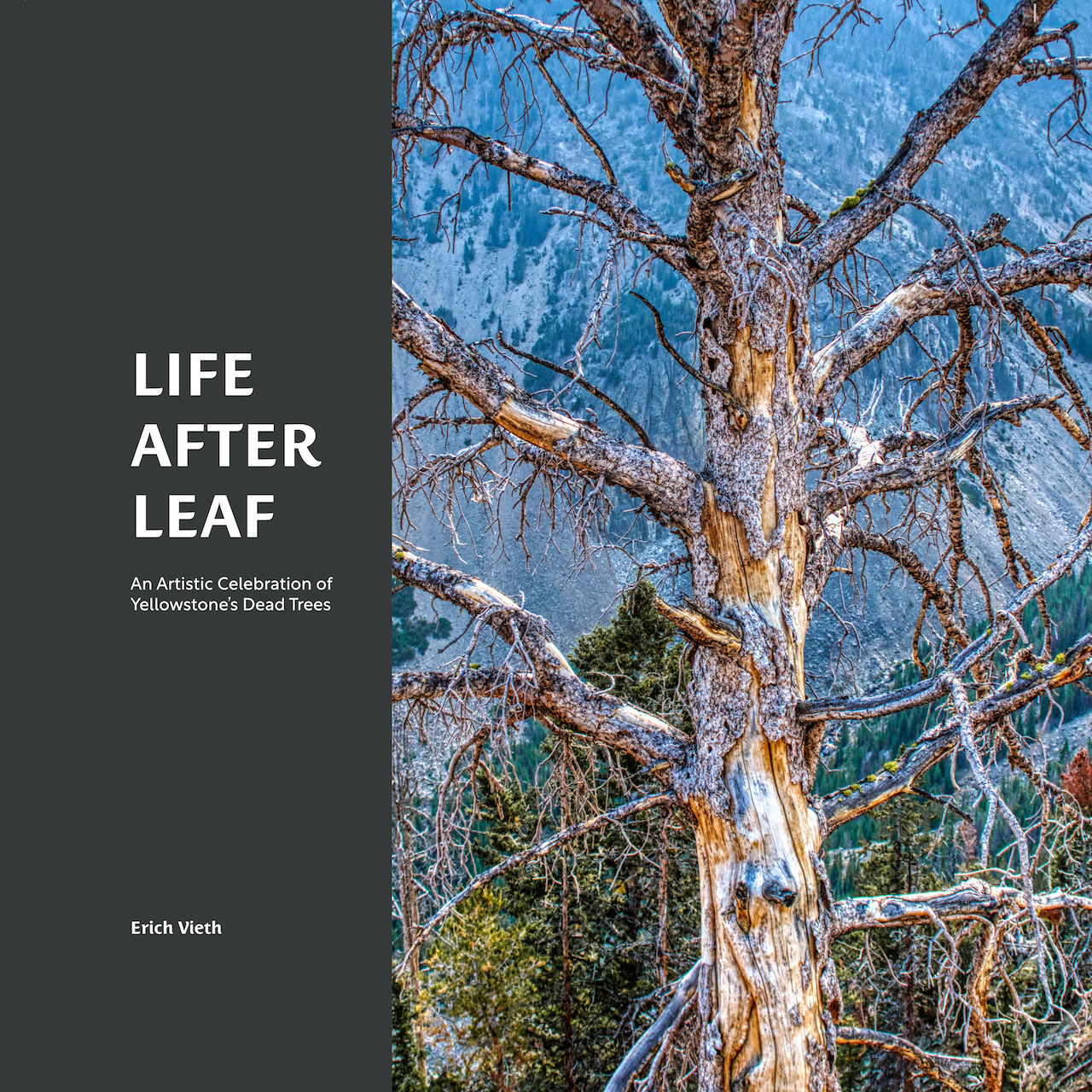
Life After Leaf: An Artistic Celebration of Yellowstone’s Dead Trees

Are you looking to buy a unique Christmas gift for friends or family? Consider my newly published art book: Life After Leaf.

In October 2021 I traveled to Yellowstone National Park twice for the purpose of shooting images of the trees. All the images in my book were shot along high altitude hiking trails

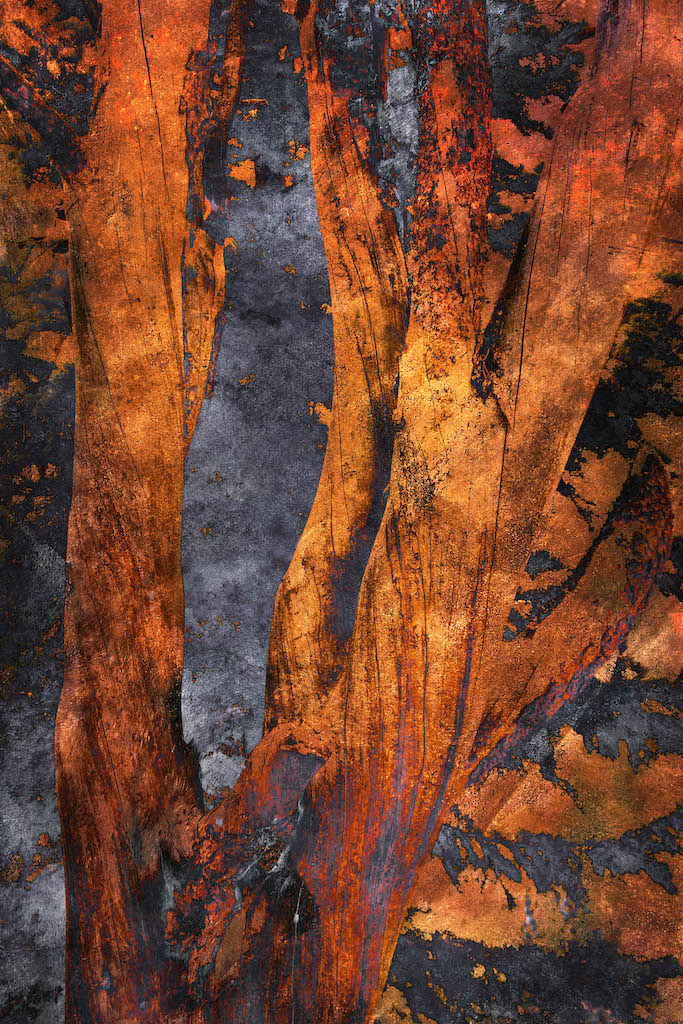
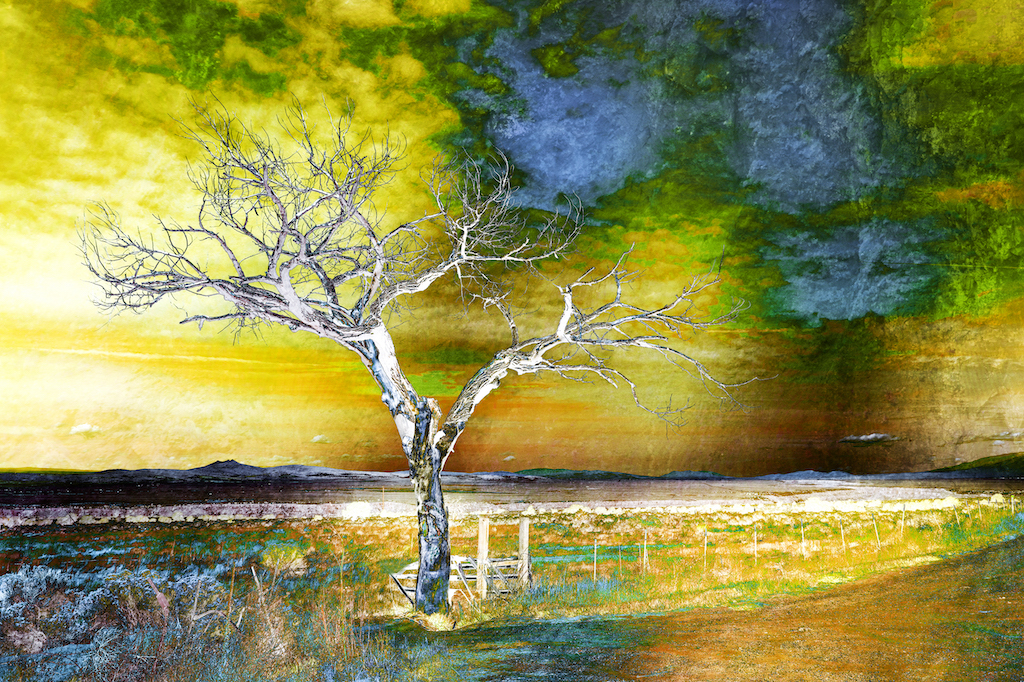
Over the years, I have developed Photoshop artistry techniques for digitally blending my images of trees with texture images of rocks, clouds, water and many other natural objects and vignettes that I captured this year. In total, my book draws upon my collection of more than 2,000 images of trees and textures. I use Photoshop to blend the tree and texture layers. I then use additional Photoshop tools such as adjustment layers, masking, gradients, blurring, and lighting techniques to wrestle these abstract images into final form. These techniques often involve considerable trial-and-error and the end product often consists of dozens of PS layers. While working on these images, they sometimes take on a life of their own.

Life After Leaf contains 72 photos taken at Yellowstone National Park along with more than 160 works of art featuring Yellowstone’s dead trees.  The price is $45 and shipping is free. I invite you to order your copy at my Digicrylics website.

Or feel free to browse my other artwork at my two art websites, Digicrylics.com and Erichvieth.com.

Continue ReadingLife After Leaf: An Artistic Celebration of Yellowstone’s Dead Trees