
Neo-Humanist Statement of Secular Principles

What guiding principles would you select if you wanted to establish a highly cooperative new society? In order to avoid re-creating the deep-seated cultural strife that is ripping us apart, you might be tempted to brush aside all current conflicting systems of religious-based morality and start fresh, striving to come up with a system to which most non-believers and many believers could assent. At center, it would be an evidence-based system. That's what Paul Kurtz has done with his newly released Neo-Humanist Statement of Secular Principles and Values. It's not for everyone, but its list of principles and values will resonate with many people. Here are the basic principles:

Neo-Humanists:

  1. aspire to be more inclusive by appealing to both non-religious and religious humanists and to religious believers who share common goals;
  2. are critical of traditional theism;
  3. are best defined by what they are for, not what they are against;
  4. wish to use critical thinking, evidence, and reason to evaluate claims to knowledge;
  5. apply similar considerations to ethics and values;
  6. are committed to a key set of values: happiness, creative actualization, reason in harmony with emotion, quality, and excellence;
  7. emphasize moral growth (particularly for children), empathy, and responsibility;
  8. advocate the right to privacy;
  9. support the democratic way of life, tolerance, and fairness;
  10. recognize the importance of personal morality, good will, and a positive attitude toward life;
  11. accept responsibility for the well-being of society, guaranteeing various rights, including those of women, racial, ethnic, and sexual minorities; and supporting education, health care, gainful employment, and other social benefits;
  12. support a green economy;
  13. advocate population restraint, environmental protection, and the protection of other species;
  14. recognize the need for Neo-Humanists to engage actively in politics;
  15. take progressive positions on the economy; and
  16. hold that humanity needs to move beyond ego-centric individualism and chauvinistic nationalism to develop transnational planetary institutions to cope with global problems—such efforts include a strengthened World Court, an eventual World Parliament, and a Planetary Environmental Monitoring Agency that would set standards for controlling global warming and ecology.
Paul Kurtz has issued an invitation for others who accept its main principles and values to sign on in support, even if they do not agree with all of its provisions. I have signed up. The values listed in this document are my values. It is so rare that I find a collection of principles to which I would so readily aspire. These principles should not surprise anyone familiar with the work of Paul Kurtz. This Neo-Humanist statement is both a set of positive principles and a push-back against radical atheism:

Writing in the December 2009/January 2010 issue of Free Inquiry, the magazine he founded, Kurtz declared "militant atheism is often truncated and narrow-minded...it is not concerned with the humanist values that ought to accompany the rejection of theism. The New Atheists, in my view, have made an important contribution to the contemporary cultural scene because they have opened religious claims to public examination...What I object to are the militant atheists who are narrow-minded about religious persons and will have nothing to do with agnostics, skeptics, or those who are indifferent to religion, dismissing them as cowardly."

In his interview at Huffpo, Kurtz reminds us that only 2 to 3 percent of Americans self-identify as "atheists," whereas 16 percent of Americans (50 million people) do not affiliate with any religious organization. The Statement ends with this invitation:

We submit that the world needs to engage in continuing constructive dialogue emphasizing our common values. We invite other men and women representing different points of view to join with us in bringing about a better world in the new planetary civilization that is now emerging.
Continue ReadingNeo-Humanist Statement of Secular Principles

We need to create a new word.

I'm looking for a word, but I don't think any existing word has the meaning I'm looking to express. Hence, I believe that we need to create a new word. There isn’t any rule that we can’t create new words, of course. It's done all the time (Shakespeare did far more than his share). The way to create a neologism is simply to announce it and then hope it goes viral. The concept I would like to express is not simple—it is a compound somewhat-conflicting concept. Of course, individual words can richly express compound ideas. Take, for instance, the Chinese word for “crisis,” which is often thought to consist of two characters that stand for danger and opportunity (though I’ve recently learned that this delightful story seems to be a myth). Or consider the German word “schadenfreude,” which in pop culture means “'shameful joy', or taking pleasure in the suffering of others. But I digress. We need a new word for the following concept:

Short-sighted dangerous action motivated by instinctual kindness.

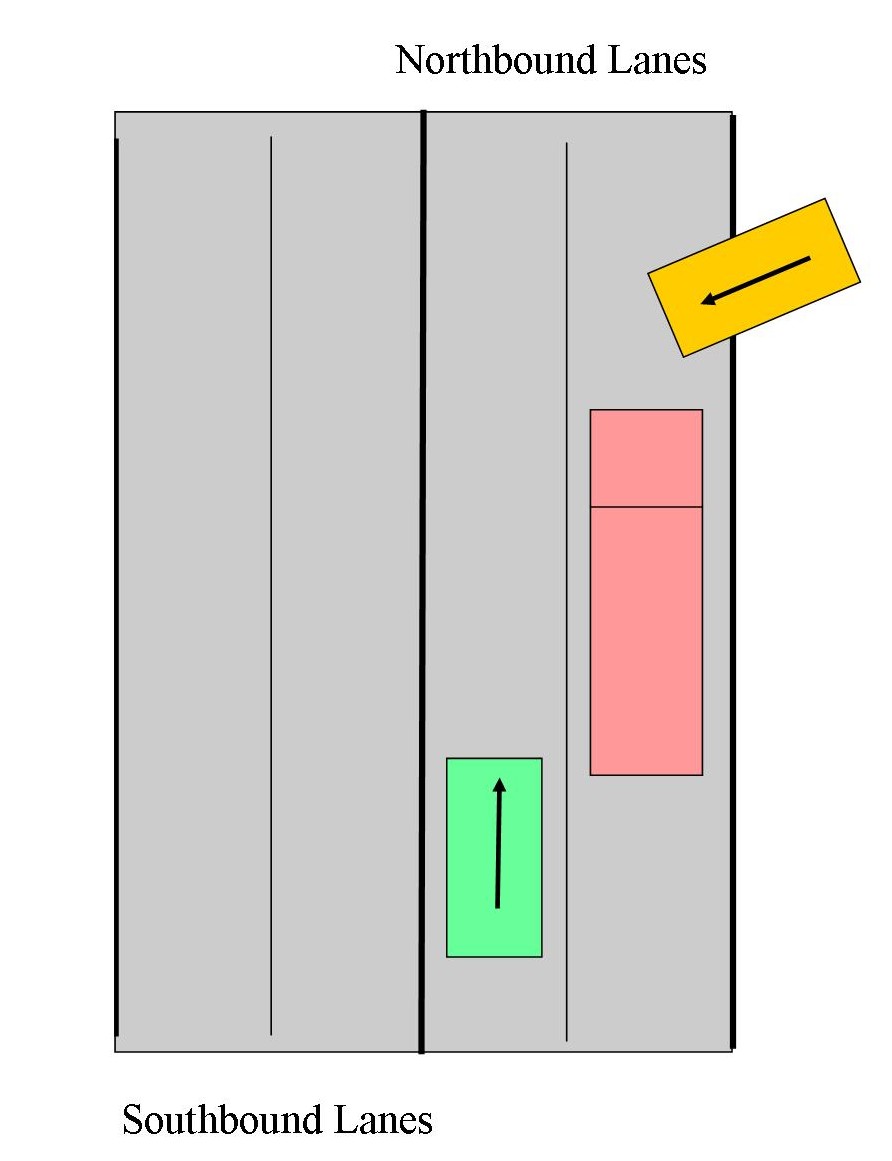
I saw this situation in action two days ago, while I was driving the green car northbound on a four-lane road (see the image below). The pink truck had come to a stop ahead of me and to my right, in front of a hotel. As I found out (suddenly) the truck had stopped to allow the yellow car make a left turn out of the hotel driveway to go southbound. well-meaning-and-dangerous The yellow car popped right out in front of me and I had to slam on my brakes (no collision resulted). This is a stunt that you see every so often—a tall stopped vehicle waving the shorter vehicle to blindly drive out into traffic on road having more than two lanes. I have worked as an attorney on a couple traffic cases like this. In one case of those cases, a well-intentioned driver slowed down on a road with two lanes in each direction (failed to take the right of way) in order to wave a child across the street in front of him. He did it out of kindness. The child was killed by a car that didn't see child until the child stepped out into the second lane of traffic. Regarding my traffic incident two days ago, the truck should have taken its right-of-way thereby allowing the yellow car to fend for itself. Doing this would have seemed less considerate, of course, but it would certainly have been a better option than the short-sighted dangerous action that the truck driver took. Therefore, if you are reading this, let me know whether you have any ideas for a new word to capture all of these ideas: Short-sighted dangerous action motivated by instinctual kindness. Or let me know if there is an existing word that has this meaning. Once we lock onto a word with this meaning, I’ll use it every day, I assure you. It would have applications in situations too numerous to fathom, most of them having nothing to do with traffic. It might become my second-favorite word of all time (the first is “paltering”).

Continue ReadingWe need to create a new word.

What Republicans believe

A new Harris poll reports what our non-evidence-based-Republican-brethren tend to believe. At The Daily Beast, John Avlon reports:

57 percent of Republicans (32 percent overall) believe that Obama is a Muslim 45 percent of Republicans (25 percent overall) agree with the Birthers in their belief that Obama was "not born in the United States and so is not eligible to be president" 38 percent of Republicans (20 percent overall) say that Obama is "doing many of the things that Hitler did" Scariest of all, 24 percent of Republicans (14 percent overall) say that Obama "may be the Antichrist."
Avlon refers to these poll results as evidence of "'Obama Derangement Syndrome'—pathological hatred of the president posing as patriotism."

Continue ReadingWhat Republicans believe