
How to get from here to there regarding renewable energy
According to a recent article by Richard Kerr in the August 13, 2010 issue of Science ("Do We Have the Energy for the Next Transition?") it's going to be extremely difficult to move the world away from power-packed fossil fuels to more diffuse and less useful renewable energy:
Never has the world so self-consciously tried to move toward new sources of energy. But the history of past major energy transitions-from wood to coal, and from coal to oil and gas-suggests that it will be a long, tough road to scaling up alternatives to fossil fuels that don't stoke greenhouse warming. The big problem is that, for the first time, the world is moving to tap new energy sources that are, in many ways, less useful and convenient than the currently dominant sources: fossil fuels.
[For instance] oil is densely packed with energy, easily transported and stored, and efficient at releasing its energy in modern engines. Renewables are another matter.
[caption id="attachment_14020" align="alignright" width="300" caption="Image by Erich Vieth (using creative commons images)"]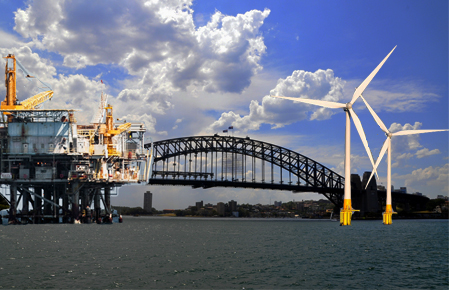 [/caption]
How much energy do we need to replace? The number is staggering. "Replacing even half of the coal, oil, and gas consumed today would require 6 terawatts of renewable energy . . . In contrast, renewables today produce just 0.5 terawatts."
Kerr suggests that oil production might peak at around 2030 and natural gas section might keep pace with demand only until 2050. What then? He suggests the the "sobering reality" that only one renewable, solar energy, could meet future energy demands by itself (although wind power could make significant contributions). All of the other types of renewables "would provide just 1/10 to 1/10000 of today's energy output from fossil fuels."
How should we attempt such a daunting transition to cleaner fuels that are otherwise much less desirable? Kerr argues that the best way to approach this transition is to "reduce consumption," and, fortunately, we have the technology for reducing consumption drastically. I previously posted that modest conservation measures with regard to transportation could save enough oil to retire all of the 4000 oil drilling rigs in the Gulf of Mexico. Based on our long and unimpressive track record, Americans will readily express interest in reducing consumption but they lack the political will to actually do so. One huge approach to saving energy would be to immediately implement strict requirements for building highly energy-efficient residences and office buildings. There are many substantial things we could be doing to save energy, if only we cared enough about our future to do so.
Kerr closes his article with this less than cheerful conclusion: "Conservation would buy time for meagerly attractive renewables to make some inroads before fossil fuels begin to bow out."
(Note: Kerr's article is available online only to subscribers)
[/caption]
How much energy do we need to replace? The number is staggering. "Replacing even half of the coal, oil, and gas consumed today would require 6 terawatts of renewable energy . . . In contrast, renewables today produce just 0.5 terawatts."
Kerr suggests that oil production might peak at around 2030 and natural gas section might keep pace with demand only until 2050. What then? He suggests the the "sobering reality" that only one renewable, solar energy, could meet future energy demands by itself (although wind power could make significant contributions). All of the other types of renewables "would provide just 1/10 to 1/10000 of today's energy output from fossil fuels."
How should we attempt such a daunting transition to cleaner fuels that are otherwise much less desirable? Kerr argues that the best way to approach this transition is to "reduce consumption," and, fortunately, we have the technology for reducing consumption drastically. I previously posted that modest conservation measures with regard to transportation could save enough oil to retire all of the 4000 oil drilling rigs in the Gulf of Mexico. Based on our long and unimpressive track record, Americans will readily express interest in reducing consumption but they lack the political will to actually do so. One huge approach to saving energy would be to immediately implement strict requirements for building highly energy-efficient residences and office buildings. There are many substantial things we could be doing to save energy, if only we cared enough about our future to do so.
Kerr closes his article with this less than cheerful conclusion: "Conservation would buy time for meagerly attractive renewables to make some inroads before fossil fuels begin to bow out."
(Note: Kerr's article is available online only to subscribers)
