
Religion: It’s almost like being in love

You know how it is when someone is in the first throes of infatuation. We call it "love," but it's very different than the kind of relationship that eventually develops. Or doesn't develop. Think of all of those young couples "in love" who are at each other's throats only a couple years later. While they are in the romantic love stage, they are "caught up in the emotion." Their lover can do no wrong. Their lover is perfect. Their lover has no faults; oh, sure he or she has idiosyncrasies, but nothing that could possibly impede this relationship. At least not until the fairy dust settles and they are able to start seeing each other as flawed human beings, sometimes horribly flawed. Amazing as it seems, strong emotions can cause massive distortions in perceptions. They can make A look like Not-A. Strong emotions can also completely shut down our ability to think self-critically. How is it possible that perceptions and understanding can be massively distorted by emotion? How is it that a violent drunkard kleptomaniac can initially seem like a nice fellow? That's evolution at work. As Robert Wright once wrote in The Moral Animal, emotions are "evolution's executioners." We have deep instincts for falling in love, for losing control, for blinding ourselves to the other's faults so that we will make babies. I should restate this. It's not that evolution is trying to do anything at all. Evolution is not conscious and it has no plan. On the other hand, we are survivors at the top of a long branch of the tree of speciation. You and I and all of our ancestors have survived Nature's amoral pruning, millennium after millennium. We are extremely lucky that we evaded the weeding phase of breed and weed. The unrelenting reproductive urge, the one thing that every one of our ancestors had in spades, has been passed on to us or we wouldn't be here to ponder anything. ALL of our ancestors had it and acted on it: the compulsion to reproduce--the urge to merge. This ancient instinct is ubiquitous, even though, once in a while, a cigar is only a cigar. What is the most efficient way to make animals reproduce? How about this? Blind them to each others' faults and make them horny. [More . . . ]
Continue ReadingReligion: It’s almost like being in love

It’s in the First Amendment

This exchange between Republican Senate Candidate Christine O'Donnell and her Democratic opponent, Chris Coons, is surreal. Here's how it went, as reported by CBS News:

Coons said that creationism, which he considers "a religious doctrine," should not be taught in public schools due to the Constitution's First Amendment. He argued that it explicitly enumerates the separation of church and state. "The First Amendment does?" O'Donnell asked. "Let me just clarify: You're telling me that the separation of church and state is found in the First Amendment?" "Government shall make no establishment of religion," Coons responded, reciting from memory the First Amendment to the U.S. Constitution. (Coons was off slightly: The first amendment actually reads "Congress shall make no law respecting an establishment of religion.") "That's in the First Amendment...?" O'Donnell responded.
I thought this had to be a spoof from the Onion when I first read it, but you can watch the video if you want proof--if you can stand to watch it. I do sympathize with Chris Coons. This is also a tragedy for America. All of the candidates running for office should be be best and the brightest. They should be familiar with the facts regarding the issues on which they opine. O'Donnell seems to have the factual competency of a fourth grader.

Continue ReadingIt’s in the First Amendment

On reclaiming the United States

Last week, I had the opportunity to attend a fund-raising Gala for Missouri GRO (Grass Roots Organizing). GRO is an impressive progressive organization. It was founded by a small handful of rural activists, mostly women who, according to a history of the organization written by Tony Pecinovsky, "wanted more accountability from politicians and big businesses alike." Most of its members are people who live in rural Missouri, "people who live in small towns not necessarily known for their progressive politics." GRO is part of a nationwide network of progressive organizations, National People's Action, that has coordinated local activist organizations pushing hard for health care reform, Wall Street financial reform and other important issues. GRO is anything but shy. Consider this account (from the literature handed out at the gala event last week):

GRO carried out a winter-long anti-payday lending campaign that backed QC Holdings [Owner of the company that runs one of the biggest payday lending chains in the country] into a corner of public scrutiny and legislative pressure. On April Fools' Day we learned the Missouri legislature gave the payday loan industry a solo "hearing," led by theVice Chair of the Financial Institutions Committee, who owns a payday loan store inCabool, Missouri. The industry went totally unchallenged. They took over our public domain. So we decided to take over QC Holding's private domain in corporate words, Overland Park, Kansas. . . . We mobilized all150+ of our people up 15 floors on elevators to take over the corporate penthouse suite of the Missouri's largest payday lending operation.

In short, GRO has made a lot of noise where corporate power is runing amok. Because of this moxie, GRO has earned the respect of many in Missouri and outside of Missouri. At its fund-raising gala last week, GRO filled a large downtown St. Louis hotel ballroom with supporters who gathered to hear the keynote speech delivered by John Nichols, Washington Correspondent of The Nation Magazine. Nichols is also co-founder (with Robert McChesney) of Free Press, one of the country's leading media reform organizations. Prior to speech, John Nichols gave me permission to videotape his speech so that I could make it available here at Dangerous Intersection. In Part I of his speech, Nichols makes the argument that we do not really have a debt crisis. He passionately explains what kind of crisis we actually do have. In Part II of his speech, Nichols takes a hard critical look at the United States Supreme Court decision, Citizens United v. FEC. Nichols reminded the audience that the first American tea party was an anti-corporate tea party. Toward the end of Part II, Nichols argues that in order to take our country back, we will need an anti-corporate revolution-- we will need to go around the "corrupted" United States Supreme Court by organizing at the grass roots and enacting a Constitutional amendment declaring that "No corporation is the equal of a citizen" and "Citizens are supreme."

Continue ReadingOn reclaiming the United States

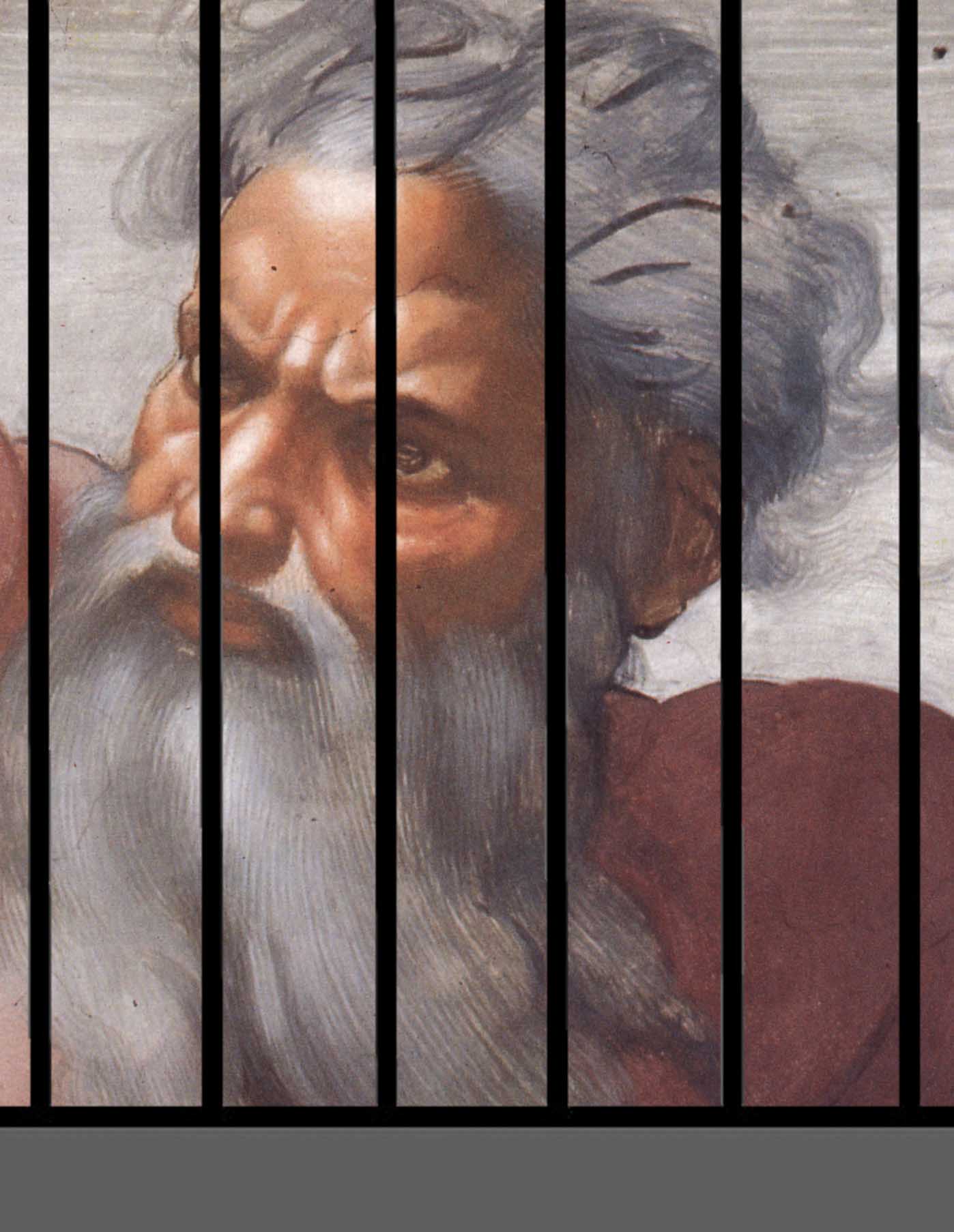
God is good

Prologue: This post does not apply to Christians who conclude that "God" was evil to the extent that "He" killed babies. Nor does it apply to Christians who don't believe that the Old Testament is literally true, and further conclude that "God" never actually killed babies as described in the Old Testament. In short, this post applies only to those who believe that A) God really killed numerous little babies, and B) that God is nonetheless "good." Whenever I hear believers proclaim that “God” is “good” I am puzzled. How could it possibly be that an all-knowing and omnipotent being could engage in the many atrocities attributed to “God” in the bible? For example, how can killing little babies ever be considered to be good? Here are 1,199 more examples of cruelty from the Bible. Anyone but “God” who engaged in such behavior would be universally proclaimed to be evil, not good. There’s no way to avoid this conundrum for believers, especially for Bible literalists. The God they repeatedly praise purportedly killed many thousands of innocent people, including countless numbers of babies. Consider also, that other Bible passages show little regard for the lives of infants and fetuses. The above passages cause me to consider this question: Do believers sincerely believe their claims that “God” is “good,” or are they merely being practical in the face of the threat of hell? To what extent is it that it is the perceived threat of hell causes it to seem “true” that a baby-killing God is “good”? Sam Harris raises a similar issue at page 33 of his new book, The Moral Landscape (2010):

What if a more powerful God would punish us for eternity for following Yahweh’s law? Would it then make sense to follow Yahweh’s law “for its own sake”? The inescapable fact is that religious people are as eager to find happiness and to avoid misery as anyone else: many of them just happen to believe that the most important changes in conscious experience occur after death (i.e., in heaven or in hell).

Indeed, what if a bigger stronger god named Kyle came along and smote Yahweh, showing all the world Yahweh’s lifeless supernatural “corpse” while declaring “God is Dead!” (Were this ever to happen, it would likely make atheist Friederick Nietzsche jostle in his grave). Wouldn’t believers quickly modify their existing hymnals, scratching out “God” and inserting “Kyle”? What might they do to the traditional hymn, “God is so Good”? Something like this? [More . . . ]

Continue ReadingGod is good

The rapid rise of churchless believers

Large numbers of people now leaving churches nonetheless continue to believe in a god. This article in the L.A. Times indicates that the marriage of conservative politics and religion is driving them away from church:

The most rapidly growing religious category today is composed of those Americans who say they have no religious affiliation. While middle-aged and older Americans continue to embrace organized religion, rapidly increasing numbers of young people are rejecting it. As recently as 1990, all but 7% of Americans claimed a religious affiliation, a figure that had held constant for decades. Today, 17% of Americans say they have no religion, and these new "nones" are very heavily concentrated among Americans who have come of age since 1990. Between 25% and 30% of twentysomethings today say they have no religious affiliation — roughly four times higher than in any previous generation.

Continue ReadingThe rapid rise of churchless believers