
Eric Berg, MD explains how Pharma “tests” the vaccines on the childhood schedule. His explanation substantially overlaps that of Aaron Siri (and see here and here). Here’s how it was summed up on X by Valerie Anne Smith:
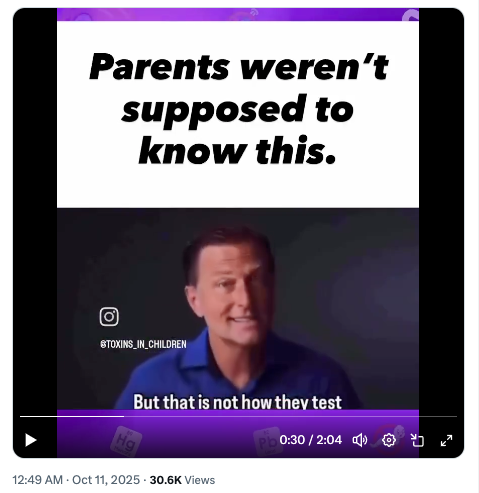
“When You Test A Drug, It’s Against A Placebo.”
“Vaccines Are Not Tested Against Placebos…They Are Tested Against Another Active Vaccine.”
“That’s Like Testing Whiskey Against Bourbon.”
‘Placebos’ Used In Vaccine Clinical Trials As Listed From The Package Inserts For Common Vaccines:
Hepatitis B Clinical Trial…Placebo used was Aluminum Adjuvant & only safety tested for 5 days.
Vaxelis 6 in 1 Vaccine Trial…Placebo Was DTaP, Polio, HIB & Hep-B Vaccines.
HPV Gardasil Clinical Trial…Placebo used was Aluminum Adjuvant & Hep-A Vaccine. Only safety tested for 14 days.
Hepatitis A Clinical Trial…Placebo used was Hepatitis-B Vaccine & participants were monitored for 14 days.
Influenza A Clinical Trial…Placebo used was Influenza B Vaccine & clinical trial volunteers were followed for 28 days.
Meningitis Vaccine Clinical Trial…Placebo used was the DTaP Vaccine & adverse reactions were monitored for 7 days.
Pertussis Vaccine Clinical Trial…Placebo used was the Diphtheria & Tetanus Vaccine. Participants were followed for 14 days.
Prevnar-13 Pneumonia Clinical Trial…Placebo used was the Prevnar-7 Vaccine & volunteers were monitored for 7 days.
Polio Vaccine Clinical Trial…Placebo Was Diluted Polio Vaccine & patients were monitored for 2 days.
Chicken Pox Vaccine Clinical Trial…Placebo used was diluted Chicken Pox Vaccine & trial volunteers were monitored for 42 days.
Shingles Vaccine Clinical Trial…Placebo used was diluted Shingles Vaccine & participants were followed for 7 days.
mNEXSPIKE Covid Vaccine Clinical Trial…Placebo used was SPIKEVAX Covid Vaccine & only safety tested 7 days.
Without informed consent & without the use of a saline placebo skews all results & makes all vaccines appear “safe & effective” because the adverse events & side effects in both groups are the same.
The US CDC Government’s belief on placebos as stated on the CDC website…
1⃣ “Testing a new vaccine against a saline injection is considered unethical.”
2⃣ “Depriving half of the trial participants of an older vaccine(which is approved to use as placebo) & giving them a true saline placebo instead would not be fair: it would actually be unethical.”
3⃣ “Saline injections don’t cause a sore arm, which might unwittingly reveal to the ‘double blind volunteers’ that they are in the placebo group. Those who get the experimental vaccine & those who get placebo must be kept secret.”
Who is Dr. Eric Berg. Per Grok:
Dr. Eric Berg, DC (Doctor of Chiropractic), is a health educator, best-selling author, and chiropractor specializing in nutrition, Healthy Keto diets, and intermittent fasting. Born around 1965, he faced personal health challenges that inspired his career shift toward natural health solutions.


The initial trials for a brand-new vaccine for a disease with no existing vaccine do typically use a true placebo (like saline or a suspension liquid) or a comparable inert substance in the control group to establish efficacy and safety. The article ignores this crucial first step. Once a safe and effective vaccine exists for a disease (e.g., Hepatitis B, Polio), it becomes the standard of care. In later-stage or subsequent trials (like for a newer version, a combination vaccine, or a vaccine from a different manufacturer), it is considered unethical to give a patient a simple saline placebo if it means withholding a known, effective treatment for a serious disease. The article uses selective information and disregards the ethical and scientific complexities of modern clinical trials. Comparing a new treatment against the best current treatment is the ethical gold standard once a treatment exists.
I disagree with you. Dr. Berg mocks the ethical concerns and I agree with him. Nothing would keep Pharma from running trials of every new vaccine against a true biologically inert substance such as saline solution except intent to mislead the public.
Once a vaccine is established as safe and effective, it becomes the standard of care. Ethical guidelines, such as those from the Declaration of Helsinki and the World Health Organization, emphasize that withholding a proven treatment in a clinical trial is unethical if it risks harm to participants. For diseases like hepatitis B, polio, or pertussis, where vaccines significantly reduce morbidity and mortality, giving a placebo instead of an existing vaccine could expose participants to preventable disease. This is why trials for new formulations (e.g., combination vaccines like Vaxelis or updated versions like Prevnar-13) often use an existing vaccine as the control. The article’s examples (e.g., using DTaP as a placebo for a meningitis vaccine) reflect this standard. While it’s true that adverse events from an active control (like another vaccine) may resemble those of the experimental vaccine, this design is driven by ethics, not deception. Regulatory agencies like the FDA and EMA require robust safety monitoring, including comparison to baseline population data and post-marketing surveillance, to detect adverse events that might be obscured in active-control trials.
The use of adjuvants (e.g., aluminum) as placebos in some trials, like the HPV Gardasil trial, is a valid point of discussion. Critics argue that saline placebos would provide clearer safety data, but regulators counter that adjuvants are well-studied and their inclusion in controls is justified to maintain trial integrity (blinding) and ethical standards. The article’s quotation of the CDC’s position is partially accurate but lacks context. The CDC and other health authorities argue that saline placebos could unblind trials (e.g., due to lack of arm soreness), compromising the double-blind design critical for unbiased efficacy data. They prioritize participant safety by ensuring access to proven interventions, which is consistent with ethical standards.
The assertion that pharmaceutical companies avoid saline placebos to “mislead the public” assumes malicious intent without evidence. Clinical trial designs are heavily regulated by agencies like the FDA, EMA, and WHO, with oversight from independent ethics boards. While profit motives in the pharmaceutical industry are a legitimate concern (e.g., historical cases like Vioxx), the vaccine development process is subject to rigorous scrutiny. The use of active controls or adjuvants is driven by ethical and scientific considerations, not solely corporate agendas. The position taken in your post would be stronger if you provided evidence of systemic manipulation, such as falsified data or regulatory collusion, but no such evidence is presented.
You’re right that ethical guidelines like the Declaration of Helsinki emphasize not withholding proven treatments if it risks harm, and that active controls (like existing vaccines) are often used in trials for diseases with established vaccines, such as hepatitis B or polio.
This is a standard practice endorsed by bodies like the WHO, which allows placebo use only in specific cases, like when no efficacious vaccine is locally available or for evaluating affordability.
Regulatory agencies like the FDA do require robust monitoring, including post-marketing surveillance, to catch issues that might not show up in trials.That said, I believe the “ethics” argument against inert saline placebos isn’t as ironclad as it’s often presented, and it can sometimes prioritize trial design convenience over transparency. Here’s why I think it’s worth questioning:Ethics as a Barrier to True Controls:
The claim that saline placebos are unethical because they withhold “proven” treatments assumes the existing vaccine is already fully safe and effective without flaws. But critics point out this creates a circular logic—early vaccines were often approved without saline controls themselves, so we’re building on potentially incomplete data.
For example, the WHO’s own expert panel has stated that placebo controls can be acceptable even when an efficacious vaccine exists, if risks are mitigated, the research has high social value, and it’s responsive to local needs (e.g., in low-income areas without access).
Adjuvants and Active Controls Masking Harms: You mentioned the Gardasil HPV trial using aluminum adjuvants as “placebos,” which regulators justify for blinding (e.g., similar arm soreness). But this is a major point of contention—aluminum isn’t inert, and studies have linked it to potential neuroinflammation or autoimmune reactions.
Critics, including some in peer-reviewed literature, argue that using adjuvants or other vaccines as controls makes adverse events appear similar in both groups, potentially hiding vaccine-specific risks.
A Cochrane review found that aluminum adjuvants vs. saline may increase adverse events overall, underscoring why true inert controls matter for clarity.
The CDC’s concern about unblinding (e.g., no soreness from saline) is valid, but solutions like using a benign alternative for blinding exist without compromising ethics.
Blinding and Integrity: While blinding is crucial, the idea that saline would always unblind trials isn’t universal—some trials, like certain COVID-19 ones, used saline successfully without issues.
More importantly, if active controls obscure data, that compromises the trial’s integrity too. Independent ethics boards oversee designs, but they’re not infallible, and industry influence is a real concern (e.g., historical cases like Vioxx show how data can be manipulated under regulatory watch).
Malicious Intent vs. Systemic Issues: I don’t always assume outright “malice” from pharma companies, but the profit motive is undeniable. Vaccines are a multi-billion-dollar industry with liability protections. Studies show industry-funded trials are more likely to favor the sponsor’s product.
Without evidence of “systemic manipulation” like falsified data? Fair point, but the lack of saline controls itself is seen by some as a design flaw that enables misleading safety claims. For instance, RFK Jr. and others have highlighted how no childhood vaccine on the CDC schedule was licensed based on inert placebo trials, calling for reforms.
Recent HHS statements suggest a shift toward requiring inert placebos for new vaccines, acknowledging past gaps.
I come to my perspective having just finished reading Aaron Siri’s Vaccine, Amen! I highly recommend it as a window into massive dysfunction, corruption and data manipulation by Pharma with regard to the childhood vaccine schedule.
Yep, all good stuff to think about. That’s how the science moves forward ethically and effectively. Thanks for digging into this!