
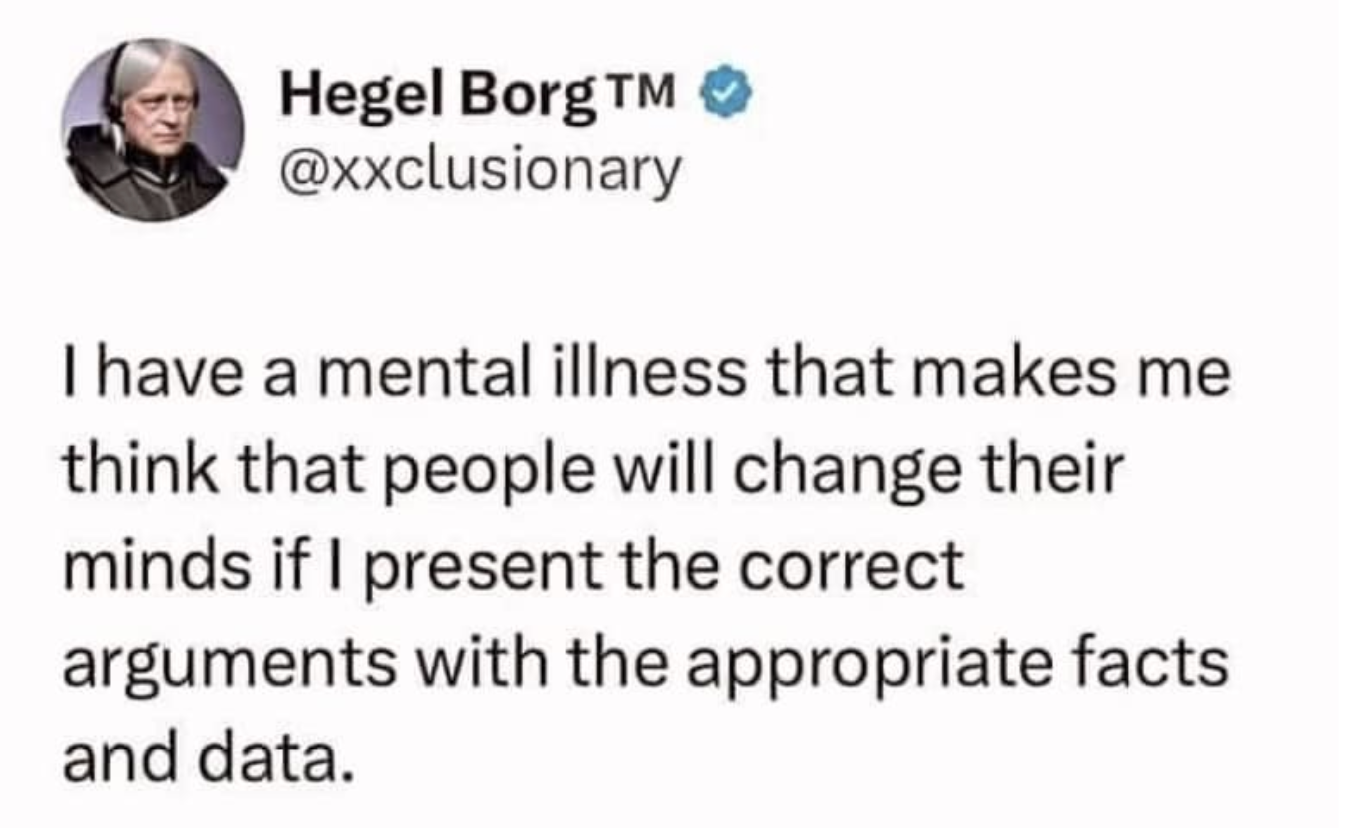
“I have a mental illness that makes me think that people will change their minds if i present the correct arguments with the appropriate facts and data.”
And to make things even worse, consider the Boomerang Effect. I turn to Grok:
The boomerang effect (also known as the backfire effect in some psychological literature). Is a persuasion paradox where presenting strong evidence or arguments to debunk a false belief doesn’t sway people; instead, it often reinforces their original misconception, making them dig in even deeper. This happens because the challenge feels like a threat to their identity, worldview, or autonomy, triggering defensive reasoning—think of it as the brain “boomeranging” the message right back at you with amplified conviction.Classic examples include political debates (e.g., fact-checking a conspiracy theory that only rallies believers more) or health campaigns (e.g., anti-smoking ads that ironically boost smoking among defiant teens). Studies show it spikes when the persuasion feels too forceful, emotional, or condescending, as people resist perceived control. To counter it, softer approaches like asking open questions or building rapport work better than direct confrontation.It’s a frustrating reminder that facts alone don’t always win—emotions and ego often steal the show.

