Differential Investment in Procreating in Terms of Money and Risks

In her column at Psychology Today ("How to Train Your Boyfriend"), Evolutionary Psychologist Diane Fleischman illustrates the time investment differential in terms of money:

We know women have had to carry a baby for 9 months. But over our evolutionary history, a mother would have had to breastfeed for 3 years, on average, before the baby would be weaned. What's the minimum amount of investment a man could put in to have a baby? Let's be generous and say the minimum amount is an hour. This is called "minimum obligatory parental investment" and in human men and women, the asymmetry is bigger than in most other species. . . . If you think about the asymmetry between men and women in the minimum amount they would have to invest to make a baby in terms of dollar amount- a man would have to invest $1 and a woman would have to invest $32,000.

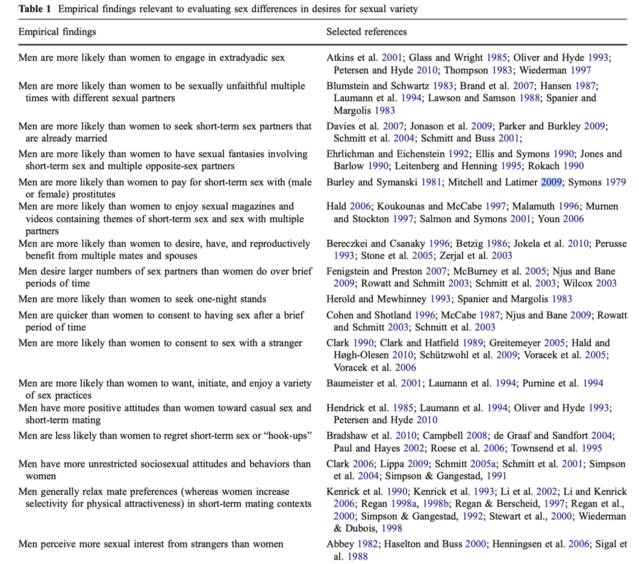
In her article, Fleishman points out many difference in behavior between men and woman (see the extensive list below), as well as reproductive risks, stemming from this procreation investment asymmetry.
Continue ReadingDifferential Investment in Procreating in Terms of Money and Risks

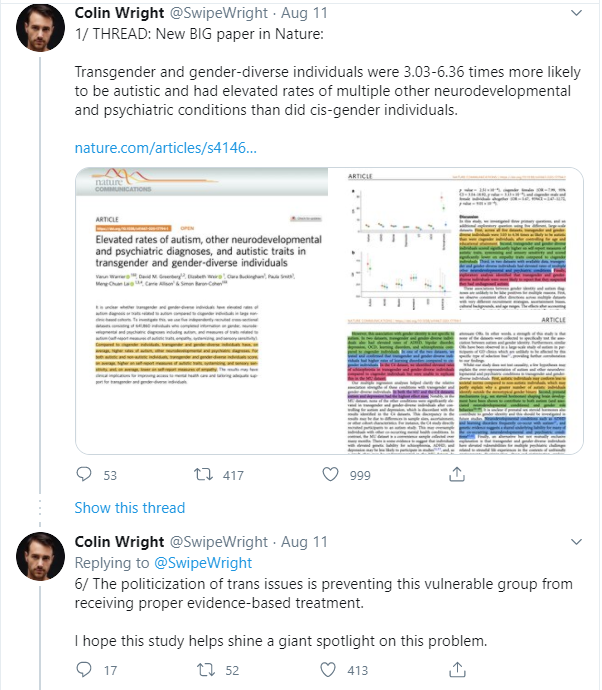
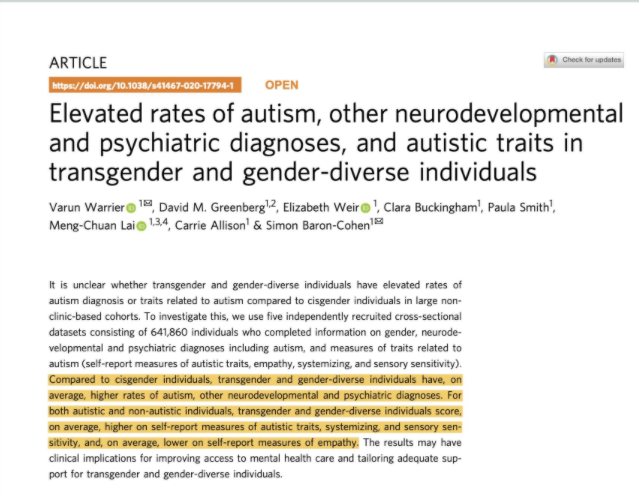
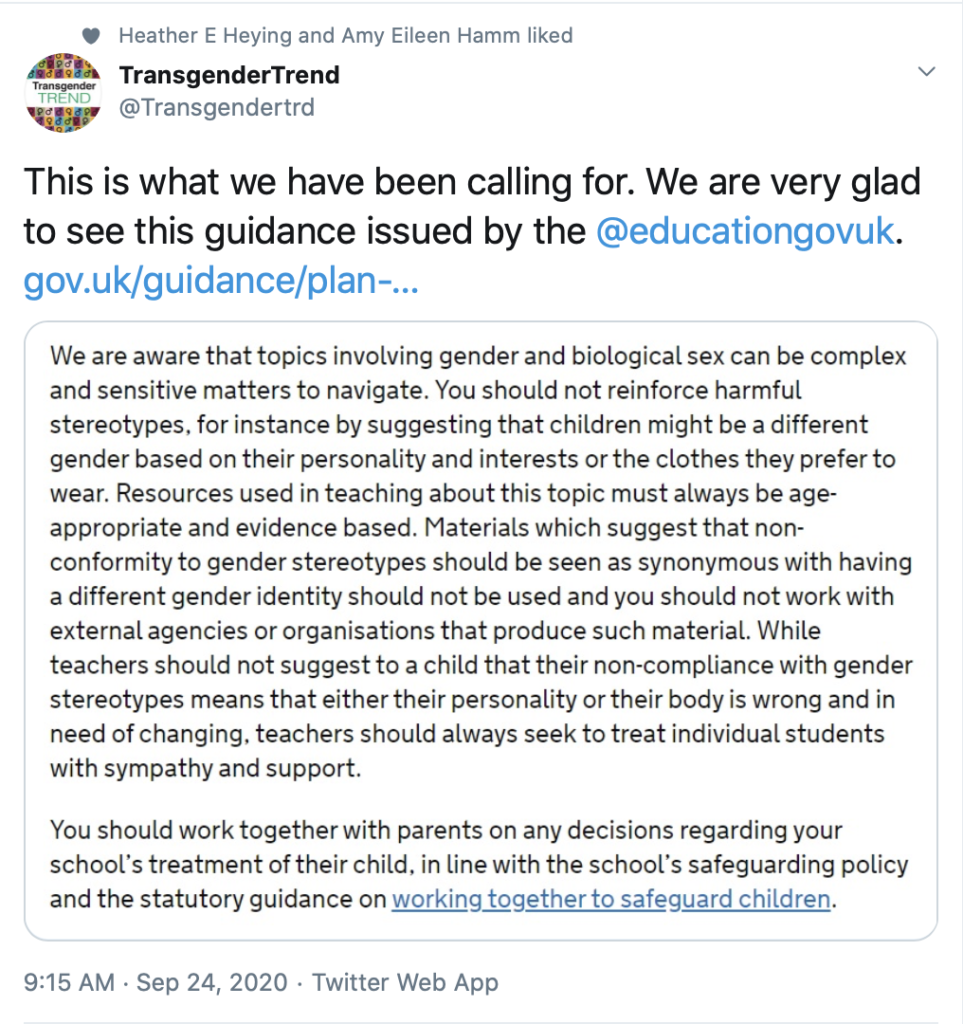
Updated Common Sense Advice on Transgender Issues re Children from the U.K. Department of Education

This advice from the U.K. Department of Education is long overdue. So much common sense here.  Perfect response to many bad arguments being made by transgender activists, for instance, if a girl likes to engage in activities that are stereotypically "for boys," she was born in the wrong type of body and thus needs surgery and hormones. It's now time to invest in some giant shredders to rip up massive amounts of pernicious trendy advice.

This is a list of things that are so obvious that they shouldn't need to be said at all, but we live in a world where these things do need to be said.

Continue ReadingUpdated Common Sense Advice on Transgender Issues re Children from the U.K. Department of Education

Sex Differences in Casual Sex and the Lack of Blank Slates

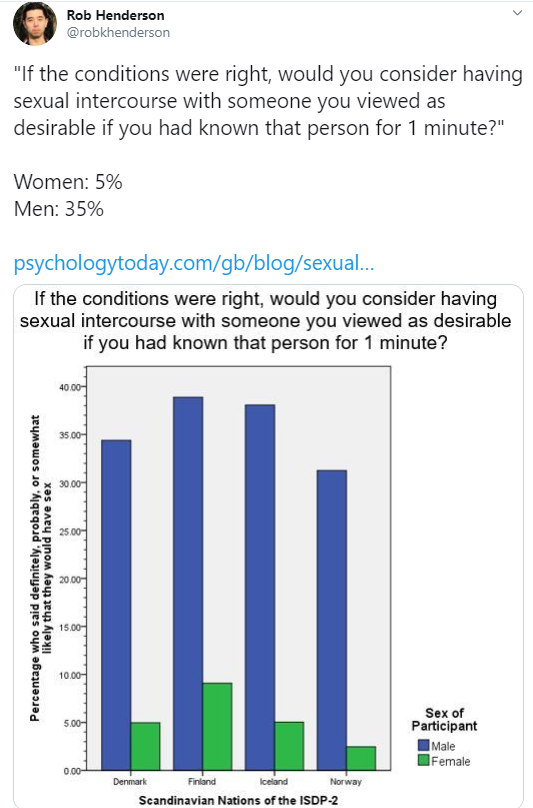
This Tweet links to a detailed article from 2017.  Men and women are similar in many ways, but they are extremely different when it comes to attitudes regarding casual sex.

From the cited article at Psychology Today:

Over the last few decades almost all research studies have found that men are much more eager for casual sex than women are (Oliver & Hyde, 1993; Petersen & Hyde, 2010). This is especially true when it comes to desires for short-term mating with many different sexual partners (Schmitt et al., 2003), and is even more true for wanting to have sex with complete and total strangers (Tappé et al., 2013).

In a classic social psychological experiment from the 1980s, Clark and Hatfield (1989) put the idea of sex differences in consenting to sex with strangers to a real-life test. They had experimental confederates approach college students across various campuses and ask, "I've been noticing you around campus. I find you to be very attractive. Would you go to bed with me tonight?" Around 75 percent of men agreed to have sex with a complete stranger, whereas no women (0 percent) agreed. In terms of effect size, this is one of the largest sex differences ever discovered in psychological science (Hyde, 2005).


Continue ReadingSex Differences in Casual Sex and the Lack of Blank Slates

Sam Harris Explores the Global Epidemic of Child Sexual Abuse

In his introduction to "The Worst Epidemic," Sam Harris warns that the subject matter might be difficult for listeners. The topic is the global epidemic of child sexual abuse involving children as young as one year old. Sam is joined by Gabriel Dance, a NYT reporter who has thoroughly investigated this issue. Until I forced myself to listen, I had assumed that this predatory behavior was relatively rare, but I was shocked to learn that sexual predators have exploited every corner of the Internet. To illustrate, Dance mentions that law enforcement experts estimate that of the 9 million citizens of New Jersey, 400,000 have been exposed to these highly illegal images and videos, some of this exposure being inadvertent, but much of it being intentional. It makes you wonder who we are, as a nation, that so many among us are willing to torture children. The tragedy is widespread, making the technical challenges and law enforcement needs overwhelming.

As a public service, Sam has put this episode in front of his paywall. The topic spirals in many directions, including the misleading concept of “child pornography,” the failure of governments and tech companies to grapple with the problem, the tradeoff between online privacy and protecting children, the National Center for Missing and Exploited Children, photo DNA, the roles played by specific tech companies, the ethics of encryption, “sextortion,” and the culture of pedophiles.

I am proud to say that I have been a paid subscriber of Making Sense for years. Sam Harris does a great job of exploring complex and oftentimes thorny issues unflinchingly, week after week.  From Sam's About Page:

His writing and public lectures cover a wide range of topics—neuroscience, moral philosophy, religion, meditation practice, human violence, rationality—but generally focus on how a growing understanding of ourselves and the world is changing our sense of how we should live.

If you are unfamiliar with the work of Sam Harris, I invite you to listen to this Episode, or any Episodes of Making Sense.

Continue ReadingSam Harris Explores the Global Epidemic of Child Sexual Abuse