I have Darwin on my mind these days, perhaps because tomorrow is Darwin Day.
To celebrate Darwin Day, I sat down to read the February 2009 edition of National Geographic, which, according to the front cover, features an article entitled “What Darwin Didn’t Know.” Once you get inside the magazine, however, you’ll see that the main article is actually entitled “Darwin’s First Clues [1].” It is an extraordinary article setting straight some of the misconceptions about the manner in which Darwin developed his theory of evolution by natural selection. You can read that article online here [1]. you can also watch a short introductory video by writer David Quammen, who explains that Darwin “is a man who just will not go away,” and whose ideas are not only still relevant, but “central” to the field of biology.
If you read this article, you’ll see that Darwin’s first clue toward evolution occurred not in the Galapagos, but three years earlier on the northern coast of Argentina, where Darwin found fossils of giant sloths. You’ll also read about his numerous fossil finds of giant mammals, “extinct Pleistocene giants.”
Quammen’s article points out that, for all of his gifts, Dawn was not a comparative anatomist. For this reason, he entrusted much of that work to others, including John Stevens Henslow, a botanist at Cambridge and Richard Owens, “an up-and-coming authority on extinct mammals.”
Darwin was certainly aware of the implications of the diversity and distributions of the flora and fauna he studied. The fact that fossils of giant extinct mammals could be found in the same places as still-living relatives suggested the idea of “relatedness and succession among closely allied species” rather than a God who had specially created species, placing them on the planet in arbitrary locations. Darwin’s explanation was certainly “more economical, more inductive and more persuasive than the creationist scenario.”
In the paper version of National Geographic (though this is not available online) is a chart demonstrating numerous scientific findings of which Darwin was not aware. Around 1865, for example, Gregor Mendel conducted his experiments demonstrating “factors” in pea plants, but there is no evidence [2] that Charles Darwin had access to Mendel’s findings. Consider some of the other extraordinary evidence which has become widely known subsequent to Darwin’s death in 1882.
In 1906, radioactive decay experiments indicate that the earth is actually billions of years old, not thousands.
In 1892, August Weisman postulated that a substance in chromosomes was responsible for the inheritance of traits.
Around 1910, Thomas Hunt Morgan and colleagues inferred the existence of genes based upon studying many generations of fruit flies.
The 1920’s – Genetics experiments indicate that mutations can provide the raw material for evolution and that small mutations can spread widely through a population.
The 1930s – “The modern synthesis” is a general agreement by scientists that “evolution is seen to proceed through natural selection and other random mechanisms, with new species originating through the gradual accumulation of mutations in isolated populations.”
1953 – Francis Crick and James Watson discover the double-helix morphology of DNA.
1974 – Donald Johanson discovers “Lucy,” an Australopithecus female who is deemed to be of the species at the “base of the human lineage.”
The 1970s – Niles Eldredge and Stephen Jay Gould present their theory of punctuated equilibrium; Richard Dawkins writes The Selfish Gene. E. O. Wilson writes Sociobiology, suggesting the genetic basis for changes in behavior.
1977 – Carl Woese reclassifies organisms by the genetic similarity, rather than physical similarity, determining that life “is composed of three domains, splitting microbes into bacteria and archaea.”
2003 – gene sequencing demonstrates close some alerted between human and chimpanzee genomes.
Present day – Biologists reached agreement that much variation among species is due to controlling mechanisms of genes, rather than changes in genes themselves.
—
The opening paragraph to this National Geographic chart recognizes how astonishing Darwin’s discoveries were, given the paucity of evidence during his lifetime regarding the mechanism of inheritance.
So here we are, in 2009, and we all do have access to each of these immensely important discoveries. It would seem, then, that there is really no excuse for not taking the time to understand and appreciate the power and elegance of natural selection. After all, we have Darwin’s meticulous and brilliant writings to guide us–if nothing else consider reading an abridged version of “The Origin of Species.” 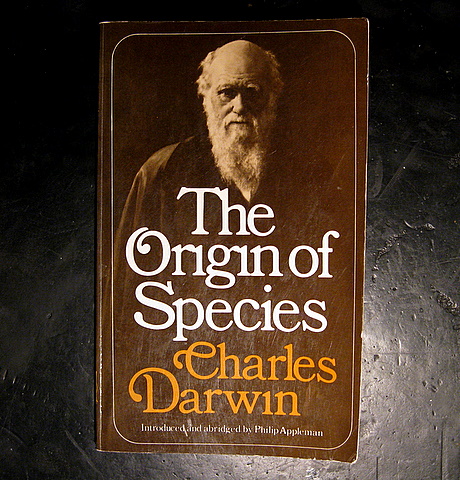 [3]We also have numerous corroborating findings that would’ve made Darwin’s work much easier for him. No excuses, right? That’s what I think whenever I see charts showing the tepid response of Americans [4] to Darwin’s brilliant analysis. Note: Upon his death, Darwin was given the great honor of being buried in Westminster Abby [5].
This is probably another good time to extol the terrific writing and photography of National Geographic. Every time I take the time to sit back and carefully read National Geographic, I am overwhelmed by the experience. I am transported to distant times and lands. Every time. It is always excellent. I applaud the National Geographic for never giving an inch to the nationwide disparagement of science that has occurred over the past eight years–nothing was watered down through the Bush years. It would be impossible to get a better bargain than a year’s worth of National Geographic for only $15 [6]. you’ll even be able to see those charts and graphics, as well as numerous photographs that are not available online.
Print this post [7]
 [8]
[8]