In the wake of the House voting to defund NPR last Thursday, and after weeks of rhetoric about cutting spending, I decided to take a 30,000 foot look at some of the budget line items of federal agencies and entities and come up with a list for the Congress to examine in detail.
First, I found several news cites (all with roughly the same wording) that a Congressional Budget Office (CBO) report found that cutting public radio funding would net zero savings but I couldn’t find the report on the CBO website. I did find a report [1] (dated Feb 18th) on H.R. 2 (the one with the creative title “Repealing the Job-Killing Health Care Law Act”) passed by the House on January 19th informing Speaker Boehner that the effects of the passage of the resolution would increase deficits in the decade 2012-2021.
CBO and JCT [Joint Committee on Taxation] estimate that, on balance, the direct spending and revenue effects of enacting H.R. 2 would cause a net increase in federal budget deficits of $210 billion over the 2012-2021 period (see Table 1).
And buried at the end,
Although premiums in the individual market would be lower, on average, under H.R. 2 than under current law, many people would end up paying more for health insurance…
Hmmm…anyway…
Disclosure: I’m cherry-picking the non-zero lines tagged “discretionary” from the FY2011 Public Budget Database outlays spreadsheet [2]. I left off lots of departments and agencies. These are the cherries I picked. Be my guest and drill through the 4880 line items and offer up your own list. Also, I did’t want to click back and forth between FY11 and FY12 to “help” out next year, so these are just for the current as yet unapproved spending – it’s a little ironic that most of the “cuts” being bandied are not cuts, but rather budget items that have not yet been approved. Certainly, the FY12 version of these numbers would still need scrutiny. And just because I chose the $1.3 trillion in discretionary items doesn’t mean that any of the “mandatory” lines are funded properly. The non-zero line items tagged as mandatory total $1.9 trillion, so I’m sure there are opportunities for belt-tightening there. At $3.2T total, of course opportunities abound.
Disclaimer: I’m only suggesting that the programs/offices below get looked at hard, not cut indiscriminately. That would be foolish. Well, foolish to the sane.
(Any more “Discl…” words I can use?) And this will get messy, so please forgive in advance the formatting.
 [3]
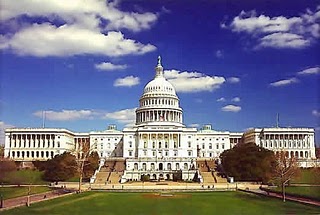
[3]Let’s start with the Legislative Branch. I think the before you start cutting programs, you need to make sure your own House (and Senate) are in order. The outlays for the agency labeled “Legislative Branch” total more than $4.6B. Here are some to consider:
Senate: Salaries, Officers and Employees [Senate] – $179M
Senate: Senators’ Official Personnel and Office Expense Account – $402M
Senate: Sergeant at Arms and Doorkeeper of the Senate [4] – $154M
House: Salaries and Expenses [House of Representatives] – $1.35B
Note: these are above the $123M mandatory compensation of members of the Senate and House, rank and file salaries being $174K, Majority/Minority Leaders being $193.400 and Speaker of the House being $223,500. That total for just salaries is $93,217,100.
Office of Compliance: Capitol Police – $265M
Legislative Branch Boards and Commissions: Open World Leadership Center Trust Fund [5] – $16M
Legislative Branch Boards and Commissions: Capital Construction, Dwight D. Eisenhower Memorial Commission [6] – $10M
Guess what, folks? If you trim just 10% off of the Legislative budget, you save nearly a half billion dollars.
 [7]
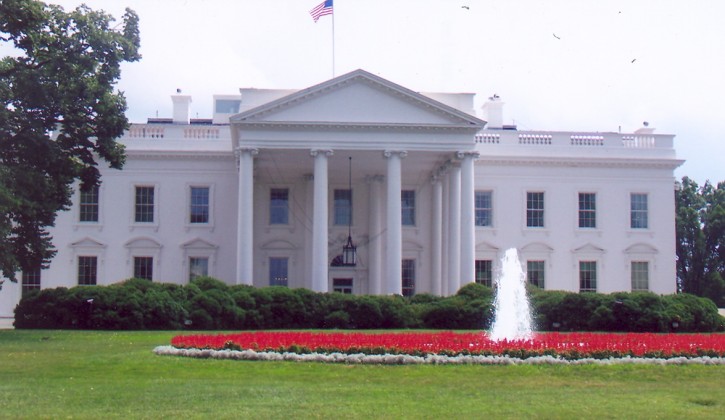
[7]Executive Branch – $463M
Executive Branch: Office of National Drug Control Policy – $30M
Executive Branch: Iraq Relief and Reconstruction Fund – $47M (under the Bureau name of “Unanticipated Needs” – I think they are no longer unanticipated)
Oddly, the line item for compensation of the President is zero. Not sure where that’s stuck…
——————————————————————
 [8]Now, on to the rest of the cherry picking….
Department of Agriculture – $32B overall
DA: Agriculture Research Service [9] – $4.99B in 26 line items (there are some pretty fat discretionary budgets here)
DA: Agricultural Marketing Service [10] – $107M
DA: Farm Income Stabilization [11] – $1.97B
DA: Rural Development Bureau [12] – $4.45B
(I’m leaving Forestry, WIC, and lots more off the 99 lines for the USDA; remember, this is my list)
Appalachian Regional Commission [13] (no kidding – it’s real) – $75M
Northern Border Regional Commission – $2M
Christopher Columbus Fellowship Foundation [14] (another “no kidding”) – $1M
Committee for Purchase from People who are Blind or Severely Disabled [15] – $4M
Corporation for National and Community Service [16] – $593M
Delta Regional Authority [17] – $13M
Denali Commission [18] (hello, Ms. Palin!) – $58M
Department of Commerce: Economic Development Administration [19] – $575M
Commerce: National Telecommunications and Information Administration [20] – $1.77B
Department of Defense – $733B (10% here would be $73B. They don’t get a pass; but because I used to be military, I know that Secretary Gates is hammering the JCS and services to cut costs. The increases seem to come from “unanticipated needs” or congressional earmarks for their constituencies. )
Department of Education – $101B (mixed feelings about this; fix the No Child Left debacle, but many states are targeting education so guess where Congress will look?)
Department of Energy: Fossil Energy Research and Development – $1.13B
DoE: Science (“General science and basic research”) – $5.34B
DoE: Power Marketing Administration [21] – $503M (marketing hydropower?) – some of this is mandatory
Department of Homeland Security – $48.6B
DHS: Citizenship and Immigration Services [22] – $299M (as contrasted with…)
DHS: Immigration and Customs Enforcement [23] – $5.65B (see where we focus?)
Department of State – $27B
(did you know there were set asides for these?)
State: Conflict Stabilization Operations – $88M
State: Democracy Fund [24] – $223M
State: Andean Counterdrug Program [25] – $199M
Election Assistance Commission [26] – $121M (not to be confused with…)
Federal Election Commission [27] – $71M
Federal Mediation and Conciliation Service [28] – $47M (bust the unions and this can go away!)
Intelligence Community Management Account [29] – $647M
International Assistance Programs – $26B
Foreign Military Financing Programs $5.4B
Economic Support Fund – $6.9B
Agency for International Development – $6B ($17M also in here for Conflict Stabilization Operations)
Pakistan Counterinsurgency Capability Fund – $595B
Millennium Challenge Corporation [30] – $1.85B (“helping lead fight against global poverty”?)
Office of Government Ethics [31] – $14M (might want to increase this one)
American Battle Monuments Commission [32] – $69M (These are memorials and cemeteries outside the US)
 [33]Buried in these and those I didn’t call out are the oil subsidies (supposedly $6B to $39B [34] annually?) and farm subsidies ($10B over 10 years? – From The Atlantic: Will the 2011 Budget Finally Cut Farm Subsidies? [35]). James Barrett at Custom Solar writes
Not long ago, I helped the nice people at the Environmental Law Institute work on a project to identify and quantify federal subsidies to various energy industries…. It turns out that the hardest part of the project was defining what a subsidy is. …defining and identifying energy subsidies is a far more convoluted undertaking than the common sense nature of the issue indicates.
No Kidding. You can read his article here [36].
If you do feel like playing this game, I recommend you hide all those extra columns, freeze the panes on that spreadsheet and use filtering – it’s a mess…and that’s just the top level roll up.
Print this post [37]
 [38]
[38]