Prologue: This post does not apply to Christians who conclude that “God” was evil to the extent that “He” killed babies. Nor does it apply to Christians who don’t believe that the Old Testament is literally true, and thus conclude that “God” never actually killed babies as described in the Old Testament. In short, this post applies only to those who believe that A) God really killed numerous little babies, and B) that God is nonetheless “good.”
Whenever I hear believers proclaim that “God” is “good” I am puzzled. How could it possibly be that an all-knowing and omnipotent being could engage in the many atrocities attributed to “God” in the bible? For example, how can killing little babies [1] ever be considered to be good? Here are 1,199 more examples [2] of cruelty from the Bible. Anyone but “God” who engaged in such behavior would be universally proclaimed to be evil, not good. There’s no way to avoid this conundrum for believers, especially for Bible literalists. The God they repeatedly praise purportedly killed many thousands of innocent people, including countless numbers of babies. Consider also, that other Bible passages [3] show little regard for the lives of infants and fetuses.
The above passages cause me to consider this question: Do believers sincerely believe their claims that “God” is “good,” or are they merely being practical in the face of the threat of hell? To what extent is it that it is the perceived threat of hell causes it to seem “true” that a baby-killing God is “good”? Sam Harris raises a similar issue at page 33 of his new book, The Moral Landscape (2010):
What if a more powerful God would punish us for eternity for following Yahweh’s law? Would it then make sense to follow Yahweh’s law “for its 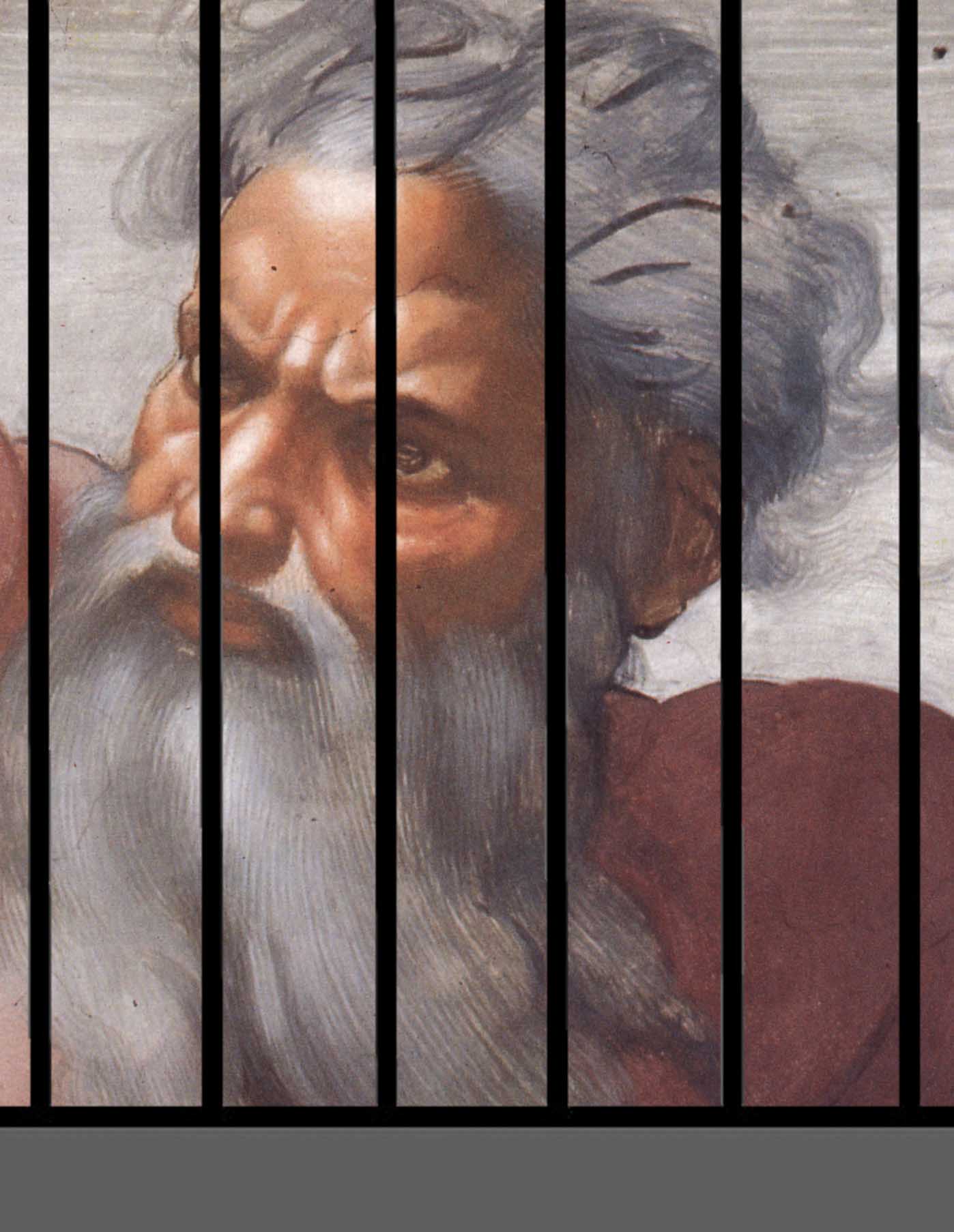 [4]own sake”? The inescapable fact is that religious people are as eager to find happiness and to avoid misery as anyone else: many of them just happen to believe that the most important changes in conscious experience occur after death (i.e., in heaven or in hell).
Indeed, what if a bigger stronger god named Kyle came along and smote Yahweh, showing all the world Yahweh’s lifeless supernatural “corpse” while declaring “God is Dead!” (Were this ever to happen, it would likely make atheist Friederick Nietzsche jostle in his grave). Wouldn’t believers quickly modify their existing hymnals, scratching out “God” and inserting “Kyle”? What might they do to the traditional hymn, “God is so Good [5]”? Something like this?
[Kyle] is so good
[Kyle]is so good
[Kyle]is so good
[Kyle]is so good
He’s so good to me
[Kyle] answers prayer
[Kyle]answers prayer
[Kyle]answers prayer
[Kyle] is so good to me [etc]
I’m sure that this thought experiment must seem blasphemous to believers. They would also consider it outrageously stupid to suggest that a sincere believer could quickly switch loyalties. But for outsiders like me it is one of the most disturbingly salient characteristics of American Christians that they claim to love God like abused children “love” their physically and emotionally abusive parents. Wouldn’t it be interesting to run an experiment to see how much “love” would flow to God in religions that taught that there is no threat of eternal torture?
How fickle are believers? Because I believe that many of them are motivated by fear of hell, I suspect that they are incredibly fickle. Nature offers precedent for this sort of instant loyalty-switching. Male lions often kill (and eat) the young cubs of a lioness who had mated with another male [6]. You would think that such a female would never associate with such an aggressive male, [7] but these traumatized female lions proceed to mate with the baby-killer lion and willingly raise the cubs he sires.
“Truth” often results from the exercise of power. This commonly occurs whenever a new regime takes over. To what extent is that type of terror motivating religious belief?
How far could Kyle push his new subjects? I would suspect that he could push them to embarrassing degrees as long as “He” allowed them the opportunity to watch lots of TV while on Earth, plus “He” gave them a sliver of hope that they could avoid eternal torture by engaging in weekly groveling at church. I would suspect that even if new god Kyle disavowed the divinity of Jesus, the terror invoked by his bigger and hotter hell would quickly have most believers uttering “Jesus Who?”
What if Kyle told us that he would throw us in hell unless we humans once again treated women as inferior, requiring all women on Earth to wear burqas? What if “He” demanded that each of us killed our own second-born children with kitchen knifes? How much would it take for believers in Kyle to stop proclaiming that Kyle is “good,” and to acknowledge that “He” is actually “evil,” based on the fact that morality is founded on empathy [see this post about the work of Frans De Waal [8] and here [9]].
How much outrageous behavior would it take for believers to shake off homage based on obeisance and fear and to instead proclaim that genuine goodness is the same type of conduct we admire in good human beings, regardless of the extreme amount of power wielded by He who is being judged?
Print this post [10]
 [11]
[11]