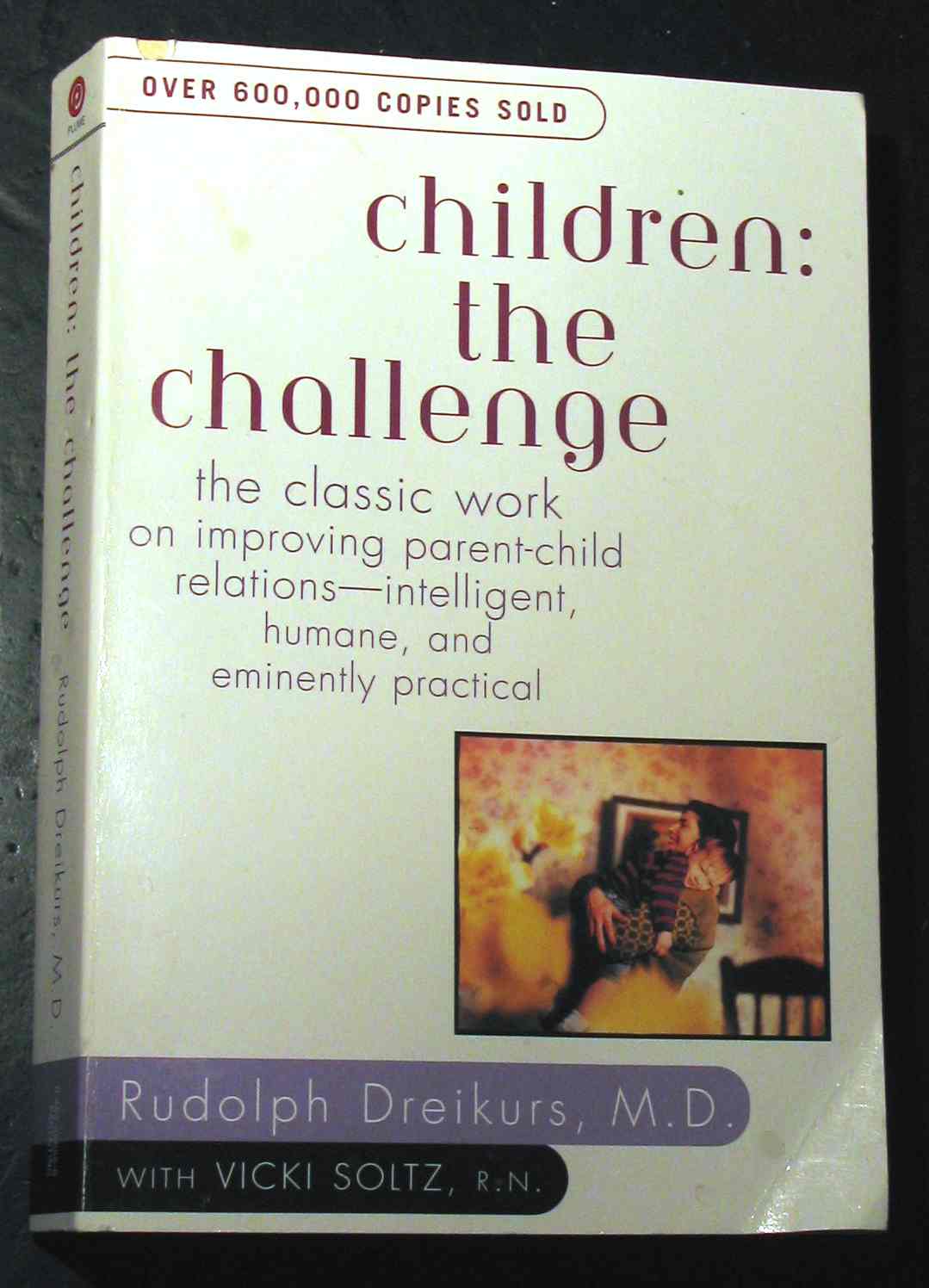
In 1964, Rudolph Dreikurs wrote a child psychology book that is still considered a classic by child psychologist: Children: the Challenge. [1] Dreikurs argued that using punishments to change behavior is inefficient.
No amount of punishment will bring about lasting submission. Confused and bewildered parents mistakenly hope that punishment will eventually bring results, without realizing that they are actually getting nowhere with their methods or, at best, they gain only temporary results from punishment. When the same punishment has to be repeated again and again, it should be obvious that it does not work. The use of punishment only helps the child to develop greater power of resistance in defiance.
Dreikurs argued that the authoritative idea of using punishment needs to be replaced with a sense of mutual respect and cooperation. Children need real leadership. “A good leader inspires and stimulates his followers into action that suits the situation.” It is important to arrange the learning situation such that a child learns “without a show of power, for power insights rebellion and defeats the purpose of child-raising.”
 [2]
[2]
Dreikurs also cautions parents about using rewards:
The system of rewarding children for good behavior is as detrimental to their outlook as a system of punishment. The same lack of respect is shown. We “reward” our inferiors for favors or for good deeds. In a system of mutual respect among equals, a job is done because it needs doing, and the satisfaction, for the harmony of two people doing a job together…. satisfaction comes from a sense of contribution and participation-a sense actually denied to our children in our present system of rewarding them with material things. And our mistaken efforts to win cooperation through rewards, we are actually denying our children the basic satisfactions of living.
Since neither reward nor punishment is effective, what does Dreikurs suggest? He suggests using an approach he terms “natural consequences.”
Natural consequences” represent the pressure of reality without any specific action by parents and are always effective … What would be the natural consequence of forgetting one’s lunch? One would go hungry…. the idea of letting a child go hungry is horrifying to many parents. Actually, it is unpleasant to be hungry. But one missed lunch now and then is not going to cause bodily harm, and the discomfort may be effective in stimulating [the child] to remember to take his lunch with him…. we do not have the right to assume the responsibilities of her children, nor do we have the right to take the consequences of their acts. These belong to them.
I agree with Dreikurs. As a parent, I have become tuned to the existence of many styles of parenting. I have come to learn that rewards and punishments do not create responsible children. Instead, they create extended co-dependencies.
As I read Dreikurs book, I was reminded that our government constantly tries to regulate behavior through the inefficient methods of rewards and punishments, resulting in the same problems that result in a household that utilizes these approaches.
Our government has also evolved to do something far more insidious: hiding natural consequences from the citizens. Take Iraq, as one example. We don’t see caskets of our soldiers. We don’t see the mayhem still occurring in Iraq. The United States government and the corporate media work hard to protect us from these terrible images. This lack of information means that the citizens are protected from knowing the “natural consequences” of funding military action in Iraq.
We have been protected from knowing hundreds of other important things, as well, including government spying and government doctoring of scientific reports. The government, aided by an over-consolidated corporate media work hard to pump out lots of news and ads that hypnotize us to believe that the best way to be happy is to buy expensive things we don’t need. We are encouraged to over-consume, over-spend and over-trust the government. If you don’t believe me, pick up any episode of your daily “news”-paper or watch any episode of your local “news.” As a result of the lack of good information, we are now facing multiple terrifying economic, energy and environmental crises. We have been protected from the natural consequences and, therefore, we don’t know enough to change our ways.
It is critically important to have a vigorous media peeling back the protective curtain erected by government and the corporate media so that, as a country, the citizens can receive accurate feedback in order to have the opportunity to learn these natural consequences of their collective actions. That is why I am so supportive of media reform organizations like Free Press, which just sponsored a massive National Conference for Media Reform in Minneapolis. [3]
There are endless other examples, of course. The point is a simple one. Unless Americans have accurate feedback, they, just like the children Dreikurs studied, will be deprived of knowing natural consequences and they will therefore fail to adjust their behavior. They will not learn to live responsibly. We will become infantilized, making short-sighted decisions based only on what is in front of us, just like toddlers. [4] We will operate on the “greedy algorithm.” [5] When we are deprived of natural consequences, we always live in the present, just like dogs and toddlers. And eventually, when problems become so enormous that they can’t be hidden from us any longer, we are only trained to deal with them as well as toddlers would be. That’s what we’re doing now–scrambling to find ever more short-term fixes for long-term challenges. Anything, so we can get back to suckling on our television shows, text-messaging, video games, movies and sports events.
Without the opportunity to adapt our behavior based on “natural consequences,” Americans are left with the inefficient lessons taught by rewards (“economic stimulus payments,” anyone?) and punishments (consider the absurd “war on drugs”). The parallels between Dreikurs’ young subjects and U.S. citizens are striking: a country that hides the truth and relies heavily on rewards and punishments denies its citizens “the basic satisfactions of living.”
How do we get better information? In my opinion, the two most important ways are media reform and campaign finance reform, to upon up these two massively guarded systems, to allow the citizens to learn from their mistakes.
Print this post [6]
 [7]
[7]