“There is no evidence whatsoever that flowering plants evolved.”
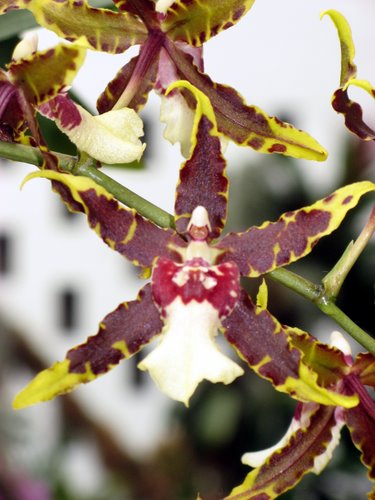
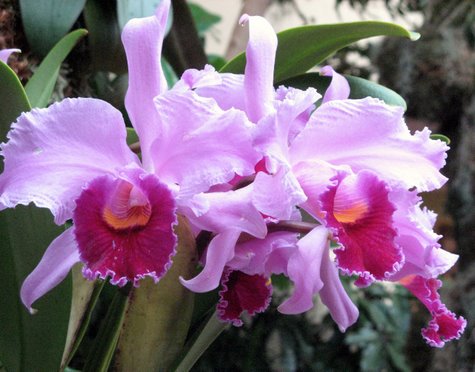
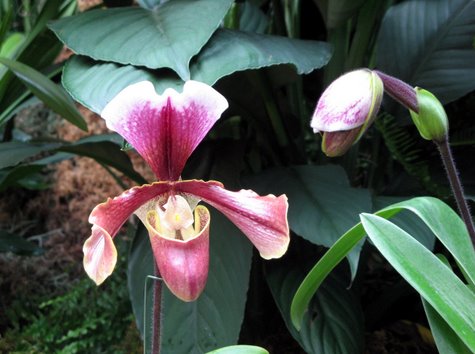
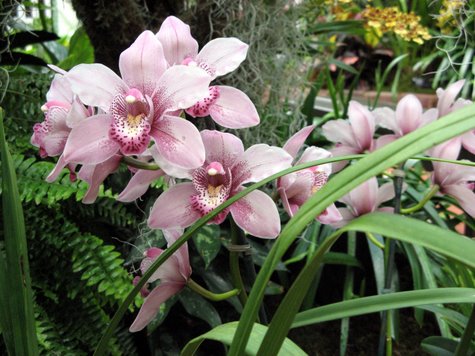
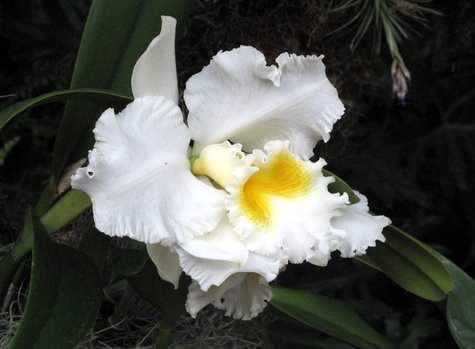
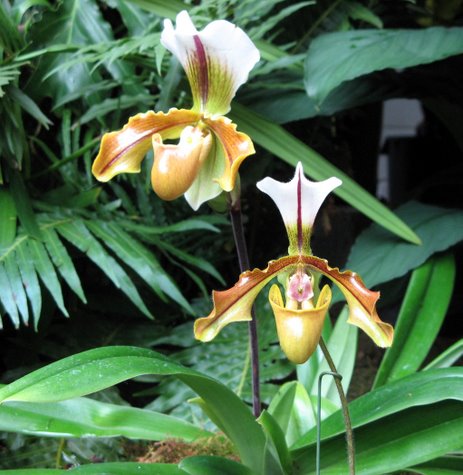
I can understand this resistance to believing that orchids evolved without the help of God-the-Artist. I understood this resistance while strolling through an extraordinary display of orchids today at the Missouri Botanical Garden. [2]
 [3]
[3]
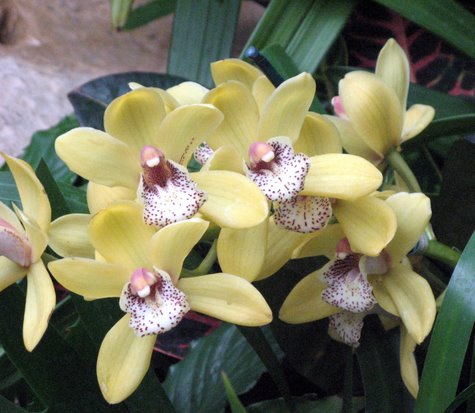
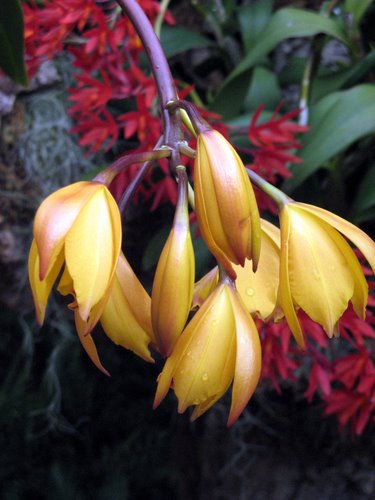
It was like looking at fireworks. Just when you thought you had seen it all, you would see yet another dazzling package of color and shape. Why would “Nature” waste such time on crafting such masterpieces? For those primed by a religious upbringning, the emotions would compel the thought that flowers of this type must be no less than “God’s” aesthetic gift to Humankind.
 [4]
[4]
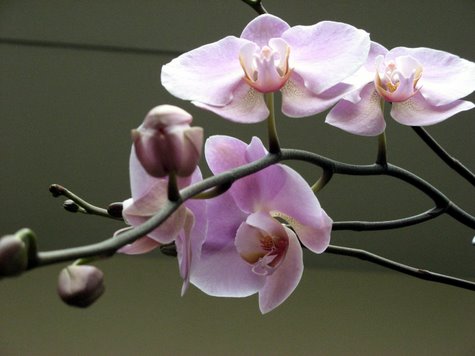
Such thinking, of course, is prevalent among creationists. Prevalent and wrong. Not that orchids sculpted by natural selection are any less stunning in appearance that those that might have been crafted by an omniscent deity. They are what they are. They are compelling beings, those orchids. They are beautiful and they are alive. And they can be appreciated by anyone, of any world view, who comes to view them. I imagine that, today, many creationists lined up with those who are convinced by evolutionary theory, all of them appreciating the orchids.
 [5]
[5]
Viewing this orchid display reminded me of Darwin’s writings regarding the many versions of finches Darwin observed on his trip to the Galapagos. Regarding those finches, Darwin concluded that, in geographical isolation, the various species of finches evolved from a small number of common ancestors so that each species was thus modified to suit “different ends.” Darwin’s conclusion that the species of finches specialized due to geographical isolation was key to the development of his theory of natural selection.
 [6]
[6]
Darwin studied orchids carefully after publishing On the Origin of Species in 1859. Darwin later published a book called On the Various Contrivances by which British and Foreign Orchids are Fertilised by Insects and the Good Effects of Intercrossing. Rather than argue that the beauty of orchids was God’s effort to please humans, Darwin argued that the various species of flowers were honed by natural selection to attract specific types of insect cross-pollinators. Incredibly, there are more than 22,000 known species of orchids. [7]
 [8]
[8]
 [9]
[9]
The following excerpt, published by Nature (on the PBS site) [10]notes the significance of orchids to Darwin:
The great evolutionist Charles Darwin was so taken with the flowers that in 1877 he published a thick book devoted to THE VARIOUS CONTRIVANCES BY WHICH ORCHIDS ARE FERTILISED BY INSECTS. In it, he noted that some orchids appear to rely on just one specific pollinator — a particular species of moth, for instance — for survival. Modern researchers call this specialized biological embrace of two species “co-evolution.” But co-evolution has both benefits and risks. The benefit is that both partners can specialize and don’t have to waste energy finding other ways to reproduce. The peril is becoming too reliant on a single partner. If one half of the co-evolved pair becomes extinct, the other is surely doomed as well.
Darwin’s insights into co-evolution allowed him to foretell the discovery of a new species. In a famous example, he described an orchid from Madagascar that had a foot-deep nectar well that kept the sweet liquid far out of reach of all known butterflies and moths. But the existence of the flower led him to predict the existence of a specialized moth with a foot-long proboscis that, like a straw, could reach the deep reward. Indeed, after Darwin’s death, researchers discovered just such an insect, and named it the “Predicta moth” in honor of Darwin’s educated guess.
 [11]
[11]
 [12]
[12]
 [13]
[13]
Print this post [14]
 [15]
[15]