What to Say When You Notice Someone Sneezing in the Age of COVID-19

The traditional response to noticing another person sneeze has never worked well for me. Why would I invoke the name of a deity in such a situation?

Even if a such deity actually existed, why would he/she/it/they care about someone sneezing? Path dependance explains a lot of things we do and the "God Bless You" people often say (often with a concerned look) is one of those many things we do merely because we've always done it that way. 

COVID-19 has made our concerns about sneezing much more legitimate. I noticed this yesterday while I was outside in my backyard (alone) eating pretzels. I had a mouthful of pretzel when I had a strong urge to sneeze came upon me. Maybe God made me do it. I didn't hold back, even with my mouth filled with mostly-chewed pretzel. It was a world class sneeze, I can proudly say, but it was also a science experiment. I watched as the pretzel particles sprayed several feet from me. If I were contagious, that would have been pretzels AND COVID-19 micro-particles and I assume that the virus would have sprayed even much farther than the pretzel dust. This was a visual reminder that it is good advice to sneeze into your elbow these days, if you can't hold back your sneeze while with others.

I've had long been puzzled about the traditional sneeze response ("God bless you"). A bit of research today showed me that the phrase might have first been uttered around 600 A.D. to try to protect people from the plague.  For many years, however, we've used that same expression when there was no fear of any plague.  

In modern pre-COVID times, however, the phrase has been an overly-quaint response to a perfectly natural and harmless bodily action, especially around allergy season. Sneezing is one of those fascinating complex series of coordinated actions that our bodies do (along with swallowing, vomiting, and orgasms) where our animal bodies seem to take on a life of their own for a short period, independent of our control once they reach the point of no return.

But what, exactly, is it that a God would supposedly do by "blessing" me following a sneeze? The obvious answer (it would seem) is to help me to stop sneezing in the future. Armed with this speculative conclusion a few years ago, I asked my nephew Dan whether he could help me with a new logical yet pretentious thing to say to a person who just sneezed. Dan had recently majored in Latin as well as computer science. His suggestion was to say: "Consiste sternuere!" He assured me that this phrase is Latin for "Stop sneezing!"  If you say this phrase with a stern face, carefully pronouncing each syllable, it might appear (to certain credulous people) that you are saying something useful and that you might even be wielding other-worldly powers.

If you are interested in joining me to help to make this new cutting edge expression viral, simply utter "Consiste sternuere!" instead of "God bless you." It is pronounced. ConSIStay stern-you-AIR-eh.

Thank you, Nephew Dan.

Continue ReadingWhat to Say When You Notice Someone Sneezing in the Age of COVID-19

Darrin Patrick’s Final Sermon: Life is Precious and Fleeting

A friend of mine, Darrin Patrick, was a pastor of a St. Louis Church called "The Journey." He died suddenly two days ago. The Post-Dispatch reports this: [N]o official cause of death has been released. The gunshot wound appeared to be self-inflicted; foul play is not suspected." I don't know anything further than this cryptic account.

I hadn't seen Darrin for several years, but I could have tried harder to connect with him again. That's one of the crazy things that life does, right? You don't make enough effort and then, suddenly, it's too late. This is not the first time this has happened to me. Perhaps this was Darrin's last sermon: life is truly precious and fleeting and you need to seize the day and make real efforts to maintain your connections to your people. He would likely add that it is critically important to be creative in those connections, because it was a significant part of his mission to support artists and writers.

When we last visited, Darrin spoke highly of his wife Amie and their kids, but I hadn't met them. Yesterday, Amie posted a sad sweet announcement on his FB page, and I just posted a short comment, which I will paste below. Mine was the 918th comment to her announcement. For another glimpse at what an unusual and innovative person Darrin was, check out this post at Dangerous Intersection.  In fact, I'm going to spoil it: I would bet you don't know of any other pastor who invited an atheist to discuss skepticism in front of hundreds of parishioners as part of a church service.

Amie, you and I have never met, but I am one of the many people touched by Darrin. By no means am I the sort of person that would be expected to fit into Darrin's flock, but I suspect that Darrin was surrounded by such people. He challenged me and I challenged him back and that's how he wanted it. That's because he was a real person, filled with intelligence, good-heartedness and energy but also nuance. I'm so sorry for your loss. Please know that I will miss him too. He changed me for the better and that's the bottom line.

Continue ReadingDarrin Patrick’s Final Sermon: Life is Precious and Fleeting

Front Porches Come Alive During the Pandemic

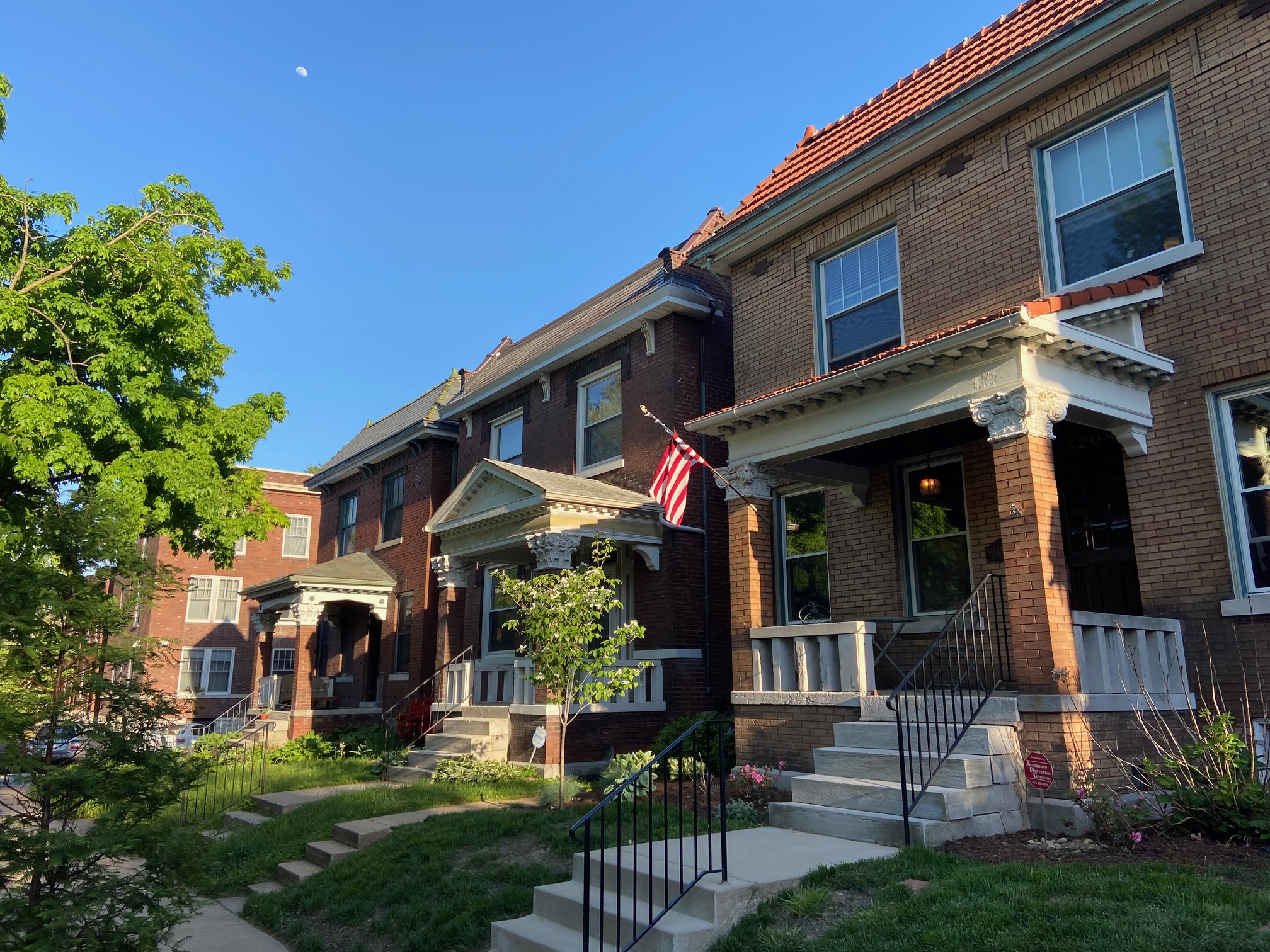
How many thousands of dissertations will be written about the many ways that this Pandemic has affected us as a society? Here's something that many of us are noticing in my neighborhood. I live in a diverse St. Louis City neighborhood with houses that are often more than 100 years old. These house typically have front porches designed with lots of room for people to spend time on them, but (I suspect) some combination of air conditioning and TV has caused many of these porches to be vacant much of the time. My neighbors and I are seeing a resurgence in the use of these front porches by people seeking to socialize. Increasing numbers of families are out of their porches visiting with each other, visiting with neighbors and chatting with strangers passing by on foot.

I haven't quantified this, but it is apparent and it's a beautiful thing to behold. As a photographer, I would be tempted to use my long range camera to capture a collage of these highly-social images, but I don't want to invade the privacy of my neighbors. Are other people in other neighborhoods around the U.S. noticing anything similar?

Continue ReadingFront Porches Come Alive During the Pandemic

Axiomatic Civic Responsibility

I’m looking at the “protesters” in Michigan and ruminating on the nature of civil disobedience versus civic aphasia. By that latter term I mean a condition wherein a blank space exists within the psyché where one would expect an appropriate recognition of responsible behavior ought to live.  A condition which seems to allow certain people to feel empowered to simply ignore—or fail to recognize—the point at which a reflexive rejection of authority should yield to a recognition of community responsibility.  That moment when the impulse to challenge, dismiss, or simply ignore what one is being told enlarges to the point of defiance and what ordinarily would be a responsible acceptance of correct behavior in the face of a public duty. It could be about anything from recycling to voting regularly to paying taxes to obeying directives meant to protect entire populations.

Fairly basic exercises in logic should suffice to define the difference between legitimate civil disobedience and civic aphasia. Questions like: “Who does this serve?” And if the answer is anything other than the community at large, discussion should occur to determine the next step.  The protesters in Michigan probably asked, if they asked at all, a related question that falls short of useful answer:  “How does this serve me?”  Depending on how much information they have in the first place, the answer to that question will be of limited utility, especially in cases of public health.

Another way to look at the difference is this:  is the action taken to defend privilege or to extend it? And to whom?

One factor involved in the current expression of misplaced disobedience has to do with weighing consequences. The governor of the state issues a lockdown in order to stem the rate of infection, person to person. It will last a limited time. When the emergency is over (and it will be over), what rights have been lost except a presumed right to be free of any restraint on personal whim?

There is no right to be free of inconvenience.  At best, we have a right to try to avoid it, diminish it, work around it.  Certainly be angry at it.  But there is no law, no agency, no institution that can enforce a freedom from inconvenience.  For one, it could never be made universal.  For another, “inconvenience” is a rather vague definition which is dependent on context.

And then there is the fact that some inconveniences simply have to be accepted and managed.

Continue ReadingAxiomatic Civic Responsibility

Irresolvable Negotiable Differences of our Culture Wars

Marriage/relationship researcher John Gottman has provided us with a stunning statistic:

"69% of relationship conflict is about perpetual problems. All couples have them — these problems are grounded in the fundamental differences that any two people face. They are either fundamental differences in your personalities that repeatedly create conflict, or fundamental differences in your lifestyle needs.In our research, we concluded that instead of solving their perpetual problems, what seems to be important is whether or not a couple can establish a dialogue about them."

Gottman's research reminds me of the our nation's cultural divide; apparently, we can no longer talk with those we perceive to be different. I don't think we differ from each other nearly as much as the mass media suggests. That said, it seems to me that Gottman's suggested strategies for keeping individual relationships happy and functional are relevant to what we need to do on a national level.

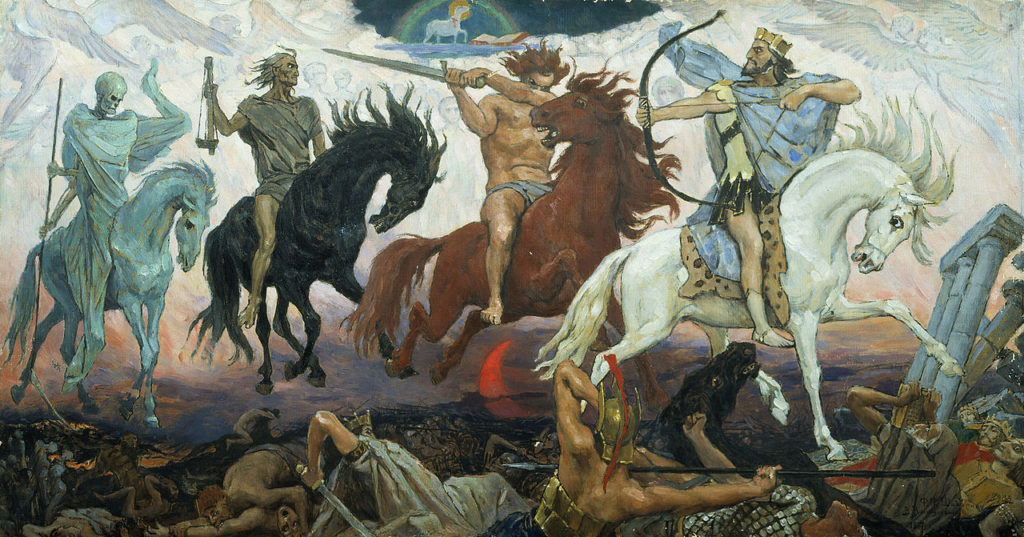
We have forgotten how to talk respectfully to one another, avoiding Gottman's "four horsemen," criticism, contempt, stonewalling, and defensiveness. We have forgotten that being in any functional relationship takes hard work and compromise. I believe that this difficult work has become logarithmically more difficult for two basic reasons: A) tribal ideologies running rampant and B) corporate money gushing through the political system. These two things distort the issues, cause us to create crude cartoons of one another, and permeate the national conversation with fear and loathing of each other.

Barking at each other never brings us any progress. We've seen that for years already. It will take lot of work, soul searching, and looking in the mirror to become more functional on a national level. It will take an act of faith that we can get along if only we worked harder to be civil. This is perhaps too much to ask in an age of widespread magic thinking and diminished attention spans.

Continue ReadingIrresolvable Negotiable Differences of our Culture Wars